Your favorite restaurant recipes, recreated at home — tested and easy to follow.


There’s a particular kind of frustration that comes with a three-finger box and one small cup of sauce. Raising Cane’s fans have built entire online threads around the arithmetic of it — how many extra cups you can politely request, whether the big tub is worth it, what happens when you run out halfway through the Texas toast. The chain has never published the recipe, and that silence is exactly why the internet keeps trying to crack it.
Here’s what makes the restaurant version distinctive, and it isn’t a rare ingredient. It’s a mayonnaise base cut with just enough ketchup to turn it pinkish-tan, a hit of Worcestershire for savory depth, and far more coarse black pepper than most people expect — you can see the flecks suspended in it. Then it sits. Cane’s makes its sauce fresh in-store rather than shipping it in, and the widely repeated detail among former employees is that a fresh batch isn’t served until it’s had a full day in the cooler. That resting window is doing more work than any secret ingredient.
I’ve made this sauce more times than I’d like to admit, including a few side-by-side batches against a takeout cup on my counter. What follows is the ratio I landed on, the measurements written out plainly, and — more useful than either — the specific reasons a batch comes out wrong and how to steer it back. If you like this style of creamy restaurant dip, my Copycat Swiss Chalet Sauce Recipe works on the same principle of getting the ratio right and then leaving it alone.
Why This Copycat Works
- Uses a 3:1 mayo-to-ketchup ratio, which lands on the restaurant’s pinkish-tan color instead of the pale off-white most recipes produce.
- Coarse-ground black pepper, not fine — you should see it, and feel a little bite at the back.
- Five minutes of active work, then a 24-hour chill. The chill is the recipe.
- Hardest part: waiting. It tastes flat and mayonnaise-heavy the moment you mix it, and that’s normal.
Key Ingredients & Substitutions
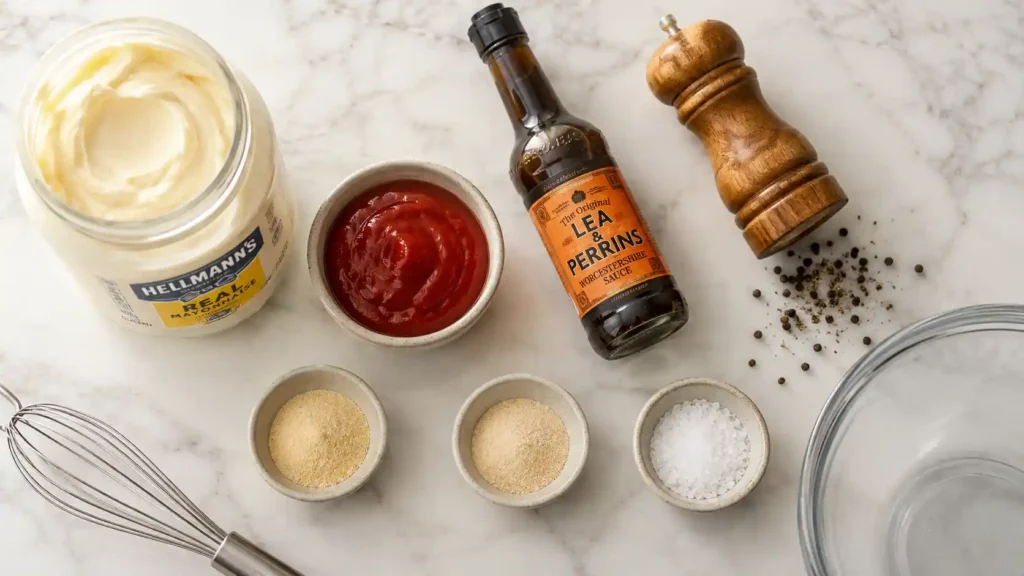
Full-fat mayonnaise (the base). This carries everything else, so its flavor is the sauce’s flavor. Use a plain, neutral, full-fat mayonnaise. Tangier Southern-style mayo works but pushes the sauce sweeter and richer than the original, which throws the balance off. Light mayo makes a thinner, sharper sauce — usable, and covered in the lighter version below. Avocado-oil mayo is a fine one-for-one swap.
Ketchup (color, sweetness, acidity). Ketchup does three jobs here and you only want a moderate amount of each. Too much and you’ve made fry sauce; too little and the color stays cream-white instead of that light salmon-tan. Standard tomato ketchup is right. No-sugar-added ketchup cuts the sweetness, which several home cooks prefer — just expect a slightly thinner, sharper result.
Worcestershire sauce (the zing). This is the ingredient people underuse, and it’s the most common reason a batch tastes like plain mayo-and-ketchup. It brings fermented, anchovy-driven savoriness that nothing else in the bowl provides. If you need a fish-free version, a low-sodium soy sauce plus a few drops of white vinegar gets you close on umami and acidity, though it’s darker.
Coarsely ground black pepper (the signature). Grind it yourself on a coarse setting if you can. Pre-ground fine pepper dissolves into the sauce and gives you generic heat instead of the visible flecks and the little sting the restaurant version has. White pepper makes a smoother, rounder pepper flavor if you dislike the bite.
Garlic powder (background savoriness). Powder, not fresh — fresh garlic is too sharp and keeps developing in the fridge until it dominates. Garlic salt works if you reduce the added salt to compensate.
Salt. Kosher salt dissolves cleanly. If you only have fine table salt, use about two-thirds the volume.
Optional: Creole seasoning. A lot of Louisiana cooks add a pinch of a Cajun/Creole all-purpose blend, which makes sense given where the chain started. It adds paprika, celery, and a little heat. It’s a variation, not the baseline. These blends sit in the spice aisle of most supermarkets.
How to Make Canes Sauce at Home
You’re building an emulsified cold sauce, which means there’s no cooking and no technique risk — the whole thing is measuring accurately, whisking until genuinely smooth, and then leaving it alone in the fridge for a full day. Active time is about five minutes. The method works because mayonnaise takes time to absorb dry seasoning; pepper and garlic powder sitting on the surface taste harsh and separate, while the same seasonings after 24 hours taste like one thing.
Step 1: Build the Base
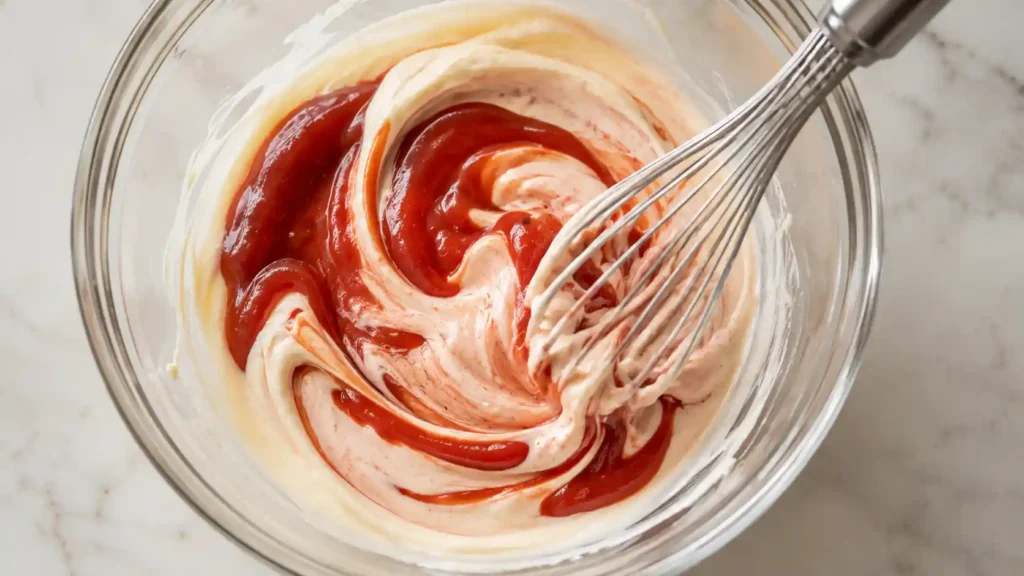
In a medium mixing bowl, combine 1 cup (about 240 g) full-fat mayonnaise and 1/3 cup (about 80 g) ketchup. Use a spoon to level your measures rather than eyeballing them — this ratio is the single biggest factor in whether your sauce matches. Stir them together just enough to break up the streaks. At this stage the color will be a soft pink, noticeably lighter than the finished sauce.
Step 2: Add the Worcestershire and Seasonings
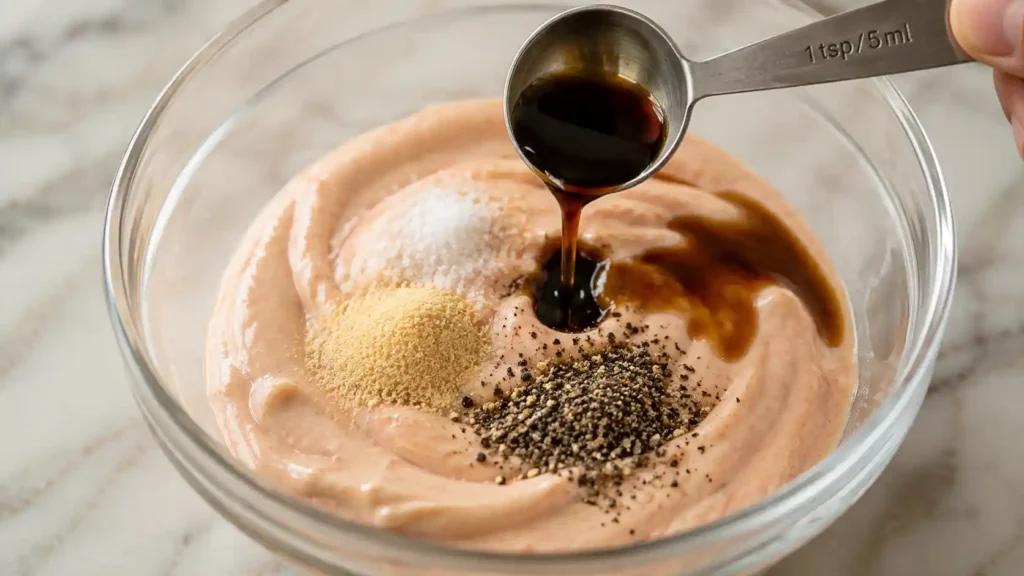
Add 1 tablespoon Worcestershire sauce, 2 teaspoons coarsely ground black pepper, 1 teaspoon garlic powder, 3/4 teaspoon kosher salt, and 1/4 teaspoon onion powder if you’re using it. Measure the Worcestershire in a spoon rather than pouring straight from the bottle — the neck pours fast and an extra splash makes the sauce noticeably darker and saltier. Everything goes in at once; there’s no order that matters.
Step 3: Whisk Until Completely Smooth
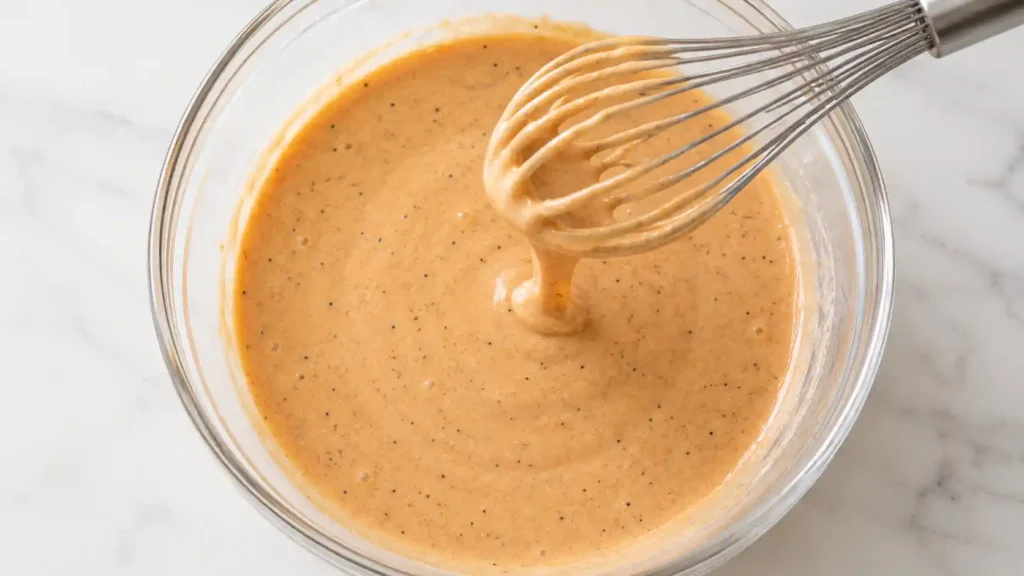
Whisk for a solid 45 to 60 seconds, scraping the sides and bottom. You’re done when there is not a single streak of ketchup or a clump of garlic powder visible — just a uniform light tan sauce with black pepper suspended evenly through it. Undermixing is a real problem here: pockets of dry seasoning don’t dissolve during chilling, they just sit there and turn up in one unlucky bite.
Step 4: Chill for at Least 24 Hours
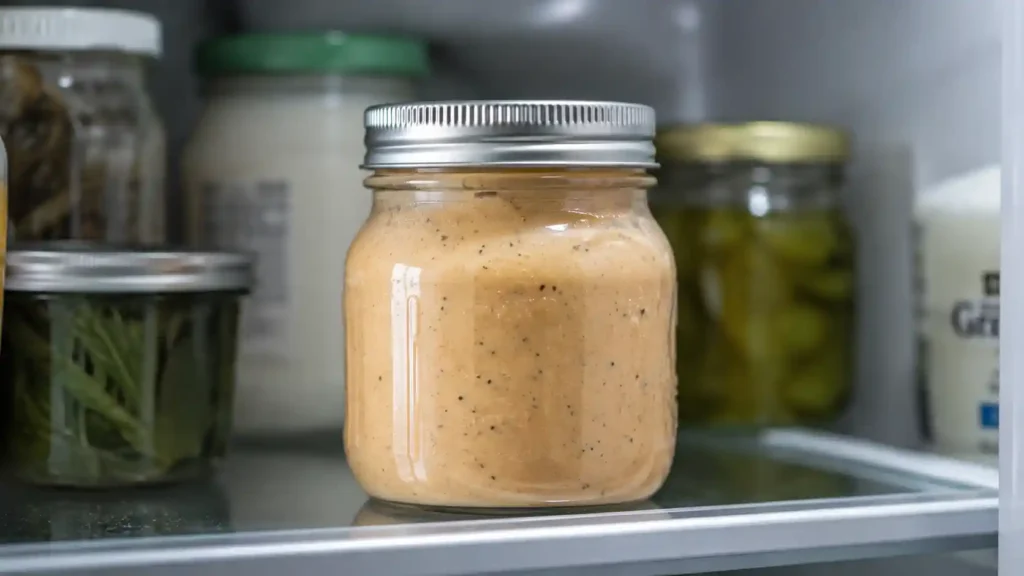
Transfer to an airtight jar, seal it, and refrigerate. Six hours will get you something good. Twenty-four hours gets you something that makes people ask where you bought it. Over that window the pepper hydrates, the Worcestershire mellows out of its raw vinegary edge, and the mayo takes on the garlic and salt evenly. Give it a quick stir before serving. If any thin liquid has gathered at the edge, that’s normal separation — stir it back in.
Chef’s Note: Do not judge this sauce on the day you make it. Fresh out of the bowl it tastes like seasoned mayonnaise and people assume the recipe failed. Taste it, write off your impression, and try again tomorrow. If you must adjust something on day one, adjust nothing but salt.
What the Restaurant Does That Home Cooks Skip
Two things separate a store batch from a kitchen batch, and neither is exotic. The first is the rest, which I’ve hammered on already because it’s the failure point in nearly every disappointed comment I’ve read on other copycat recipes. The second is consistency of measurement. A restaurant makes the same batch with the same scoops every single day, which is why the sauce tastes identical in Baton Rouge and in a mall food court. At home, a heavy-handed pour of Worcestershire or a rounded rather than level tablespoon of ketchup shifts the balance enough that you notice.
There’s also a texture difference worth naming: restaurant sauce is thinner and more pourable than most homemade versions, largely because commercial mayonnaise and ketchup are blended at scale until fully slack. If yours is stiff enough to hold a spoon upright, it’s too thick — see the fixes below.
The recipe isn’t a secret. The patience is.
Troubleshooting: Why Your Batch Tastes Off
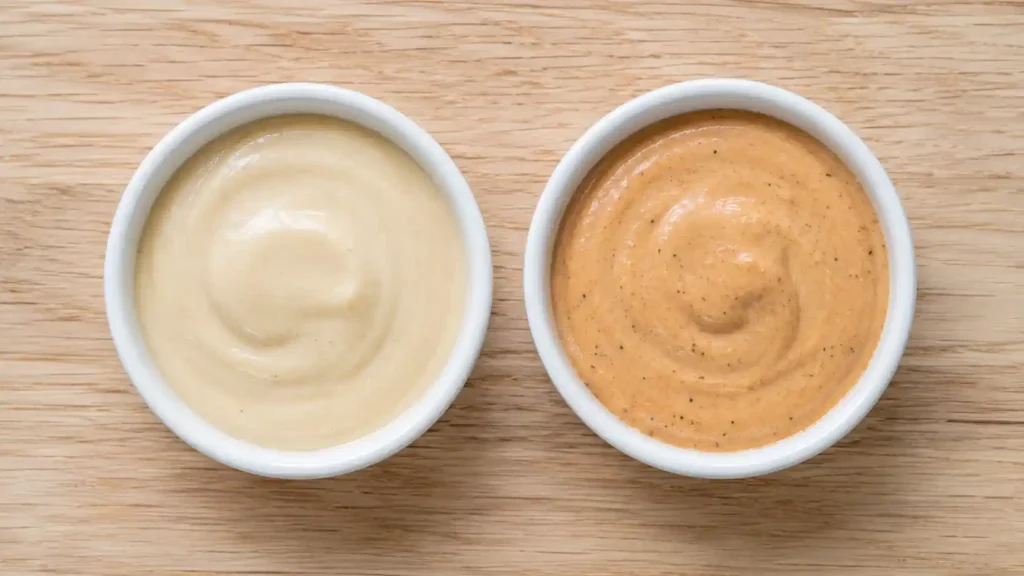
These are the complaints that come up over and over from people who’ve A/B tested a homemade batch against the real thing.
It’s too pale. Almost always not enough ketchup, sometimes not enough Worcestershire. Add ketchup a teaspoon at a time until the color deepens to a light salmon-tan, then re-taste after another few hours.
It tastes like plain mayo. You’re short on Worcestershire. Add another 1/2 teaspoon, whisk, and let it sit again. This is the ingredient that supplies the savory “what is that” note.
It’s too sweet. Usually a sweeter-style mayonnaise stacking on top of ketchup sugar. Add more black pepper first, since pepper cuts perceived sweetness better than salt does. A few drops of white vinegar also helps.
It’s too thick. Thin it with a teaspoon of water or milk at a time, whisking between additions. Two teaspoons is usually plenty for a batch this size.
It’s gritty or has hot spots of garlic. Undermixing at Step 3, or fine-ground pepper that never hydrated. Whisk hard and give it another night.
Common mistake: Correcting the seasoning on day one and then correcting it again on day two. The flavors intensify overnight, so a batch you salted and peppered “to taste” while it was fresh will read as harsh once it’s rested. Season to the measurements, wait, then adjust.
How Close Is This to the Real Thing?
Honest answer: very close on flavor, close on color once you’ve dialed the ketchup, and slightly thicker on texture unless you thin it. Where homemade genuinely wins is quantity — one batch gives you more sauce than several takeout cups, for the cost of pantry staples you probably already own. There’s also a store-brand chicken finger dipping sauce sold at large grocery retailers that gets mentioned as a shortcut dupe, and it’s a reasonable option on a night you don’t want to wait 24 hours.
| Restaurant version | This homemade version | |
|---|---|---|
| Flavor | Peppery, tangy, savory | Very close after a full 24-hour chill |
| Color | Light salmon-tan with visible pepper | Matches once ketchup is dialed in |
| Texture | Thin, pourable | Slightly thicker; thin with water if needed |
| Portion | A small cup per box | About 1 1/3 cups per batch |
| Cost | Priced per cup, extras add up | Pantry staples, far cheaper per serving |
Variations Worth Making
A lighter Cane’s sauce. Swap in light mayonnaise, or go half regular mayo and half plain Greek yogurt. The yogurt version is tangier and thinner, and it loses some of the rich mouthfeel, but the pepper-and-Worcestershire character survives intact. Keep the seasonings identical — this is where people over-correct and end up with something that tastes like ranch.
Spicier. Add 1/4 teaspoon cayenne, or a teaspoon of your favorite Louisiana-style hot sauce. Add it before the chill so it integrates.
Creole-style. Replace the salt and garlic powder with 1 1/2 teaspoons of a Cajun/Creole seasoning blend. Smokier and more complex, and arguably closer to the chain’s Baton Rouge roots.
Smoky. A scant 1/4 teaspoon smoked paprika. Go lighter than you think; it takes over fast.
If you like a mayo-based sauce with a different personality, my Tim Hortons chipotle sauce uses the same cold-emulsion approach with smoke and heat instead of pepper.
Storage, Scaling, and Making It Ahead
Keep the sauce in a sealed glass jar in the coldest part of the fridge — not the door — and it holds well for about a week. Because it’s mayonnaise-based, the two things that shorten its life are warmth and contamination: never dip food directly into the storage jar, always use a clean spoon, and put it straight back in the fridge after serving rather than leaving it out through dinner.
Don’t freeze it. Mayonnaise emulsions break when frozen and thaw into a curdled, weeping mess that no amount of whisking recovers.
The recipe scales up cleanly with no changes to technique, which makes it a good party prep item — mix it two days ahead and it’s better than the day-of version, the same way a good make-ahead spinach dip improves overnight. If you’re halving it, measure the Worcestershire and pepper carefully; small-batch measuring errors hurt proportionally more.
Equipment That Actually Matters
You need a bowl and a whisk. That’s it, and cheap ones work fine — this is not a recipe where gear buys you quality.
Two things do make a real difference, though. A pepper mill with an adjustable coarse setting changes the sauce more than any other tool, because pre-ground pepper simply cannot give you the visible flecks and clean bite. And a glass jar with a tight lid matters more than it sounds: mayonnaise picks up refrigerator odors readily, and a loosely covered bowl will have your sauce tasting faintly of last night’s leftovers. A small kitchen scale is optional but useful if you want to reproduce the exact same batch every time.
What to Dip in It
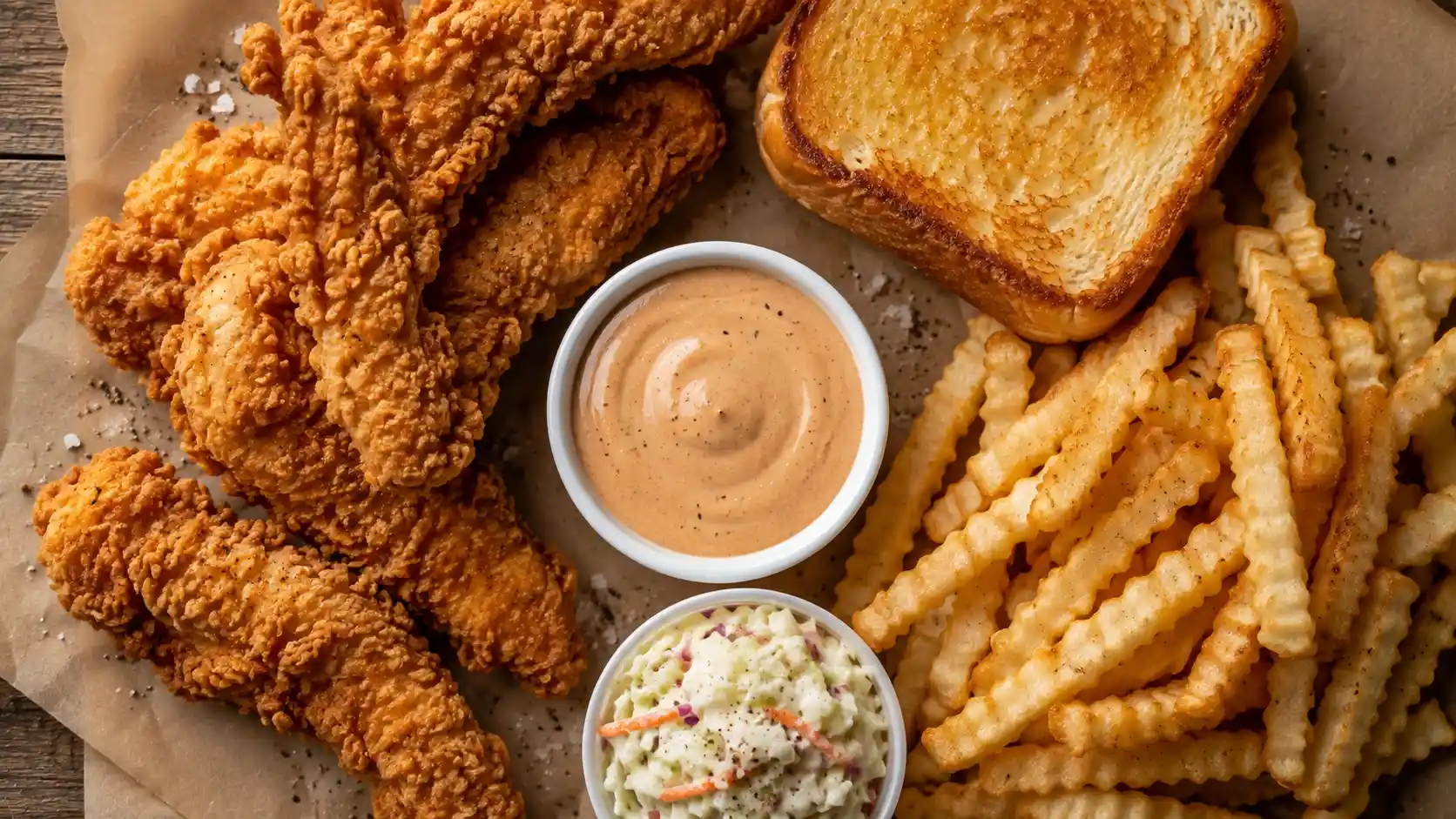
Chicken tenders are the obvious home, and this sauce is genuinely good enough to build a meal around — crispy tenders, crinkle-cut fries, buttered Texas toast, and a scoop of slaw gets you the full experience. Beyond that, it’s excellent on burgers, spread thin on a chicken sandwich, alongside roasted potato wedges, or with crispy chicken wings when you want something creamy instead of buffalo. It’s also a good counterpoint to grilled chicken — a batch of this next to Swiss Chalet-style marinated chicken is a weeknight I’ve repeated more than once.

Copycat Raising Cane’s Sauce
A creamy, tangy, heavily peppered dipping sauce that tastes like the cup you get with a box of chicken fingers. Five minutes of mixing, then a full 24 hours in the fridge — that rest is what turns seasoned mayonnaise into the real thing. Makes far more than a takeout cup, for pantry-staple cost.
Ingredients
Equipment
Method
- Combine the mayonnaise and ketchup in a medium bowl and stir to break up the streaks.
- Add the Worcestershire sauce, black pepper, garlic powder, salt, and onion powder if using. Measure the Worcestershire in a spoon rather than pouring from the bottle.
- Whisk for 45 to 60 seconds, scraping the sides and bottom, until the sauce is a uniform light tan with no ketchup streaks and no clumps of dry seasoning.
- Transfer to an airtight jar, seal, and refrigerate at least 24 hours before serving. Six hours works in a pinch, but the flavor is noticeably better at 24.
- Stir before serving. If the sauce is thicker than you want, whisk in water 1 teaspoon at a time.
Video
Notes
Store sealed in the fridge for up to about a week. Always use a clean utensil and never dip directly into the storage jar.
Do not freeze — the mayonnaise emulsion breaks on thawing.
Too pale? Add ketchup a teaspoon at a time. Tastes flat? Add another 1/2 teaspoon Worcestershire, then rest again.
For lighter, spicier, Creole, and smoky versions, see the variations covered above.
Season to the written measurements, not to taste on day one. The flavors intensify overnight.
Frequently Asked Questions
What is Raising Cane’s sauce actually made of?
Raising Cane’s has never published the recipe, so nobody outside the company can confirm it exactly. What is publicly known from the chain’s allergen disclosures is that the sauce is mayonnaise-based and contains egg and soy, with fish listed because of the Worcestershire sauce, and it is flagged for dairy in some allergen guides. Every credible copycat, including this one, builds on mayonnaise, ketchup, Worcestershire sauce, black pepper, garlic powder, and salt.
Has the real Cane’s sauce recipe ever been leaked?
No verified recipe has ever been released by the company. Posts claiming to be a leaked version circulate constantly, usually attributed to an anonymous employee, but none of them are confirmed and they contradict each other on the seasonings. Treat every version you find online, including mine, as a reverse-engineered approximation rather than the official formula.
What are the exact measurements for canes sauce?
For one batch: 1 cup full-fat mayonnaise, 1/3 cup ketchup, 1 tablespoon Worcestershire sauce, 2 teaspoons coarsely ground black pepper, 1 teaspoon garlic powder, and 3/4 teaspoon kosher salt. Measure the ketchup and Worcestershire carefully, since those two control the color and the savory depth. The ratio matters more than any single ingredient.
Do I really have to let the sauce sit for 24 hours?
Yes, if you want it to taste like the restaurant version. Fresh out of the bowl it reads as seasoned mayonnaise, because the pepper and garlic powder have not hydrated and the Worcestershire still tastes raw. Six hours gets you something good and 24 hours gets you something close to the original. This one step is the most common reason a copycat batch disappoints people.
Why is my homemade Cane’s sauce too pale and too thick?
Pale almost always means not enough ketchup, and sometimes not enough Worcestershire. Add ketchup a teaspoon at a time until the color shifts to a light salmon-tan, then rest it again before judging. For thickness, whisk in water or milk one teaspoon at a time until it pours rather than holds its shape. Restaurant sauce is noticeably thinner than most homemade batches.
How long does homemade canes sauce last, and can I freeze it?
Sealed in a glass jar in the coldest part of the fridge, it holds well for about a week. Always serve with a clean spoon and never dip food directly into the storage jar, since contamination is what shortens a mayonnaise sauce’s life fastest. Do not freeze it. The emulsion breaks on thawing and separates into a curdled texture that whisking will not fix.
Is there a healthy canes sauce recipe that still tastes right?
Swap the full-fat mayonnaise for light mayonnaise, or use half regular mayo and half plain Greek yogurt. Keep every seasoning measurement identical, because the pepper and Worcestershire are what make it recognizable. The yogurt version is tangier and thinner and loses some richness, but it still reads as Cane’s sauce rather than generic dip.
Can I make this dairy-free, egg-free, or gluten-free?
For egg-free and dairy-free, use a vegan mayonnaise as the base and check that your Worcestershire sauce fits your needs, since some contain anchovy and some list milk. For a fish-free version, substitute low-sodium soy sauce plus a few drops of white vinegar, which gives you umami and acidity at the cost of a darker color. For gluten-free, check the Worcestershire label, as some brands are made with malt vinegar or wheat.