Your favorite restaurant recipes, recreated at home — tested and easy to follow.


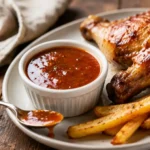
If you’ve ever eaten at a Swiss Chalet in Canada, you already know the sauce is the whole reason you order the chicken. It’s not a barbecue sauce, it’s not gravy, and it’s not quite anything else you can point to — it’s this warm, tomatoey, herb-flecked dipping sauce that somehow makes even plain fries taste like a special occasion. People genuinely get emotional about it. Canadians who’ve moved away from home have been known to smuggle packets of the dry mix across borders just to keep a taste of it in their kitchen.
The real Swiss Chalet Dipping Sauce started as a proprietary blend built to go with the chain’s slow-roasted rotisserie chicken, and it’s become just as famous as the chicken itself — so famous that Swiss Chalet sells the dry mix in Canadian grocery stores because customers demanded a way to make it at home. But if you’re outside Canada, or you just don’t want to track down an imported packet, you can build the same flavor profile from spices most of us already have in the pantry.
This copycat version simmers real ingredients — chicken broth, tomato, warm spices, and a splash of acidity — into a sauce that pours and clings the same way the original does. No mystery cube required, no hard-to-find imports, just a saucepan and about 20 minutes.
Why This Is the Best Swiss Chalet Sauce Recipe
- It’s built from real, traceable ingredients — no reliance on a discontinued or hard-to-import bouillon cube, so you can actually make it again next month.
- It matches the texture, not just the flavor. A lot of copycat versions taste close but come out too thin or too ketchup-like. This one uses a proper cornstarch slurry to get that same light, pourable-but-clingy consistency the restaurant sauce has.
- It’s genuinely fast. From cold ingredients to a finished, thickened sauce is about 20 minutes, most of it hands-off simmering.
- The spice blend is layered, not flat. Instead of dumping in a generic “Italian seasoning,” this recipe treats the herbs and warm spices as separate notes — savory, slightly sweet, a little tangy — the way the original actually tastes when you slow down and pick it apart.
- It scales easily for a family dinner or a big batch to freeze in portions.
What Makes Swiss Chalet’s Sauce So Good?
Swiss Chalet has been serving rotisserie chicken out of Toronto since 1954, and the Chalet Dipping Sauce has been part of the menu almost from the start, evolving into one of the most recognizable condiments in Canadian food culture — guests really do order extra just for the sauce.
Here’s what most online copycat recipes get wrong: they treat it like a barbecue sauce or a marinara with some spices thrown in, which pushes the flavor too sweet, too thick, or too “tomato-forward.” The real sauce is closer to a savory, herbed gravy with a tomato backbone — it’s built on a stock base, not a tomato-paste base. Tomato shows up as a supporting flavor (via tomato juice or paste), while the dominant notes are chicken stock, a blend of dried herbs (basil, thyme, parsley, a whisper of sage and marjoram), warm background spices like ginger and a touch of nutmeg, and a bright hit of acidity at the very end from lemon juice and a dash of hot sauce or Worcestershire.
That order of operations matters. The herbs and stock need real simmer time to meld before you add anything acidic — dump the lemon juice in early and the sauce tastes sharp and disjointed instead of rounded. Getting the sequence right is the difference between “tastes kind of like it” and “tastes like it.”
Key Ingredients & Substitutions
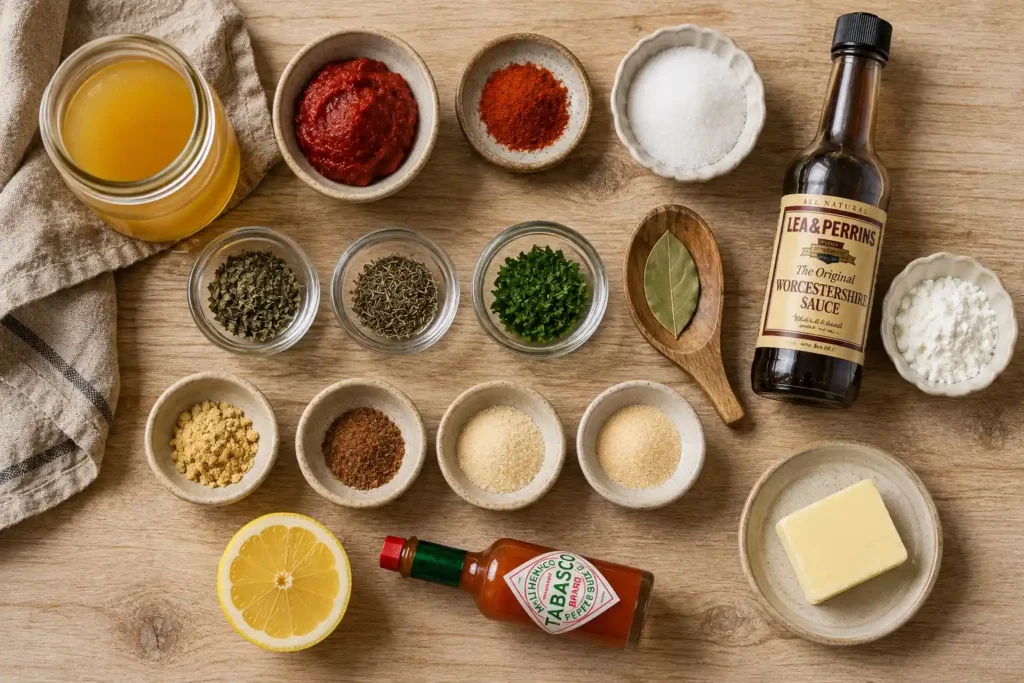
- Chicken broth — the backbone of the sauce. Use low-sodium so you can control the salt yourself; homemade or store-bought both work fine.
- Tomato paste (or tomato juice) — gives the sauce its reddish-brown color and a mild tomato undertone without turning it into a pasta sauce. Tomato paste gives a deeper, more concentrated flavor; tomato juice gives a lighter, thinner tomato note closer to some versions of the original.
- Paprika — adds color and a mild, sweet-pepper warmth. Regular paprika works; smoked paprika will push the flavor in a different (still tasty, but less accurate) direction.
- Brown or granulated sugar — just enough to round out the acidity, not to make it sweet. Start light; you can always add more.
- Dried herbs (basil, thyme, parsley) — the aromatic core of the sauce. Dried, not fresh, is correct here — it mimics the dried spice-blend origin of the original.
- Ground ginger and nutmeg — the “secret” warm-spice layer most copycats skip entirely. Use a light hand; these should be background notes, not forward flavors.
- Onion powder and garlic powder — for savory depth. Garlic powder is optional and should be used sparingly — some tasters who’ve had the real sauce note the garlic flavor is barely detectable, if present at all.
- Bay leaf — infuses the broth while it simmers; always remove before serving.
- Worcestershire sauce and hot sauce — a small amount of each adds umami depth and a faint background heat without making the sauce spicy.
- Lemon juice — added near the end for brightness. Bottled works in a pinch, but fresh has a cleaner flavor.
- Cornstarch slurry — the thickener. Mixed with cold water and stirred in at the end for that glossy, gravy-like body.
- Butter (or neutral oil) — whisked in at the very end for shine and a silkier mouthfeel.
Substitutions: For a gluten-free version, this recipe is naturally gluten-free as written (cornstarch, not flour, is the thickener) — just double-check your Worcestershire sauce and broth labels. For dairy-free, swap the finishing butter for a neutral oil like avocado or light olive oil. For a lower-sodium version, use no-sodium-added broth and season with salt to taste rather than adding it upfront.
How to Make Swiss Chalet Sauce
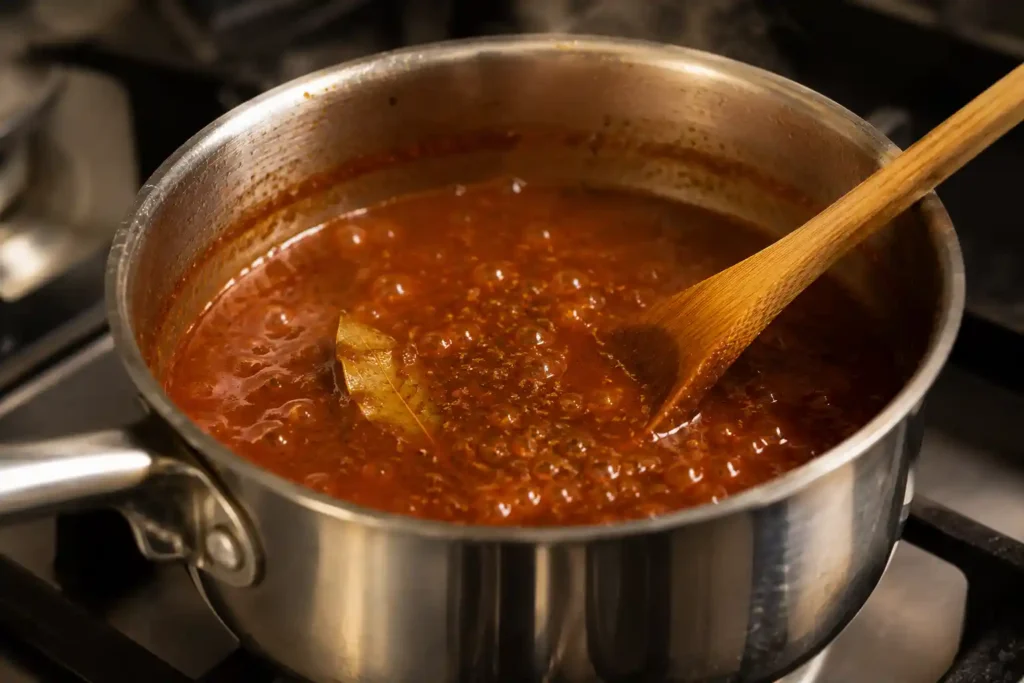
- Combine the base ingredients. In a medium saucepan, whisk together the chicken broth, tomato paste, paprika, sugar, salt, dried basil, dried thyme, dried parsley, onion powder, garlic powder, ground ginger, ground nutmeg, and the bay leaf. Whisk until the tomato paste is fully dissolved with no clumps.
- Bring to a simmer. Set the pan over medium heat and bring the mixture to a gentle boil, whisking occasionally. As soon as it bubbles, reduce the heat to low.
- Simmer to develop flavor. Let the sauce simmer uncovered for 10–12 minutes, stirring every couple of minutes. You’ll see it reduce slightly and the color will deepen from bright orange-red to a richer reddish-brown. This step is non-negotiable — it’s what lets the dried herbs bloom and the flavors actually meld instead of tasting like separate spices floating in broth.
- Add the Worcestershire, hot sauce, and lemon juice. Stir these in during the last 2 minutes of simmering, once the base flavor has developed. Taste and adjust salt or sugar here if needed.
- Remove the bay leaf. Fish it out and discard it — leaving it in too long can make the sauce slightly bitter.
- Thicken with the cornstarch slurry. In a small bowl, stir together the cornstarch and cold water until smooth, then pour it into the simmering sauce while whisking constantly. Keep whisking over low heat for 1–2 minutes, until the sauce visibly thickens and coats the back of a spoon.
- Finish with butter. Remove the pan from the heat and whisk in the butter (or oil) until fully melted and the sauce looks glossy. This step gives it that smooth, slightly rich mouthfeel instead of a flat, watery finish.
- Serve warm. Pour into small dipping bowls alongside rotisserie or roasted chicken, fries, or dinner rolls. The sauce will continue to thicken slightly as it cools, so serve it while it’s still warm for the best pourable consistency.
Variations
Slow Cooker Version: Combine all the base ingredients (everything except the cornstarch, water, and butter) directly in a slow cooker on low for 2–3 hours to let the flavors slowly infuse. Transfer to a saucepan at the end to whisk in the cornstarch slurry and butter, since slurries thicken best over direct heat.
Instant Pot Version: Use the sauté function to combine and briefly simmer the base ingredients for 3–4 minutes, then switch to the “keep warm” or low sauté setting to finish thickening with the cornstarch slurry, just like the stovetop method — the pressure-cook function isn’t needed for a sauce this quick.
Gravy-Style Version: For a thicker, gravy-like consistency to spoon over chicken and mashed potatoes rather than a thin dipping sauce, double the cornstarch slurry and reduce the broth slightly for a more concentrated flavor.
Spicier Version: Increase the hot sauce and add a pinch of cayenne for a version with more background heat, while keeping the herb blend the same.
Low-Carb/Keto Version: Swap the cornstarch slurry for a small amount of xanthan gum whisked in at the very end (start with about 1/8 teaspoon), and skip the sugar or replace it with a low-carb sweetener.
Vegetarian Version: Substitute a good-quality vegetable broth for the chicken broth. The flavor will be slightly lighter, but the herb and spice blend carries most of the character.
Tips for the Best Swiss Chalet Sauce
- Don’t skip the simmer time. Rushing this sauce is the #1 mistake — dried herbs need those 10–12 minutes to soften and release flavor into the liquid. A 3-minute simmer will taste raw and dusty.
- Whisk the cornstarch slurry separately before adding it. Adding dry cornstarch directly to the hot sauce will clump instantly. Always mix it with cold water first until completely smooth.
- Add acidic ingredients last. Lemon juice and hot sauce should go in near the end of the simmer, not the beginning — early acid can make dried herbs taste flat and prevents the broth from properly reducing.
- Go light on garlic powder. It’s easy to overdo, and the original sauce’s garlic presence is subtle at most. Start with a small pinch and adjust to taste.
- Whisk constantly once the slurry goes in. Cornstarch-thickened sauces can get lumpy or scorch on the bottom of the pan if you walk away — stay at the stove for those last two minutes.
- Taste before you finish with butter. Salt and acidity are much easier to adjust before the butter goes in; once it’s whisked in, the sauce is basically done.
What to Serve With Swiss Chalet Sauce
- Rotisserie or roast chicken — the classic pairing, whether it’s a whole bird, quarter chicken, or shredded leftovers.
- Hand-cut fries or Chalet-style fries — the sauce is famously just as good with fries as it is with chicken.
- Soft dinner rolls — for dipping or for soaking up extra sauce on the plate.
- Roasted or mashed potatoes — spoon it on the way you’d use gravy for a heartier, comfort-food plate.
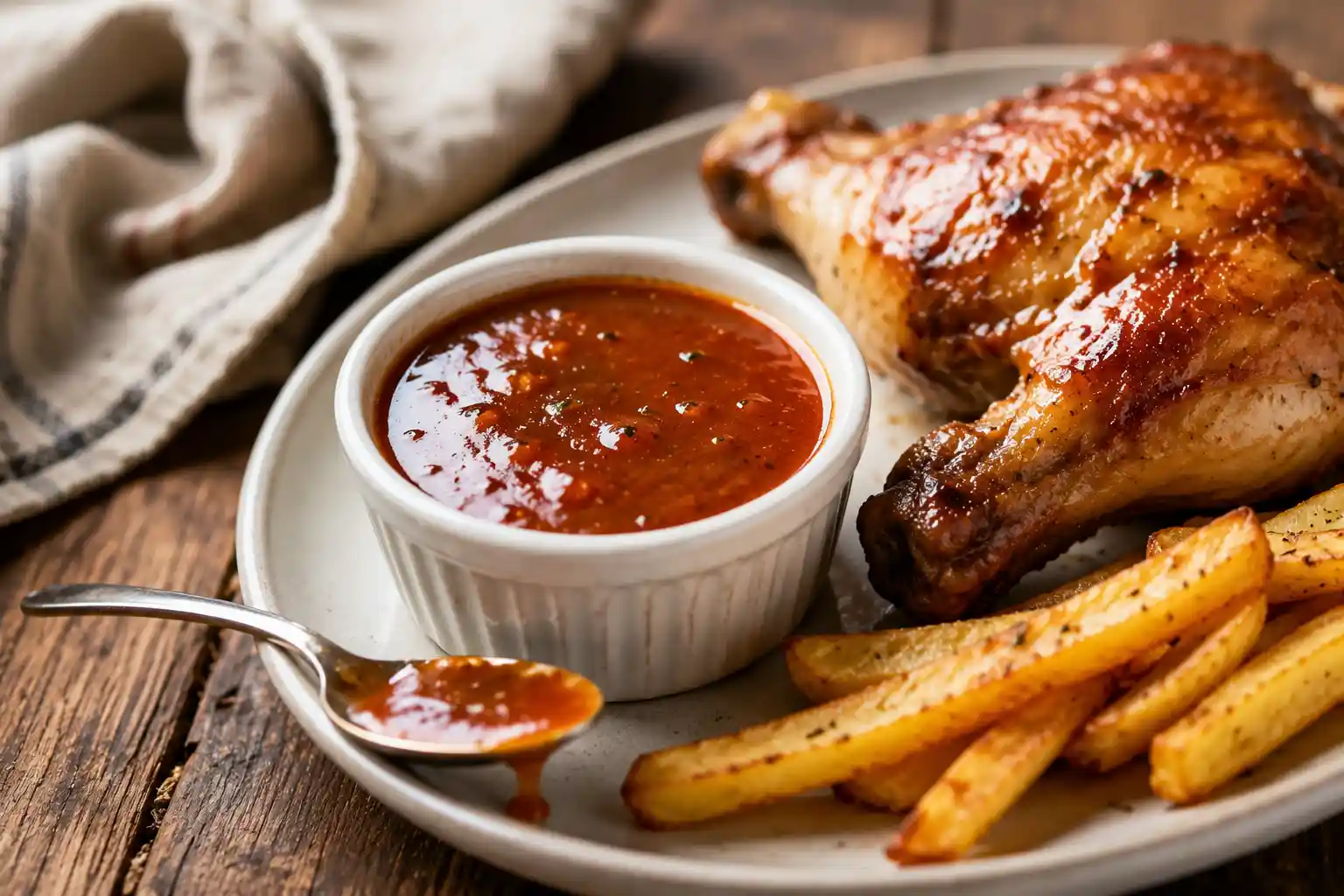

Copycat Swiss Chalet Dipping Sauce
A savory, tangy, herb-flecked dipping sauce inspired by the iconic Canadian restaurant condiment. Built on a chicken broth base with warm spices and a hint of tomato, this sauce comes together in about 20 minutes and is perfect for dipping rotisserie chicken, fries, or dinner rolls.
Ingredients
Equipment
Method
- In a medium saucepan, whisk together the chicken broth, tomato paste, paprika, sugar, salt, dried basil, dried thyme, dried parsley, onion powder, garlic powder, ground ginger, nutmeg, and bay leaf until smooth.
- Bring to a gentle boil over medium heat, then reduce to low and simmer uncovered for 10–12 minutes, stirring occasionally, until the color deepens and the sauce reduces slightly.
- Stir in the Worcestershire sauce, hot sauce, and lemon juice. Simmer 2 more minutes, then taste and adjust salt or sugar as needed.
- Remove and discard the bay leaf.
- In a small bowl, whisk the cornstarch and cold water into a smooth slurry. Pour into the simmering sauce while whisking constantly. Cook, whisking, for 1–2 minutes until thickened and glossy.
- Remove from heat and whisk in the butter until melted and smooth.
- Serve warm alongside chicken, fries, or dinner rolls.
Video
Notes
Storage: Refrigerate in an airtight container for up to 4–5 days.
Freezing: Freeze up to 2 months in an airtight container; whisk well when reheating to restore texture.
For a gravy-style version, a spicier version, a slow cooker or Instant Pot method, and dietary swaps (gluten-free, dairy-free, keto), see the Variations section in the full blog post.
Nutrition estimate is calculated using 1 tablespoon of butter and standard low-sodium broth; using a no-sodium broth or oil instead of butter will change the values slightly.
Frequently Asked Questions
What is actually in Swiss Chalet sauce?
Based on the flavor profile and how the restaurant itself describes it, the real Chalet Dipping Sauce is a savory, chicken-stock-based sauce with a mild tomato note, a blend of dried herbs, warm background spices, and a touch of acidity — Swiss Chalet keeps the exact proprietary recipe a trade secret, and sells a packaged dry mix in Canadian grocery stores rather than publishing the formula. This copycat recipe is built to match that flavor and texture using standard pantry ingredients.
Can I make this ahead of time?
Yes — in fact it’s a great make-ahead sauce. Make it up to 3 days in advance and store it in an airtight container in the fridge; the flavor actually deepens a bit overnight.
How do I store leftover sauce?
Refrigerate in a sealed container for up to 4–5 days. Reheat gently in a small saucepan over low heat, whisking occasionally, or in the microwave in 20-second bursts, stirring between each.
Can I freeze it?
Yes. Cool the sauce completely, then freeze in an airtight container or freezer bag for up to 2 months. Cornstarch-thickened sauces can separate slightly after freezing, so whisk well while reheating on the stove to bring it back together.
Is this recipe gluten-free?
As written, yes — cornstarch is the thickener, not flour. Just double-check that your specific brands of broth, Worcestershire sauce, and hot sauce are labeled gluten-free, since formulations vary.
Can I make it dairy-free?
Yes, simply substitute the finishing butter with a neutral oil like avocado oil or a dairy-free butter alternative.
Can I use tomato juice instead of tomato paste?
Yes. Tomato juice gives a lighter, thinner tomato flavor that some home cooks feel is closer to the original, while tomato paste gives a richer, more concentrated color and taste. Either works — if using juice, you may want to reduce the broth slightly to keep the final texture from being too thin.
Is Swiss Chalet or its sauce available outside Canada?
Swiss Chalet is a Canadian restaurant chain based in Toronto, and its locations are concentrated in Canada. If you don’t live near one, this homemade version is the most practical way to enjoy the flavor.