Your favorite restaurant recipes, recreated at home — tested and easy to follow.


There’s a very specific smell that hits you walking into a Swiss Chalet — that warm, savory, slightly sweet roasted chicken smell that somehow makes you hungry even if you just ate. A big part of that comes from the marinade the chicken sits in before it goes into the rotisserie, which is a different product from the famous dipping sauce, though the two share a similar flavor DNA.
Swiss Chalet has been roasting chicken this way out of its Ontario roots since 1954, and while the restaurant itself keeps its exact recipe under wraps, the chain has sold a dry Chicken Marinade Mix in grocery stores for years, meant to be combined with water and oil to marinate chicken at home. If you’ve searched for it recently and come up confused about whether it’s discontinued, you’re not imagining things — we’ll clear that up below.
This copycat recipe rebuilds that same warm, savory, slightly tangy marinade from real pantry spices, so you can get that Swiss Chalet flavor into your own roast chicken whether or not you can track down the packet at your local store.
Why This Is the Best Swiss Chalet Chicken Marinade Recipe
- It’s built from pantry spices you can always find, so you’re not stuck waiting on a specific packet that may or may not be sold near you.
- It actually explains how to use it, not just what’s in it — full marinating time, roasting temperature, and doneness cues included.
- It’s flexible for different cooking methods — oven roasting, rotisserie, grill, or slow cooker.
- It addresses the “discontinued” confusion head-on, so you know exactly what’s actually happened with the packaged version instead of getting conflicting information.
- It works on chicken pieces, not just a whole bird, for anyone who doesn’t want to commit to roasting an entire chicken on a weeknight.
What Makes Swiss Chalet’s Chicken Marinade So Good?
The flavor of Swiss Chalet’s roast chicken comes from a marinade that leans savory and slightly sweet rather than herby or citrus-forward like a lot of other rotisserie chicken marinades. Based on the packaged mix’s intended use — combined with water and vegetable oil, then used to soak the chicken before roasting — and the flavor notes people consistently describe (savory, a little smoky-sweet, with a warm spice background), the marinade appears to lean on a blend of onion and garlic, a touch of tomato for color and tang, brown sugar for a subtle sweetness, and warm spices like paprika, allspice, and ginger rather than fresh herbs.
The detail most copycat recipes skip is the tomato element. A lot of online versions leave it out entirely and end up with a marinade that tastes like a generic poultry seasoning blend instead of the specific savory-sweet-tangy profile people associate with Swiss Chalet. A small amount of tomato — whether from tomato paste, a spoonful of ketchup, or a bit of tomato soup mix — is what gives the marinade (and the drippings it leaves behind) that characteristic reddish-brown color and rounded tang.
The second detail worth knowing: this is meant to be a genuine marinade, not just a rub or basting sauce applied at the end. The chicken needs real soaking time — several hours minimum, ideally overnight — for the flavor to actually penetrate the meat rather than just sitting on the surface of the skin.
Key Ingredients & Substitutions
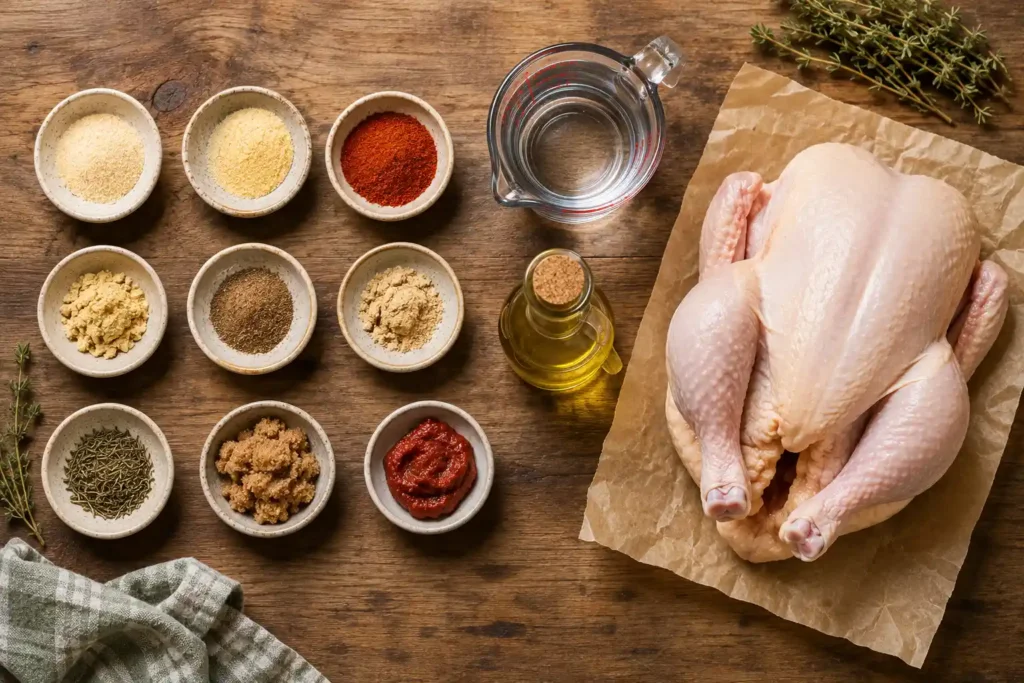
- Onion powder — the savory backbone of the marinade. Onion salt can be used instead if you reduce the added salt elsewhere in the recipe.
- Garlic powder — adds savory depth alongside the onion. Fresh minced garlic works too, though powder distributes more evenly through a liquid marinade.
- Tomato paste (or ketchup) — the ingredient most copycat recipes skip, and the one that gives the marinade its characteristic tangy, reddish-brown color. Ketchup is a fine substitute if you don’t have tomato paste on hand, since it already carries a bit of sweetness and acidity.
- Brown sugar — adds a subtle sweetness that balances the savory and tangy elements and helps the chicken skin caramelize nicely as it roasts.
- Paprika — for color and a mild, sweet-pepper warmth throughout the marinade.
- Ground allspice — a warm, slightly peppery-sweet spice that’s easy to skip but adds real depth; it’s part of what gives the marinade its distinctive background flavor rather than tasting like a generic poultry rub.
- Ground ginger — adds a gentle warmth in the background, similar to its role in the Swiss Chalet dipping sauce.
- Dried thyme — a classic herb pairing for roast chicken that rounds out the savory notes.
- Dry mustard powder — adds a subtle tang and depth; regular prepared mustard can substitute in a pinch, though the flavor will be slightly milder.
- Vegetable oil — helps the marinade coat the chicken evenly and promotes browning on the skin as it roasts.
- Water — thins the marinade to a consistency that can actually soak into the chicken rather than sitting on top like a paste.
Substitutions: For gluten-free, this marinade is naturally gluten-free as written, since it’s built from individual spices rather than a pre-made seasoning blend that might contain fillers. For a lower-sodium version, skip added salt and use onion powder instead of onion salt, seasoning to taste at the end instead. If you can’t find dry mustard powder, use 1.5 teaspoons of prepared yellow mustard in its place.
How to Make Swiss Chalet Chicken Marinade
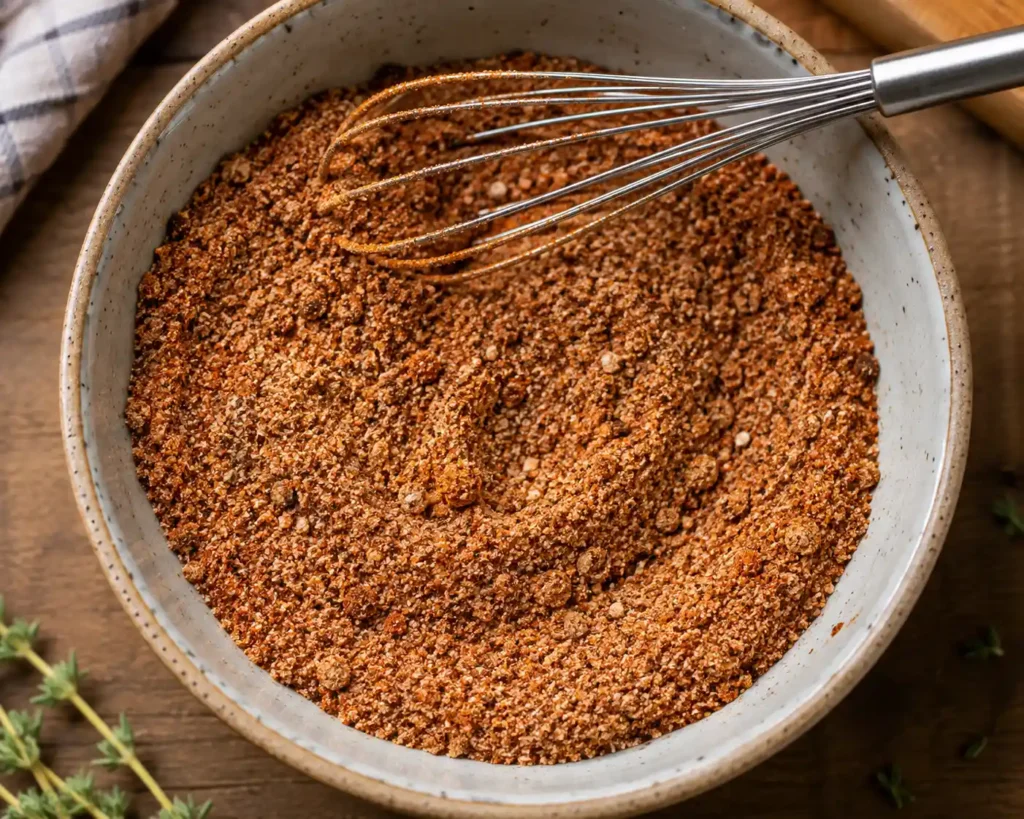
Step 1: Combine the dry spices.
In a small bowl, whisk together 2 teaspoons onion powder, 2 teaspoons garlic powder, 1 tablespoon brown sugar, 1 teaspoon paprika, 1 teaspoon dried thyme, 1/2 teaspoon ground allspice, 1/2 teaspoon ground ginger, 1/2 teaspoon dry mustard powder, and 1/2 teaspoon salt until evenly blended with no visible clumps.
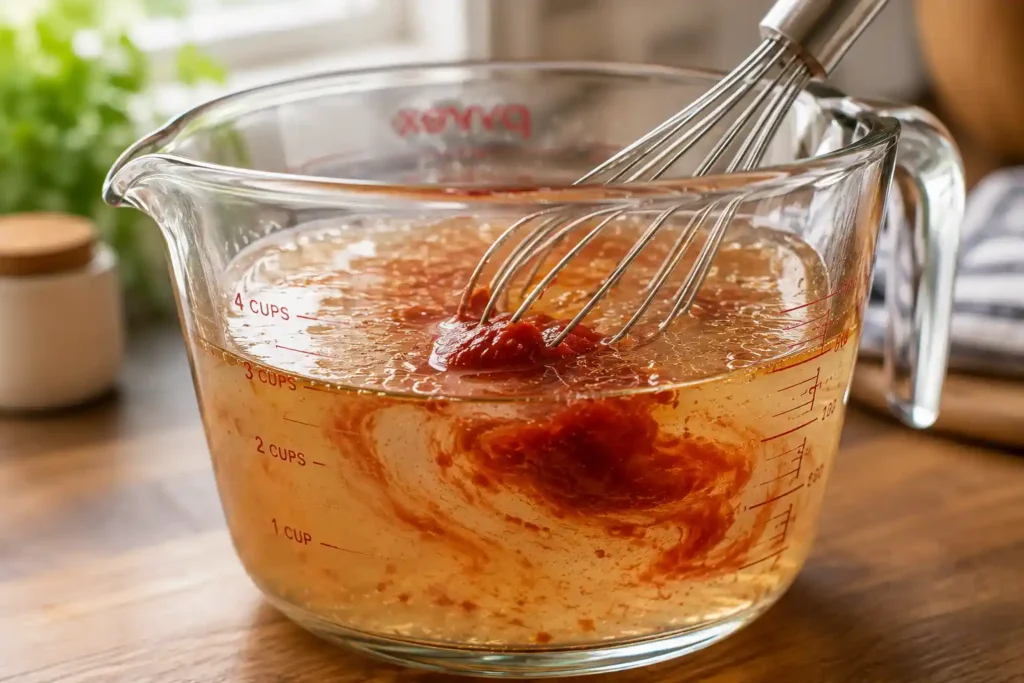
Step 2: Build the wet base.
In a medium bowl or large zip-top bag, combine 2 cups water, 1/4 cup vegetable oil, and 2 tablespoons tomato paste (or ketchup). Whisk or squeeze the bag until the tomato paste is fully dissolved into the liquid with no streaks remaining.
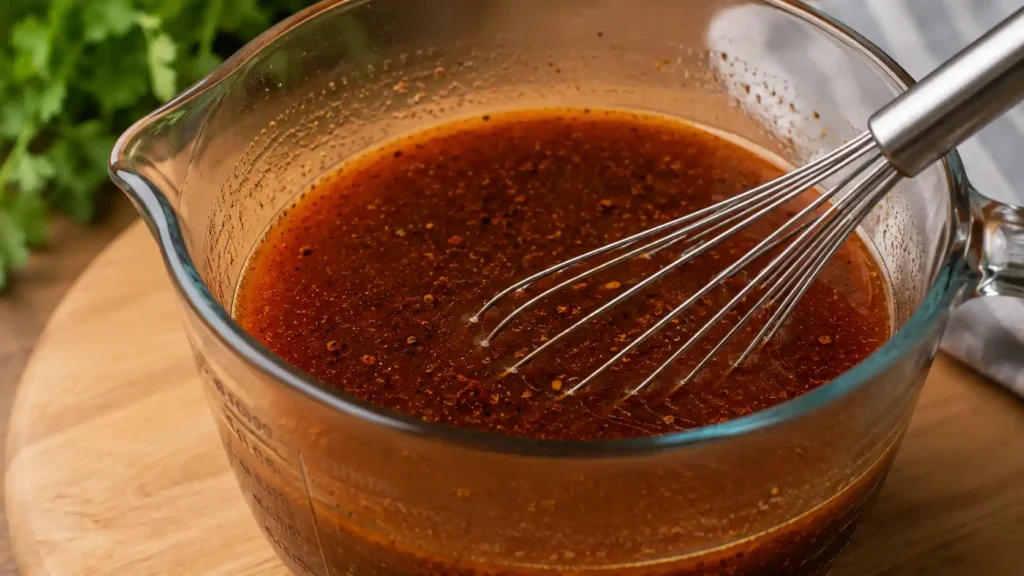
Step 3: Combine wet and dry ingredients.
Stir the dry spice mixture into the wet base until fully combined. The finished marinade should look like a thin, reddish-brown liquid — pourable, not thick or paste-like, since a runnier marinade penetrates the chicken more evenly than a thick one.
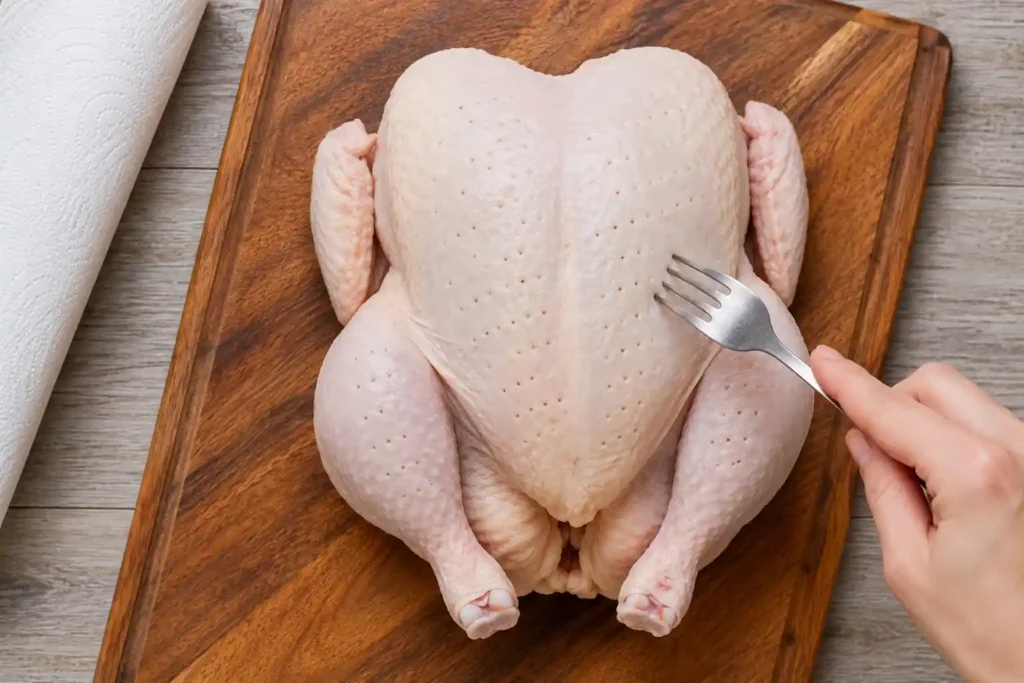
Step 4: Prep the chicken.
Pat a whole chicken (about 4 to 5 pounds) dry with paper towels, then use a fork or the tip of a sharp knife to poke holes all over the skin and thighs — this helps the marinade actually penetrate the meat instead of just coating the surface. If using chicken pieces instead of a whole bird, this step isn’t necessary; just make sure the pieces are patted dry.
Step 5: Marinate the chicken.
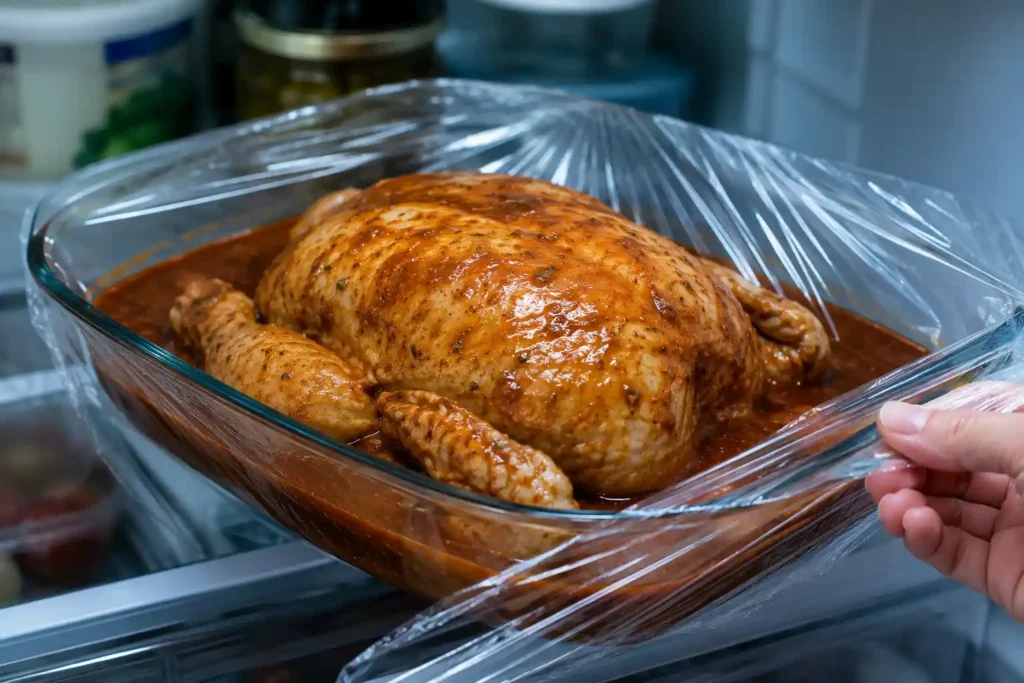
Place the chicken in a large zip-top bag or a deep dish and pour the marinade over it, making sure it’s fully coated. Seal or cover and refrigerate for at least 6 hours, though overnight (10 to 12 hours) gives noticeably better flavor penetration. Turn the bag or baste the chicken once partway through if you can, so the marinade reaches all sides evenly.
Step 6: Roast the chicken.
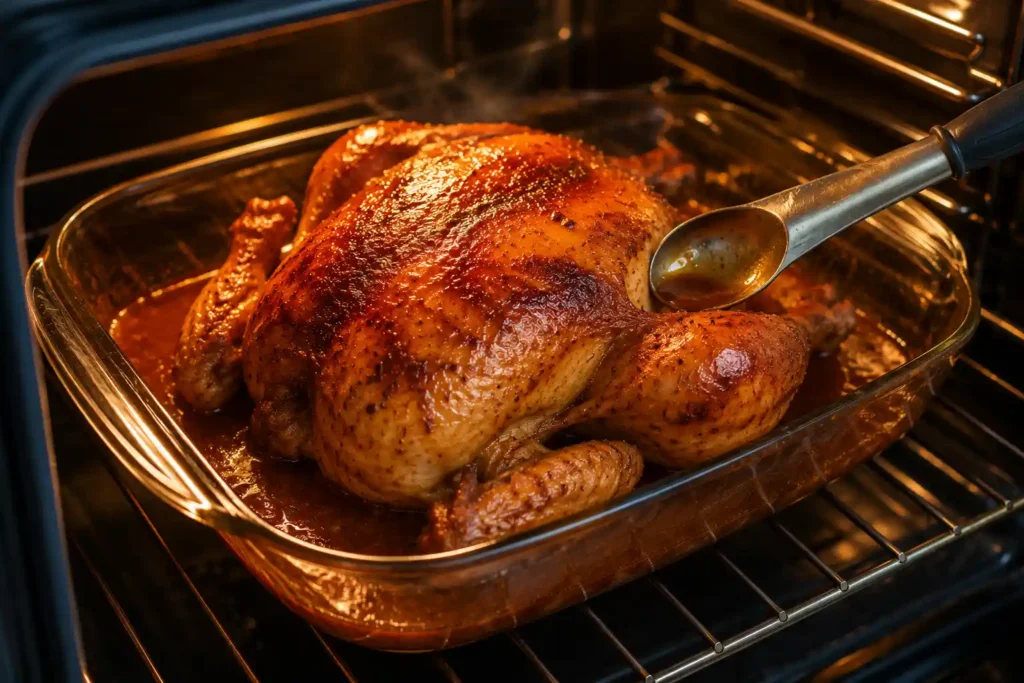
Remove the chicken from the marinade (discard the used marinade, or reserve a small amount separately before marinating if you want extra for basting) and place it in a roasting pan. Roast in a preheated 350°F oven for 20 minutes per pound, basting every 30 to 40 minutes with pan drippings, until a meat thermometer inserted into the thickest part of the thigh reads 165°F and the juices run clear. For a 5-pound chicken, this typically takes about 1 hour 40 minutes to 2 hours.
Step 7: Rest before carving.
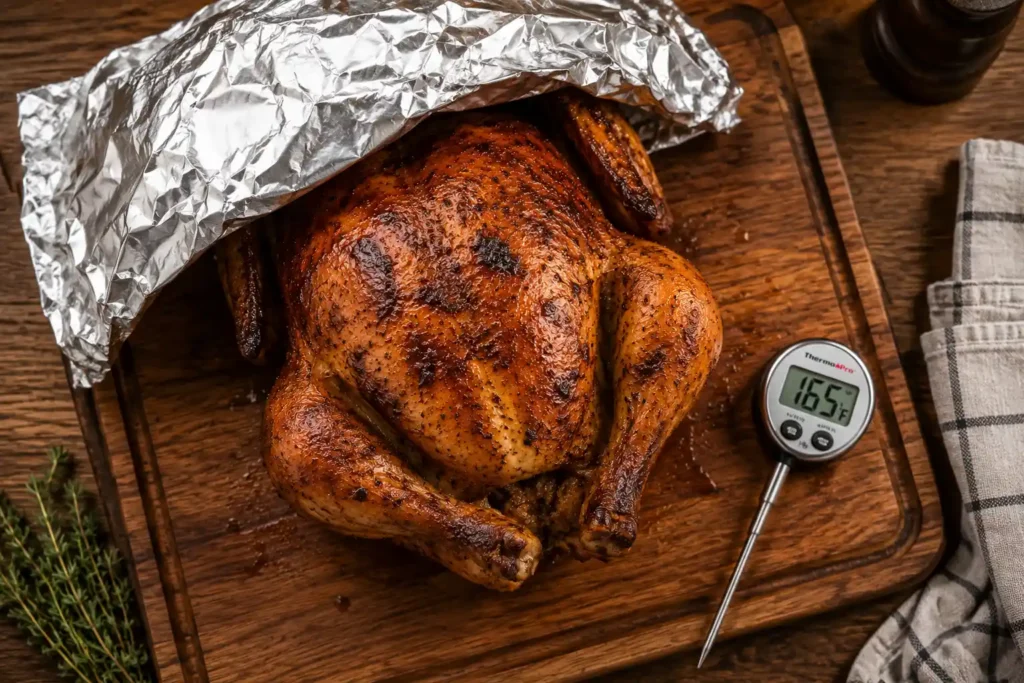
Let the chicken rest, loosely tented with foil, for 10 to 15 minutes before carving. This allows the juices to redistribute through the meat instead of running out onto the cutting board the moment you slice into it, keeping the chicken noticeably juicier.
Variations
Rotisserie Version: If you have a rotisserie attachment for your grill or oven, truss the marinated chicken securely and cook according to your rotisserie’s guidelines, typically around 350°F for roughly the same 20-minutes-per-pound timing, basting with reserved marinade or pan drippings as it turns for the most authentic result.
Grilled Version: For grilled chicken pieces instead of a whole bird, marinate bone-in, skin-on chicken thighs or drumsticks for 4 to 6 hours, then grill over medium heat (about 350–375°F) for 30 to 35 minutes, turning occasionally, until the internal temperature reaches 165°F.
Slow Cooker Version: Place marinated chicken pieces in a slow cooker with about 1/4 cup of the marinade poured over top, and cook on low for 5 to 6 hours or high for 3 to 4 hours, until the meat easily pulls from the bone. Note that the skin won’t crisp in a slow cooker, so this version is best for shredded chicken rather than a whole roasted presentation.
Chicken Pieces / Weeknight Version: Skip the whole chicken and marinate bone-in chicken breasts or thighs for just 2 to 3 hours if you’re short on time, then bake at 400°F for 35 to 40 minutes, until the internal temperature hits 165°F — a faster route to the same flavor profile.
Using the Packaged Mix: If you do manage to track down an actual Swiss Chalet Chicken Marinade Mix packet, the standard instructions are to combine the contents with water and vegetable oil according to the package directions, then marinate and roast the chicken the same way described above.
About the “Discontinued” Marinade Mix
If you’ve searched for the Swiss Chalet Chicken Marinade Mix and found conflicting information about whether it’s still available, here’s what’s actually going on: a specific older SKU (a 32-gram pouch, along with a reduced-sodium version) was listed as discontinued by Club House, the company that manufactures Swiss Chalet’s packaged seasoning mixes, dated March 2018. That’s likely the source of the “discontinued” chatter people have seen online.
However, current retailer listings — including Amazon, No Frills, Freshco, and Giant Tiger — show a Swiss Chalet Chicken Marinade Mix (32g) actively for sale as of recent searches, suggesting the product itself has continued in some form even if a specific older packaging or sodium variant was pulled. Availability can vary by region and retailer, and grocery stock changes over time, so if you can’t find it locally, this homemade version is a reliable way to get the same flavor without depending on finding a specific packet.
Tips for the Best Swiss Chalet Chicken Marinade
- Don’t skip the overnight marinating time if you can help it. A few hours will give you some flavor, but the difference between a 2-hour marinade and a 10-hour one is noticeable, especially in the deeper parts of the meat.
- Poke holes in the skin before marinating. This small step makes a real difference in how much flavor actually gets into the chicken instead of sitting on the surface.
- Baste with pan drippings, not just plain water or oil. The drippings pick up all the marinade flavor that’s cooked into the pan, and basting with them throughout roasting builds a deeper, more caramelized skin.
- Use a meat thermometer, not just cook time, to judge doneness. Oven variation and chicken size can shift the actual cook time by 15–20 minutes either direction — 165°F in the thickest part of the thigh is the only reliable doneness marker.
- Save some marinade separately for basting if you want extra flavor, since food safety means you shouldn’t reuse marinade that raw chicken has already sat in without boiling it first.
What to Serve With Swiss Chalet Chicken Marinade Chicken
- Roasted potatoes or fries — the classic pairing for a Swiss Chalet-style meal.
- A simple green salad with a light vinaigrette — to balance the richness of the roasted chicken skin.
- Dinner rolls — for soaking up any extra pan drippings or gravy.
- Homemade Swiss Chalet dipping sauce — for the full restaurant-style experience, drizzled alongside the finished chicken.
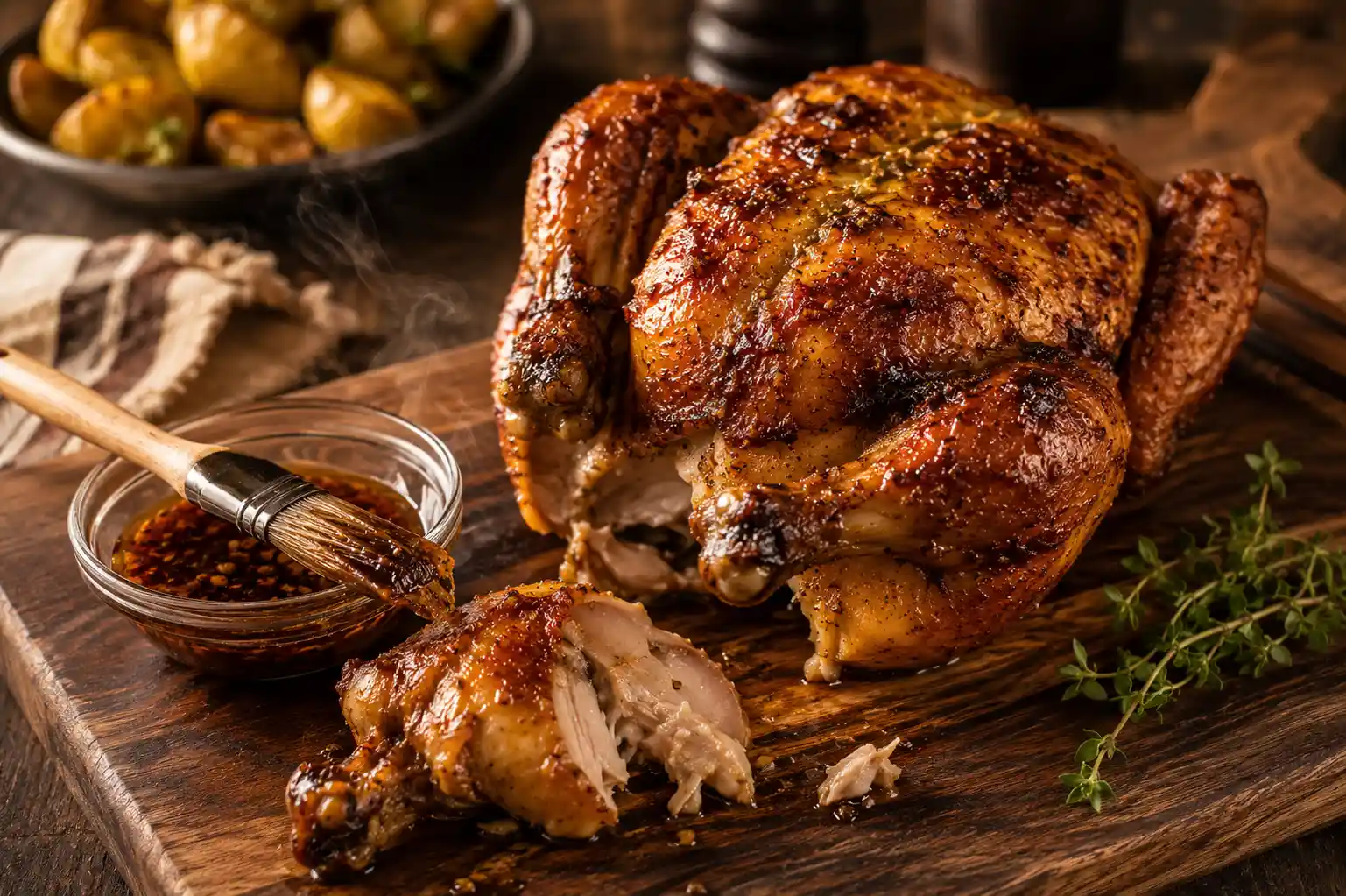

Copycat Swiss Chalet Chicken Marinade
A savory, slightly sweet and tangy chicken marinade inspired by the famous Canadian rotisserie chicken chain, built from real pantry spices instead of a hard-to-find packaged mix. Perfect for a whole roast chicken, grilled pieces, or the slow cooker.
Ingredients
Equipment
Method
- Whisk together all the dry spice ingredients in a small bowl until evenly combined.
- In a separate bowl or large zip-top bag, combine the water, vegetable oil, and tomato paste, mixing until fully dissolved.
- Stir the dry spice blend into the wet base until fully combined and pourable.
- Pat the chicken dry and poke holes all over the skin and thighs with a fork or knife tip.
- Place the chicken in a bag or deep dish, pour the marinade over it, and refrigerate for at least 6 hours or overnight.
- Remove the chicken from the marinade and roast at 350°F for about 20 minutes per pound, basting with pan drippings every 30–40 minutes, until internal temperature reaches 165°F.
- Rest the chicken, tented with foil, for 10–15 minutes before carving.
Video
Notes
Storage: Refrigerate leftover roasted chicken for up to 4 days; reheat gently at 300°F or in the microwave.
Freezing: Freeze marinated raw chicken in its marinade for up to 3 months; thaw in the fridge before roasting.
For rotisserie, grilled, slow cooker, or quick weeknight versions, see the Variations section in the full blog post.
If tomato paste isn’t on hand, ketchup works as a substitute in equal amounts.
Frequently Asked Questions
What’s actually in Swiss Chalet’s chicken marinade?
Swiss Chalet hasn’t published its exact proprietary recipe, but the packaged mix is intended to be combined with water and vegetable oil, and the flavor consistently comes across as savory and slightly sweet with a tangy, tomato-tinted undertone — pointing to a blend built on onion, garlic, tomato, brown sugar, and warm spices like paprika, allspice, and ginger, which is the profile this copycat recipe is built around.
Is the Swiss Chalet chicken marinade mix discontinued?
A specific older packaging SKU was listed as discontinued by the manufacturer in 2018, which is likely where the “discontinued” confusion comes from. Current retailer listings show a Swiss Chalet Chicken Marinade Mix still being sold as of recent searches, though availability can vary by store and region — this homemade version is a reliable backup either way.
What are the instructions for using the packaged Swiss Chalet marinade mix?
The packaged mix is designed to be combined with water and vegetable oil according to the directions printed on the package, then used to marinate chicken before roasting, similar to how this homemade version is used.
How long should I marinate the chicken?
At least 6 hours, but overnight (10 to 12 hours) gives noticeably better flavor penetration, especially into the thicker parts of the meat like the thighs and breast.
Can I make this ahead of time?
Yes — the marinade itself can be mixed up to 3 days ahead and stored in an airtight container in the fridge. You can also marinate the chicken up to 24 hours in advance without any loss of quality.
How do I store and reheat leftover roasted chicken?
Refrigerate leftover chicken in an airtight container for up to 4 days. Reheat gently in a 300°F oven, covered with foil, until warmed through, or in the microwave in short bursts to avoid drying out the meat.
Can I freeze marinated chicken?
Yes — you can freeze the chicken directly in the marinade (in a sealed freezer bag) for up to 3 months. Thaw it in the fridge for 24 to 48 hours before roasting; the chicken will continue absorbing marinade flavor as it thaws.
Is this recipe gluten-free?
Yes, as written this marinade is naturally gluten-free since it’s built from individual dry spices rather than a pre-made blend that might include gluten-containing fillers or anti-caking agents.