Your favorite restaurant recipes, recreated at home — tested and easy to follow.


Wingstop sells ranch by the sixteen-ounce container. Not a packet, not a two-ounce cup — a pint, as a standard menu size, and the company has leaned into it hard enough to release a 32-ounce collectible cup for National Ranch Day. That tells you everything about how people treat this stuff. It isn’t a condiment at Wingstop. It’s the reason a lot of people place the order.
What actually separates it from a bottle of supermarket ranch is texture more than flavor. It’s housemade in the store rather than shipped in thick from a factory, and it’s noticeably thinner — pourable, not gloopy — so it runs into the crevices of a wing instead of sitting on top in a stubborn lump. It’s also tangier and saltier than most bottled ranch, with the dried-herb flavor fully bloomed rather than raw and dusty. Every one of those qualities comes down to two variables you control at home: the mayo-to-buttermilk ratio and how long you let it sit.
Most copycat recipes out there stop at “mayo, buttermilk, ranch packet, done,” which gets you 80% of the way and leaves you guessing on the part that actually goes wrong. So this one is built around the ratios, with a fix for every way I’ve seen a batch fail — too salty, too thin, clumpy, or flat. It takes about five minutes to mix. If you’re making it for wing night, my Ninja Woodfire Grill chicken wings are what I usually have going while this chills.
Why This Copycat Works
- A 1:1 mayo-to-buttermilk ratio, which lands on the thin, dippable consistency the restaurant version has instead of the thick bottled texture.
- The seasoning goes into the mayonnaise first as a paste — that’s what stops the clumps everyone complains about.
- Five minutes of mixing, then at least an hour in the fridge.
- Hardest part: salt. It’s easy to overshoot and impossible to undo, so measure the seasoning rather than eyeballing it.
Key Ingredients & Substitutions
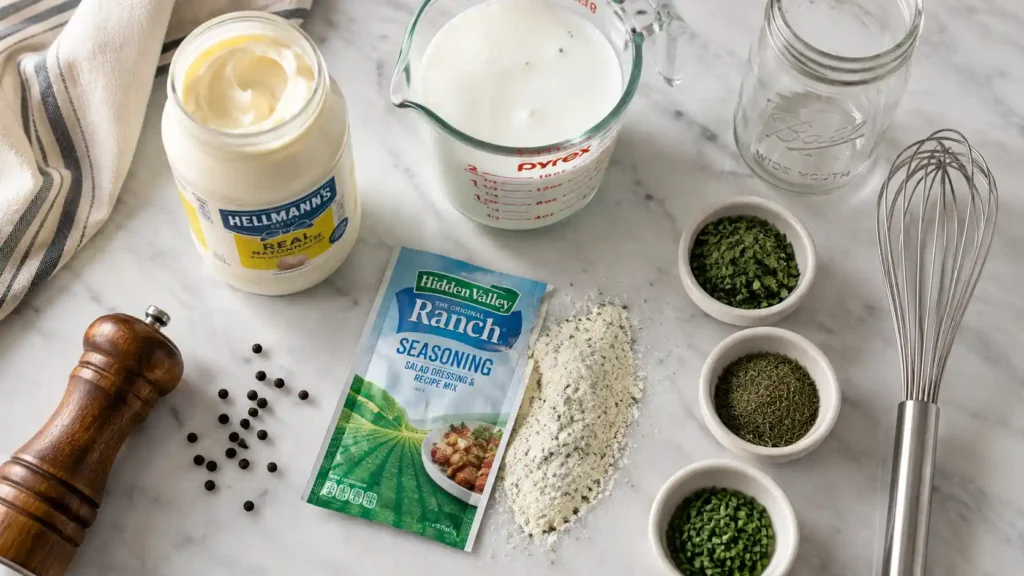
Full-fat mayonnaise (richness and body). This is the backbone, and its flavor is most of the finished flavor, so use a plain full-fat brand you actually like. Light mayo makes a thin, sharp ranch that tastes watery next to the original — if you want it lighter, swap in Greek yogurt for part of the mayo instead, which keeps some body. Vegan mayonnaise works one for one if you’re going dairy-free.
Cold buttermilk (tang and the thin texture). Real cultured buttermilk does two jobs: it thins the mayo to dipping consistency and adds a lactic tang that plain milk can’t replicate. Use it cold straight from the fridge — room-temperature buttermilk makes a looser, slacker dressing. It lives with the milk and cream in the dairy case. No buttermilk? See the substitutions section below; there are two that genuinely work and one that doesn’t.
Dry ranch seasoning mix (the flavor). A standard 1-ounce packet of ranch salad dressing and seasoning mix is what most home versions lean on, and it’s what makes the flavor instantly recognizable. It brings dried buttermilk solids, herbs, onion and garlic powder, salt, and a little thickener all in one. If you can’t get the packets where you live — a common problem outside North America — I’ve included a scratch blend below that gets very close.
Coarse black pepper. A small amount, added separately. Packet mixes are light on pepper and the restaurant version has a faint bite. Grind it coarse so you can see the flecks.
Optional: sour cream. A couple of tablespoons adds a rounder tang and a little cling. It moves the sauce slightly away from the restaurant texture, so treat it as a preference rather than an accuracy upgrade.
How to Make Wingstop Ranch at Home
You’ll make a thick seasoned paste with the mayonnaise first, then thin it out with cold buttermilk to the exact consistency you want, then chill it. Active time is about five minutes. The paste step matters more than it sounds — dry ranch mix dropped into thin liquid seizes into little pellets that never fully dissolve, and those pellets are the gritty specks people find in their finished dressing three days later.
Step 1: Make a Seasoned Mayo Paste
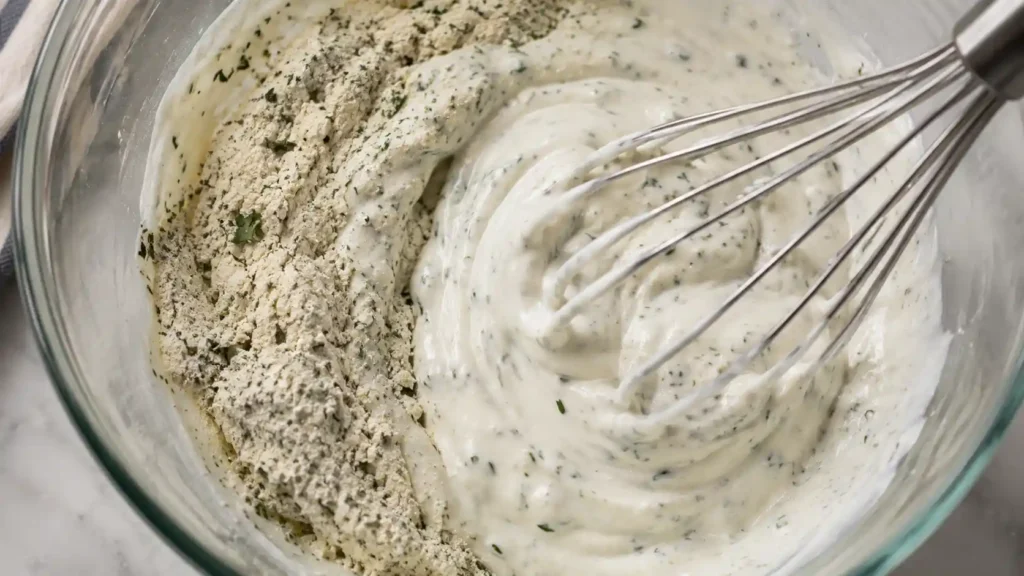
Put 1 cup (about 240 g) full-fat mayonnaise in a medium bowl. Add one 1-ounce packet of dry ranch seasoning mix — roughly 3 tablespoons — plus 1/4 teaspoon coarsely ground black pepper. Whisk for about 30 seconds until the mixture is completely uniform, a pale green-flecked cream with no dry pockets clinging to the bowl. It will be thick and stiff at this stage, almost like a spread. That’s exactly what you want; the thickness is what forces the powder to disperse.
Chef’s Note: If you’ve ever made ranch that had chewy specks in it, this is the step you skipped. Dry mixes contain gums that gel the instant they hit liquid, sealing each clump so the inside stays powder. Mayonnaise is thick and low in free water, so it coats the particles and separates them before they can gel.
Step 2: Stream In the Cold Buttermilk
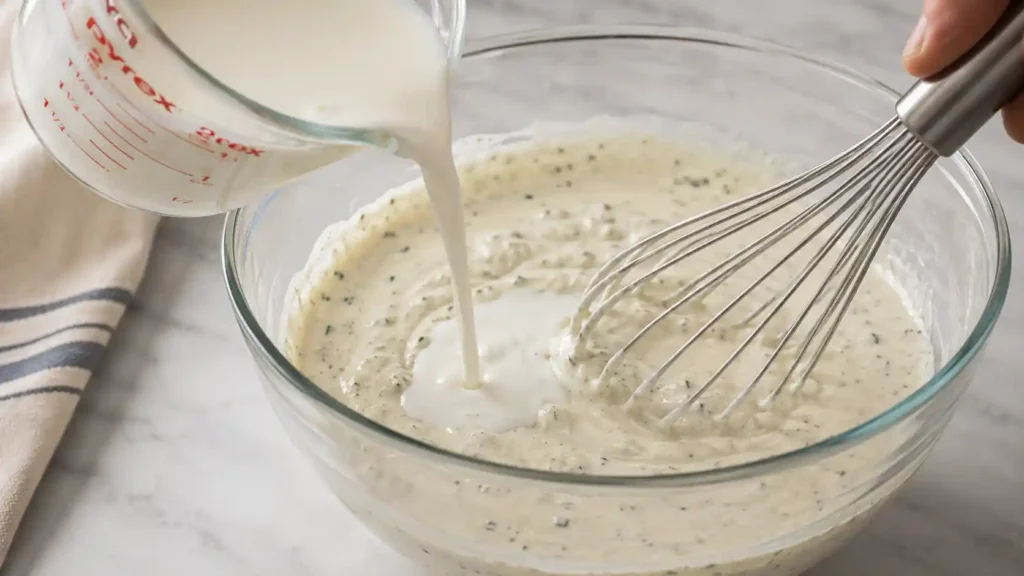
Add 1 cup (240 ml) cold buttermilk in three or four additions, whisking smooth after each one before adding more. Adding it all at once makes the mixture look broken and takes twice as long to bring together. After the last addition you should have a smooth, pourable dressing with visible herb flecks throughout. Total whisking time is about a minute.
Step 3: Adjust the Consistency
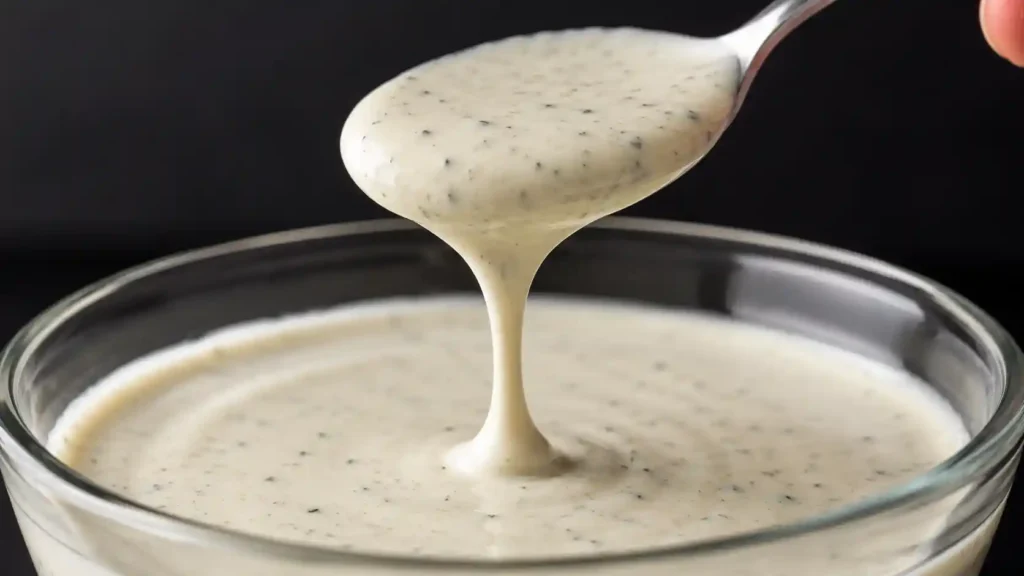
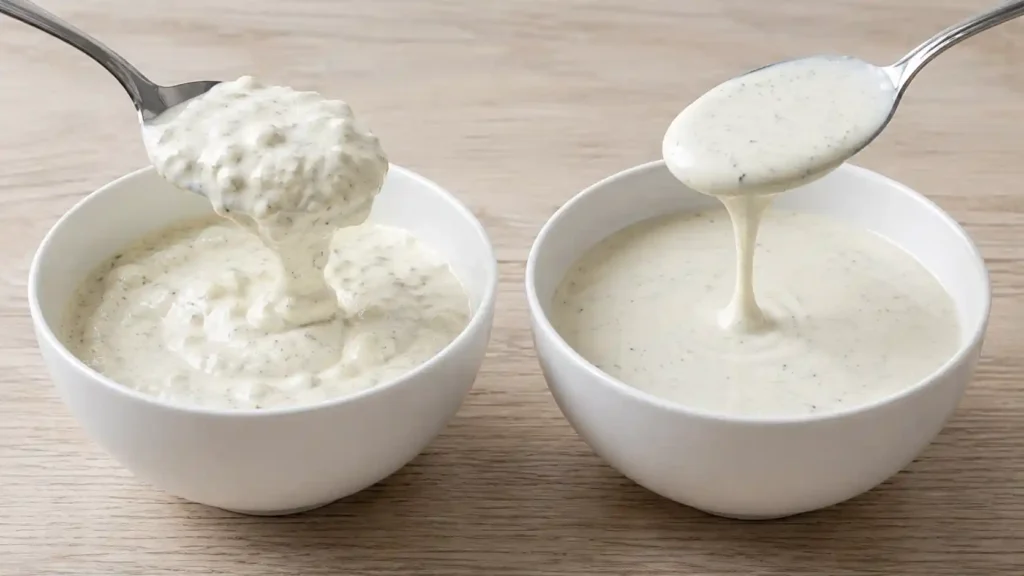
Lift a spoonful and let it fall back into the bowl. Restaurant-style ranch ribbons off in a steady stream and settles back into the surface within two or three seconds — it should not plop, and it should not run off like milk. If it’s thicker than that, whisk in buttermilk a tablespoon at a time. If it’s thinner, add mayonnaise a tablespoon at a time. Remember that it thickens meaningfully overnight, so err slightly thin.
Step 4: Chill Before You Judge It
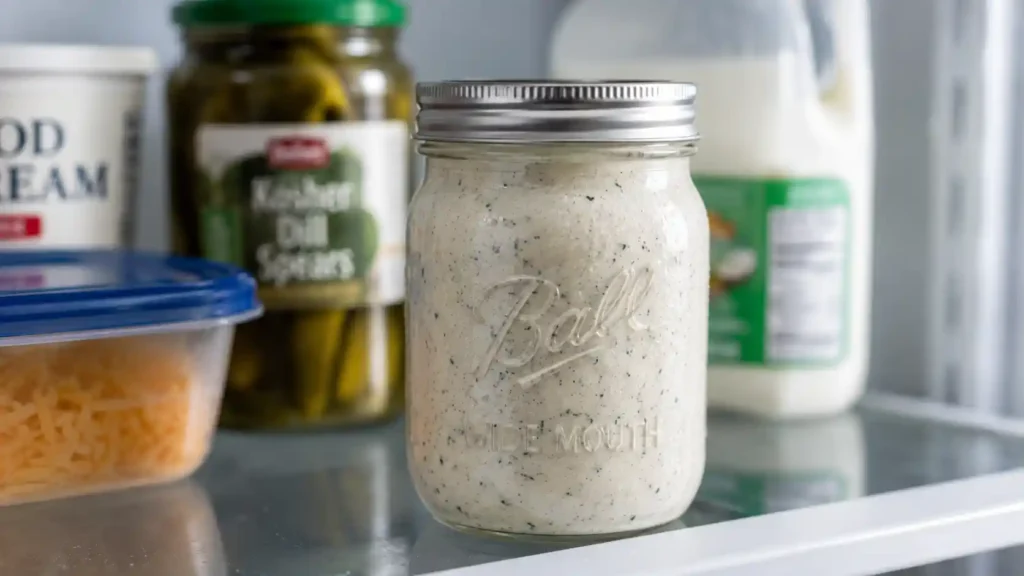
Transfer to an airtight jar and refrigerate at least 1 hour, ideally 4. The dried parsley, dill, and chives in the mix need time to rehydrate; before that they taste like dust and sit on the tongue instead of dissolving into the dressing. The salt also mellows and distributes. Stir before serving. Fresh out of the bowl it tastes sharp and one-dimensional, and that’s expected, not a failure.
What Makes the Restaurant Version Taste Different
Two things, and neither is a secret ingredient. The first is that it’s made in-store rather than bottled, so it hasn’t been formulated for months of shelf stability — commercial bottled ranch is thickened heavily to survive shipping and to look substantial on a salad, and that thickness is precisely what makes it feel wrong next to a wing. The second is that Wingstop serves it in genuinely large portions, which changes how you experience it: a thin dressing in a big cup is built for dunking a whole wing, not for scraping a teaspoon out of a tiny tub.
There’s a practical lesson in that for the home version. If your ranch is delicious but somehow doesn’t feel like Wingstop’s, the flavor is probably fine and the texture is the problem.
Thin it further than feels right. That’s the whole trick.
Getting the Ratio Right
This is where recipes online disagree wildly, and it’s why two people can follow “the same” copycat and get very different results. Some use one packet per two cups of liquid; others use two, which is roughly double the salt. Here’s how the common ratios actually behave, all based on one 1-ounce seasoning packet.
| Mayo : Buttermilk | Result | Best for |
|---|---|---|
| 1 : 0.5 | Thick, spoonable | Spreading on sandwiches, veggie dip |
| 1 : 1 | Pourable, clings to a wing | The restaurant texture — my default |
| 1 : 2 | Thin, almost drinkable | Salad dressing, drizzling over fries |
If you want the same flavor at a thinner consistency without watering down the seasoning, scale the packet with the total volume rather than with the mayo — about one packet per two cups of finished dressing keeps the salt where it should be.
No Buttermilk, No Packet, No Problem
No buttermilk. Whisk 1 tablespoon of white vinegar or lemon juice into 1 cup of whole milk and let it stand 10 minutes until it looks slightly curdled. It won’t have real cultured buttermilk’s depth, but it delivers the acidity and the thinness, which are the two jobs that matter here. Thinned sour cream also works — 3/4 cup sour cream loosened with 1/4 cup milk. What doesn’t work is plain milk with nothing added; the ranch comes out flat and tastes like seasoned mayonnaise.
No seasoning packet. This comes up constantly from readers in the UK and elsewhere, where those mixes aren’t reliably stocked. Make your own blend: 1 tablespoon dried parsley, 1 1/2 teaspoons dried dill, 1 1/2 teaspoons onion powder, 1 teaspoon garlic powder, 1 teaspoon dried chives, 3/4 teaspoon fine salt, 1/2 teaspoon black pepper, and 1/4 teaspoon sugar. Use the whole batch in place of one packet. It’s slightly less salty and won’t thicken quite as much, since it has no gums, so lean toward the thicker end of the ratio table.
Dairy-free. Vegan mayonnaise plus unsweetened plain non-dairy milk soured with a teaspoon of vinegar gets you a credible version. If you’d rather have a creamy dip that’s dairy-free by design rather than by substitution, my Tim Hortons chipotle sauce is built on a mayo base with no milk in it at all.
Fixing a Batch That Went Wrong
It’s too salty. The most common complaint, and it usually means two packets went into two cups. You can’t remove salt, but you can dilute: add mayonnaise and buttermilk in equal amounts, a quarter cup each, until it’s back in range. Make a note of what your packet size actually was.
It has gritty or chewy specks. The dry mix hit the buttermilk before the mayo. Next batch, make the paste first. For the current one, an immersion blender will break most of them down.
It’s too thin and won’t thicken. Whisk in mayonnaise a tablespoon at a time. Give it an hour in the fridge before adding more — the gums in the packet keep hydrating for a while and it will firm up on its own.
It tastes flat and herby-dusty. It hasn’t rested long enough. Give it four hours and taste again before adjusting anything.
It’s separated with a watery layer. Normal after several days as the buttermilk settles. Whisk it back together. If it smells sour beyond the usual tang, throw it out.
Common mistake: Salting to taste while it’s fresh. Ranch reads under-seasoned in the first ten minutes because the dried herbs haven’t hydrated and the salt hasn’t distributed. Add salt then and you’ll have an inedibly salty batch by morning. Season to the measurements, chill, and only adjust after.
Calories, Carbs, and Whether It Fits Keto
Published nutrition data for the restaurant ranch dip puts a serving in the low 300-calorie range, with around 34 grams of fat and only about 2 grams of carbohydrate. That’s a big number, but it’s for a full dip container, not a tablespoon — the fat is doing all the work and the carbs are almost nil.
Which answers the keto question directly: yes, in the sense that ranch is a low-carb, high-fat sauce and a couple of tablespoons will barely register on a carb count. Buttermilk contributes a little lactose, so if you’re tracking strictly, the scratch-blend version made with mayonnaise and thinned sour cream is even lower.
For a lighter version at home, replace half the mayonnaise with plain Greek yogurt and keep everything else the same. You lose some richness and gain tang, and the texture thins slightly, so start at the thicker end of the ratio table. One thing worth knowing regardless of diet: the restaurant version contains egg, milk, and soy, so it isn’t an option for anyone avoiding those, and Wingstop notes that guests with serious allergies should check with the restaurant directly.
Storage, Batch Size, and Wing Night Math
Store it in an airtight glass jar in the coldest part of the fridge, not the door. It keeps roughly as long as the buttermilk you made it with — check that date and use it as your guide, since a carton opened last week gives you a much shorter window than one opened today. Always serve with a clean spoon and never dip food directly into the storage jar; contamination is what spoils a dairy sauce fastest.
Don’t freeze it. The buttermilk and mayonnaise both break on thawing and you get a grainy, weeping mess that no amount of whisking recovers.
For a crowd, plan generously — this is a dressing people go through faster than they expect. A double batch is about a quart and takes no longer to make. It’s also better on day two, which makes it a good thing to knock out the night before alongside something like a make-ahead spinach dip.
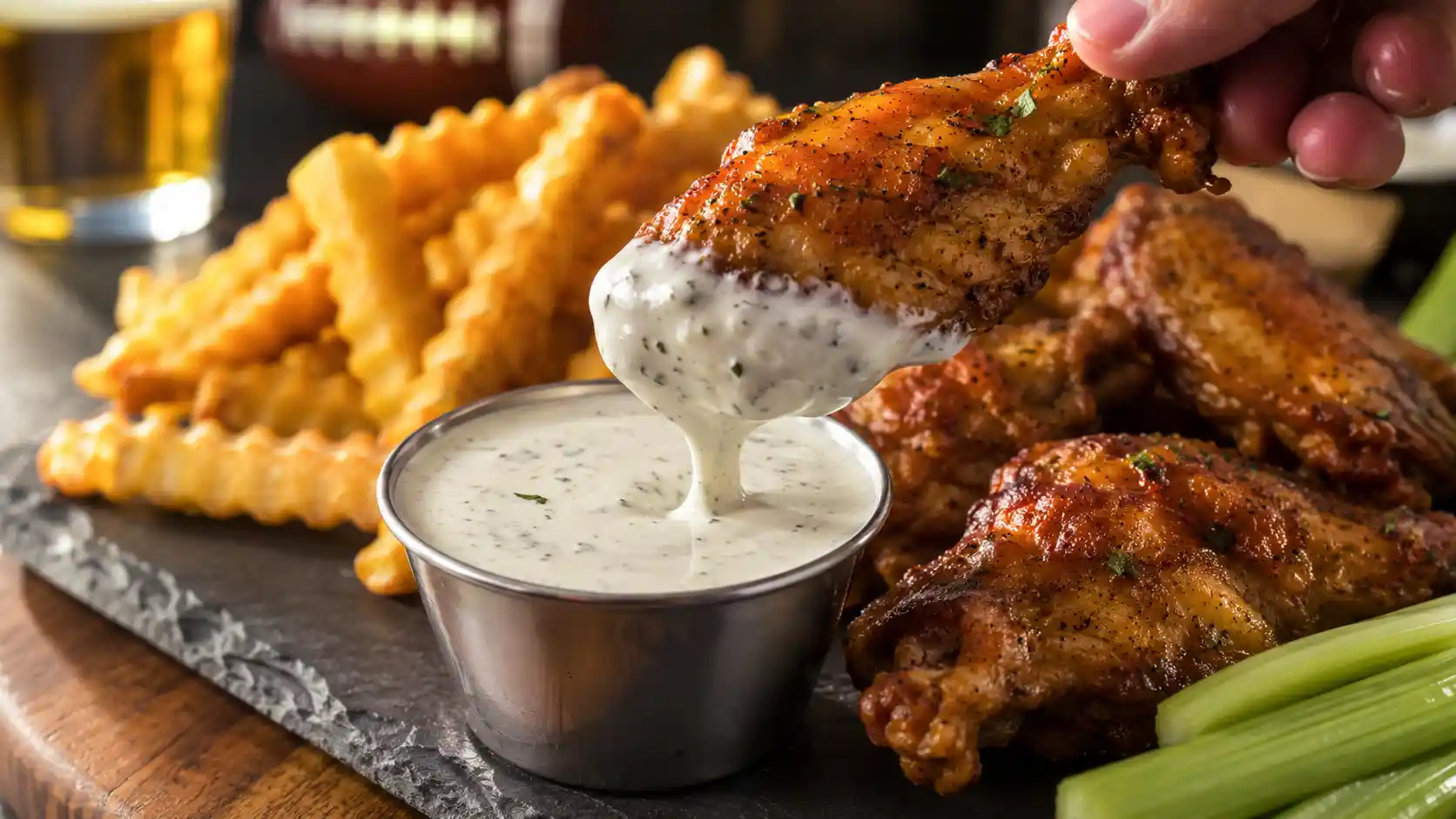
Beyond wings, it belongs on crinkle fries, celery and carrot sticks, pizza crusts, buffalo chicken wraps, and as a salad dressing straight from the jar. It’s also a good anchor for a snack board next to sharp cheddar and homemade Triscuit-style crackers.
Two Tools Worth Having
A bowl and a whisk are genuinely all you need, and the cheap ones work fine. This is one of the few recipes where I’d tell you not to spend money.
That said, two things earn their place. A wide-mouth mason jar is better than a bowl for storage because you can whisk right in it, it seals properly, and glass doesn’t hold onto garlic and onion smells the way plastic does. And a small immersion blender is the one piece of gear that meaningfully changes an outcome here — it rescues a clumpy batch in about ten seconds and produces a slightly silkier texture than whisking does. A squeeze bottle is a nice extra if you’re serving a crowd, since ranch at this consistency squeezes cleanly and it stops six people from double-dipping into your jar.

Copycat Wingstop Ranch
A thin, tangy, dippable ranch that matches the restaurant texture rather than the thick bottled kind. Mayonnaise, cold buttermilk, and a ranch seasoning mix, whisked in the right order so it never goes clumpy. Five minutes to make, one hour to chill, and better the next day.
Ingredients
Equipment
Method
- In a medium bowl, whisk the mayonnaise with the ranch seasoning mix and black pepper for about 30 seconds, until the mixture is a uniform thick paste with no dry pockets against the sides of the bowl.
- Add the cold buttermilk in three or four additions, whisking smooth after each before adding more. The finished dressing should be pourable with visible herb flecks throughout.
- Check the consistency: a spoonful should ribbon back into the bowl and settle within two or three seconds. Add buttermilk a tablespoon at a time to thin, or mayonnaise a tablespoon at a time to thicken. Err slightly thin, since it firms up overnight.
- Transfer to an airtight jar and refrigerate at least 1 hour, ideally 4, before serving. Stir before use.
Video
Notes
Keeps in an airtight jar in the fridge for roughly as long as the buttermilk you used — check that carton’s date. Always use a clean utensil.
Do not freeze; buttermilk and mayonnaise both break on thawing.
No buttermilk? Whisk 1 tablespoon white vinegar or lemon juice into 1 cup whole milk and rest 10 minutes. Plain milk alone won’t work.
For the no-packet, dairy-free, and lighter Greek yogurt versions, see the substitutions covered above.
Season to the written measurements and adjust only after chilling — it tastes under-seasoned when fresh and correct the next day.
Frequently Asked Questions
What is Wingstop ranch actually made of?
Wingstop describes its ranch as housemade and prepared in-store rather than shipped in bottled, and published allergen information lists egg, milk, and soy. That points to a standard buttermilk ranch built on a mayonnaise base with a dry seasoning blend. The company has never released measurements, so every copycat online, including mine, is a reverse-engineered approximation rather than the official formula.
Why is my homemade version thicker than Wingstop’s?
Because you almost certainly need more buttermilk. Bottled supermarket ranch is thickened heavily for shelf stability, and most home recipes inherit that texture. Restaurant-style ranch is thin enough to ribbon off a spoon and settle back within a couple of seconds. Add buttermilk a tablespoon at a time until it pours, and remember it thickens again overnight, so stop slightly thinner than you think you want.
Can I make wingstop ranch with no buttermilk?
Yes, with the right substitute. Whisk 1 tablespoon of white vinegar or lemon juice into 1 cup of whole milk and let it stand about 10 minutes until it looks slightly curdled, then use it exactly as you would buttermilk. Thinned sour cream also works well, using 3/4 cup sour cream loosened with 1/4 cup milk. What does not work is plain milk with nothing added, which leaves the ranch tasting flat.
How much ranch seasoning should I use per batch?
One standard 1-ounce packet, roughly 3 tablespoons, per two cups of finished dressing. This is where most home batches go wrong, since some recipes call for two packets in the same volume and the result is aggressively salty. If you scale the recipe thinner for salad dressing, scale the seasoning with the total volume rather than with the mayonnaise alone.
Why does my ranch have gritty specks in it?
The dry mix went into thin liquid instead of into the mayonnaise. Ranch seasoning packets contain gums that gel the instant they touch water, sealing each clump so the powder inside never dissolves. Always whisk the seasoning into the thick mayonnaise first to make a paste, then add buttermilk gradually. An immersion blender will rescue a batch that has already clumped.
Is Wingstop ranch keto-friendly, and how many calories is it?
Published nutrition data lists a ranch dip serving in the low 300-calorie range with around 34 grams of fat and only about 2 grams of carbohydrate, so it is very low in carbs and fits a ketogenic diet comfortably in normal portions. Keep in mind that figure is for a full dip container, not a tablespoon. For an even lower-carb homemade version, use the scratch seasoning blend with mayonnaise and thinned sour cream instead of buttermilk.
How long does homemade ranch keep, and can I freeze it?
Roughly as long as the buttermilk you made it with, so check that carton’s date and use it as your guide rather than a fixed number of days. Store it in a sealed glass jar in the coldest part of the fridge, not the door, and always serve with a clean spoon. Do not freeze it. Both the buttermilk and the mayonnaise break on thawing into a grainy, weeping texture that whisking cannot fix.
How can I make it if I cannot buy ranch seasoning packets?
Mix your own: 1 tablespoon dried parsley, 1 1/2 teaspoons dried dill, 1 1/2 teaspoons onion powder, 1 teaspoon garlic powder, 1 teaspoon dried chives, 3/4 teaspoon fine salt, 1/2 teaspoon black pepper, and 1/4 teaspoon sugar, used in place of one packet. It comes out slightly less salty and will not thicken as much, since it contains no gums, so start at the thicker end of the mayo-to-buttermilk ratio. Give it a full four hours in the fridge so the dried herbs rehydrate properly.