
Your favorite restaurant recipes, recreated at home — tested and easy to follow.


If you’ve ever flipped over a box of Triscuits at the grocery store, you’ve probably done a double take — whole grain wheat, oil, sea salt. That’s it. Three ingredients, and somehow they turn into that dense, woven, seriously satisfying crunch that’s been sitting on cheese boards and snack trays for over a century. It seems almost too simple to be real, which is exactly why so many home cooks want to know how do they make Triscuit crackers, and whether that woven texture is something you can actually pull off in a regular kitchen.
The truth is, the original factory process involves cooking whole wheat berries down into a mash, shredding them into fine strands, and pressing those strands through patterned rollers that “weave” them together before baking — which obviously isn’t something you’re replicating with a stand mixer and a sheet pan. But you don’t need the industrial version to get 90% of the way there. This homemade Triscuit cracker recipe uses a whole wheat dough, rolled thin and scored in a crosshatch pattern, to mimic that same rustic, fibrous bite and toasty wheat flavor, minus the factory equipment.
What you get at the end is a genuinely good cracker: crisp, a little nutty, sturdy enough to hold a slice of cheddar or a scoop of hummus without snapping in your hand, and completely customizable with herbs, seeds, or a hit of garlic if you want to riff on it. It takes about 45 minutes start to finish, most of which is hands-off baking time, and it makes way more sense once you understand what’s actually happening at each step — so let’s get into it.
Key Ingredients & Substitutions
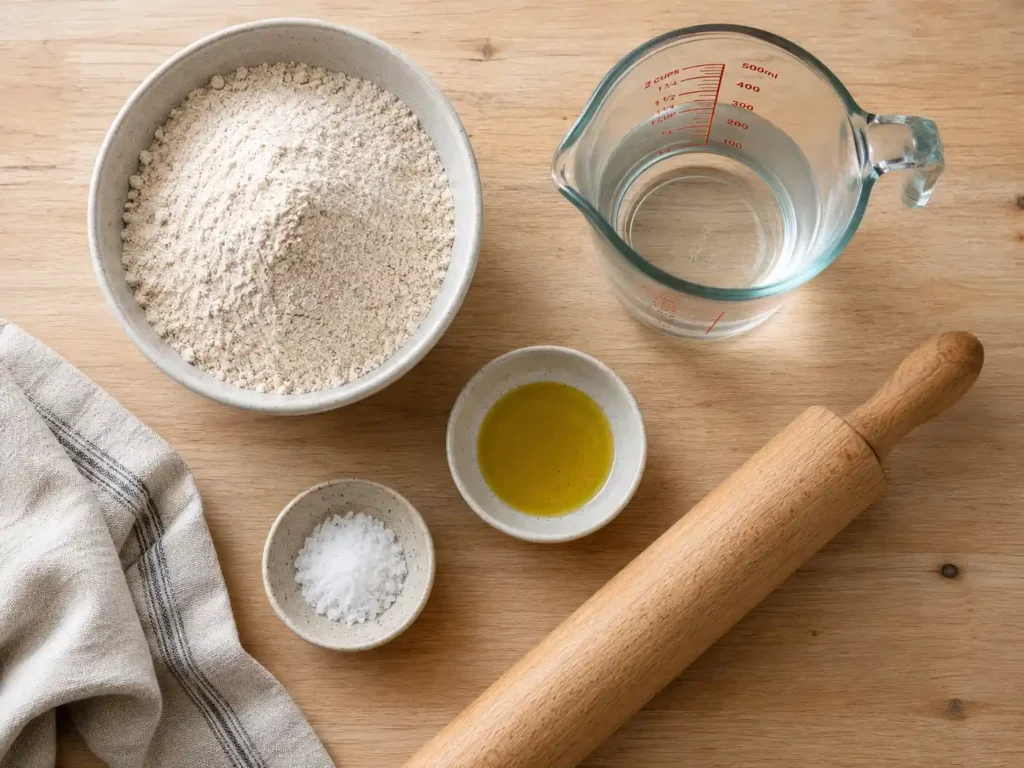
Whole wheat flour — This is the backbone of the recipe and what gives these crackers their nutty, slightly sweet wheat flavor and that dense, fibrous texture real Triscuits are known for. Don’t swap in all-purpose flour if you can help it; it’ll bake up softer and paler, losing the rustic bite that makes this cracker recognizable. If you want a lighter cracker, you can do a 50/50 blend of whole wheat and all-purpose, but go 100% whole wheat for the most accurate copycat.
Water — Just enough to bring the flour together into a firm, rollable dough. Add it gradually; whole wheat flour absorbs liquid differently batch to batch, so you may need a splash more or less than the recipe calls for.
Olive oil (or a neutral oil) — This stands in for the canola oil used in the real thing. Oil is what keeps the cracker from turning into a rock-hard biscuit — it tenderizes the dough just enough and helps the edges crisp up golden in the oven. Any neutral oil works fine (avocado oil, canola, or a light olive oil); just avoid anything with a strong, overpowering flavor like a robust extra-virgin olive oil, which can compete with the wheat.
Fine sea salt — For seasoning the dough itself, plus a light sprinkle on top before baking for that classic salty finish. Kosher salt works too, just use slightly less by volume since the flakes are bigger.
Optional flavor add-ins — A pinch of garlic powder, onion powder, or dried herbs (rosemary and cracked pepper are popular real-life Triscuit flavors) can be worked right into the dough if you want a seasoned version instead of the plain original.
How to Make Homemade Triscuit Crackers at Home
Step 1: Make the Dough
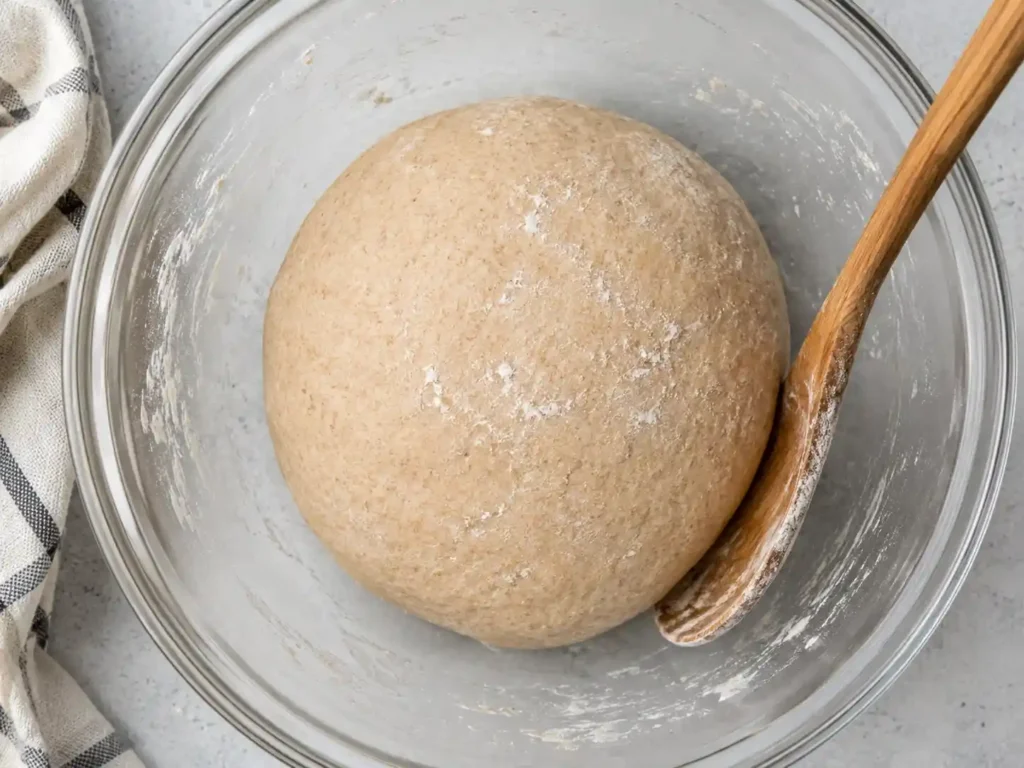
In a medium mixing bowl, whisk together 1 ½ cups whole wheat flour and ½ teaspoon fine sea salt. Make a well in the center and add 2 tablespoons olive oil, then slowly pour in about ⅓ cup water, mixing with a fork as you go. Once it starts clumping, switch to your hands and knead right in the bowl for about a minute, just until it comes together into a firm, slightly stiff dough — it should feel more like pie dough than bread dough, not tacky or sticky. If it’s too dry and crumbly, add water a teaspoon at a time; if it’s sticky, work in a little extra flour.
Step 2: Rest the Dough
Cover the bowl with a clean kitchen towel or plastic wrap and let the dough rest at room temperature for 15 minutes. This isn’t optional — resting relaxes the gluten in the whole wheat flour, which makes the dough much easier to roll out thin without it springing back or tearing. Skipping this step is the number one reason homemade cracker dough fights you during rolling.
Step 3: Roll It Thin
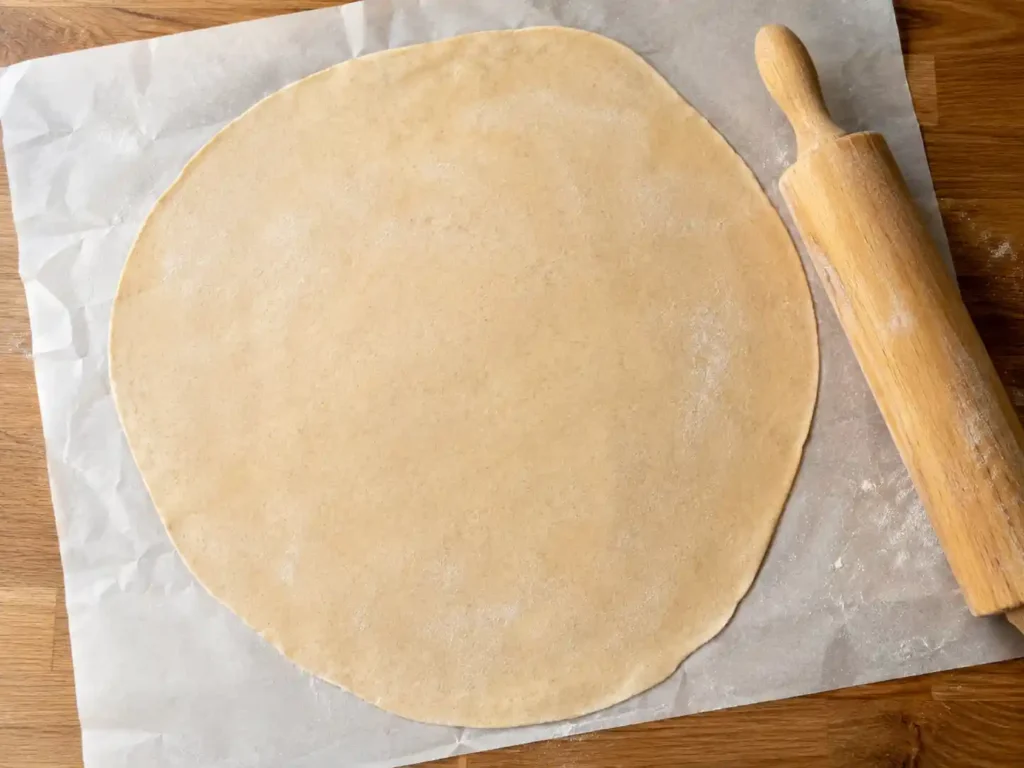
Preheat your oven to 375°F (190°C) and line a large baking sheet with parchment paper. Place the rested dough between two sheets of parchment paper and roll it out as thin as you can manage — aim for about ⅛ inch thick, roughly the thickness of a nickel. This is the step that determines whether your crackers turn out crisp or chewy: thicker dough bakes up soft and biscuit-like, while thin, even dough is what gives you that shatter-crisp Triscuit bite.
Step 4: Score the Woven Pattern
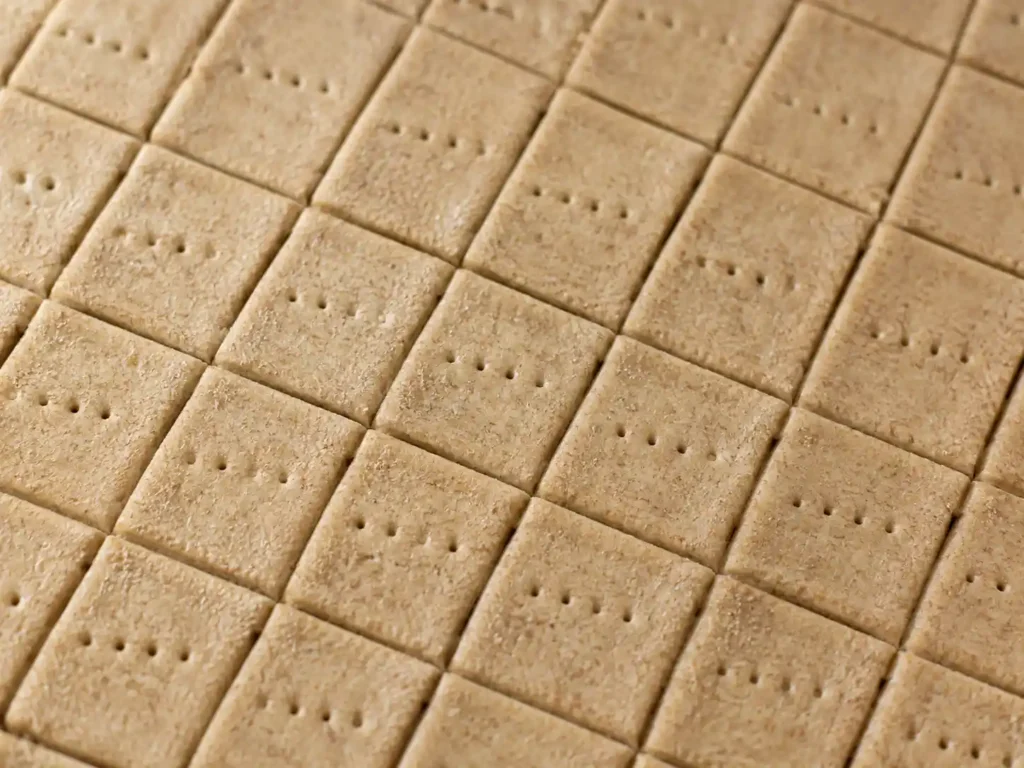
Using a sharp knife, a pizza cutter, or a bench scraper, score the dough in a tight crosshatch grid — straight lines running one direction about ¾ inch apart, then more lines running perpendicular to create small squares. Press firmly enough to nearly cut through the dough but not all the way, since this scoring is what creates the signature “woven” texture and also makes the crackers snap apart cleanly into neat squares after baking. Then use a fork to poke a few docking holes in the center of each square — this stops the dough from puffing up unevenly in the oven.
Step 5: Bake Until Golden and Crisp
Transfer the dough (still on its parchment) onto the prepared baking sheet and lightly brush the top with a little extra olive oil, then sprinkle with flaky sea salt. Bake for 18-22 minutes, rotating the pan halfway through, until the crackers are deeply golden brown at the edges and firm to the touch — they should feel dry, not soft or bendy, when you tap the surface. If some edge pieces brown faster than the center, you can pull those off early and let the rest keep baking.
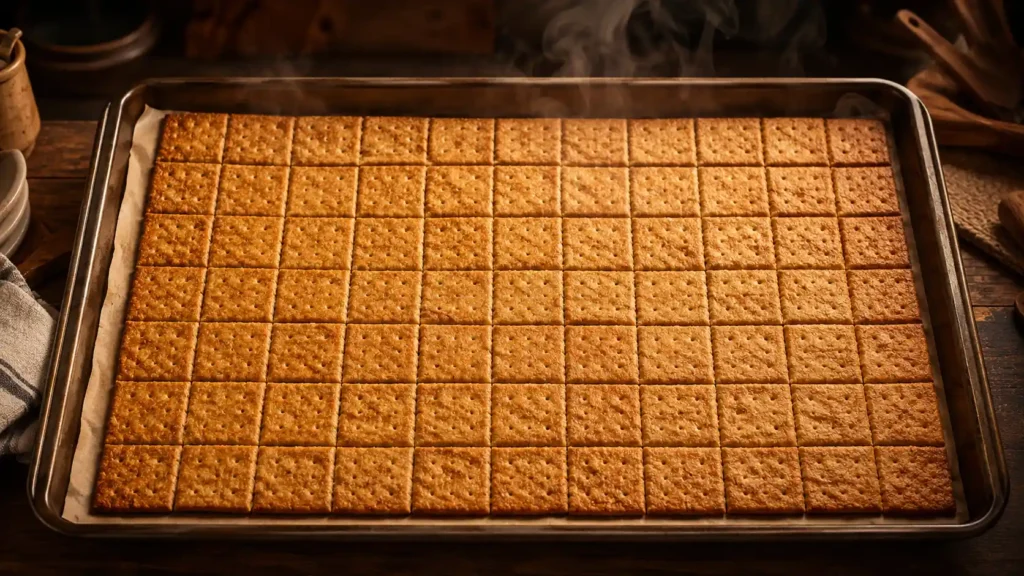
Step 6: Cool and Snap Apart
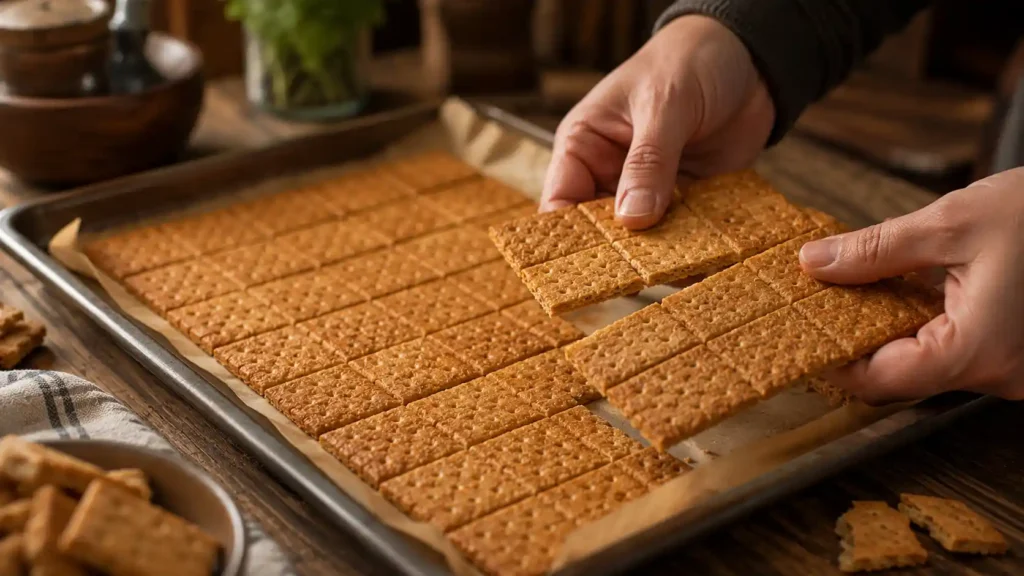
Let the baked sheet cool on the pan for at least 10 minutes before handling — this is important, because crackers continue to firm up and crisp as they cool, and cutting into them too soon will leave you with soft, bendable squares instead of a proper crunch. Once cooled, snap along the scored lines into individual crackers.
Why the Real Thing Is So Simple — and So Hard to Fake Exactly
What makes the actual product genuinely interesting is that it isn’t a “recipe” in the traditional cracker sense at all. According to Mondelez, the whole grain wheat used is boiled and tempered until it reaches a specific moisture level, then shredded into fine strands rather than mixed into a conventional dough. Those strands are pressed together by patterned rollers that crimp and score the sheet in one motion, which is where the woven look actually comes from — it’s a texture created by shredding and pressing, not by a fork or a stamp. That’s the one thing a home oven simply can’t replicate one-for-one, since it requires industrial shredding equipment.
That said, the flavor profile is genuinely simple to match, because it really is just whole wheat, oil, and salt. There’s no dough conditioner, no leavening agent, and no hidden flavoring in the original recipe — which is part of why this homemade version tastes remarkably close, even though the texture-building method is completely different.
Variations Worth Trying
Rosemary & Cracked Pepper: Work 1 teaspoon finely chopped fresh rosemary and ½ teaspoon coarsely cracked black pepper into the dough before rolling, echoing one of the brand’s more popular seasoned varieties.
Everything-Style: Sprinkle the top with a mix of poppy seeds, dried onion flakes, and garlic powder right before baking for an “everything bagel” spin.
Hint of Salt Version: Cut the salt in the dough down to a pinch and skip the finishing sprinkle entirely for a lower-sodium cracker that still holds its wheaty flavor.
Seeded Upgrade: Press sesame seeds or flax seeds into the surface after brushing with oil, before scoring, for extra crunch and a nuttier bite.
Serving Ideas
These hold up beautifully under a thick swipe of whipped cream cheese and a slice of tomato, work as a sturdy base for a cheese board next to sharp cheddar or brie, and are hearty enough to scoop up a chunky salsa or bean dip without snapping. They’re also great crushed over a salad in place of croutons if you want a wheatier crunch.
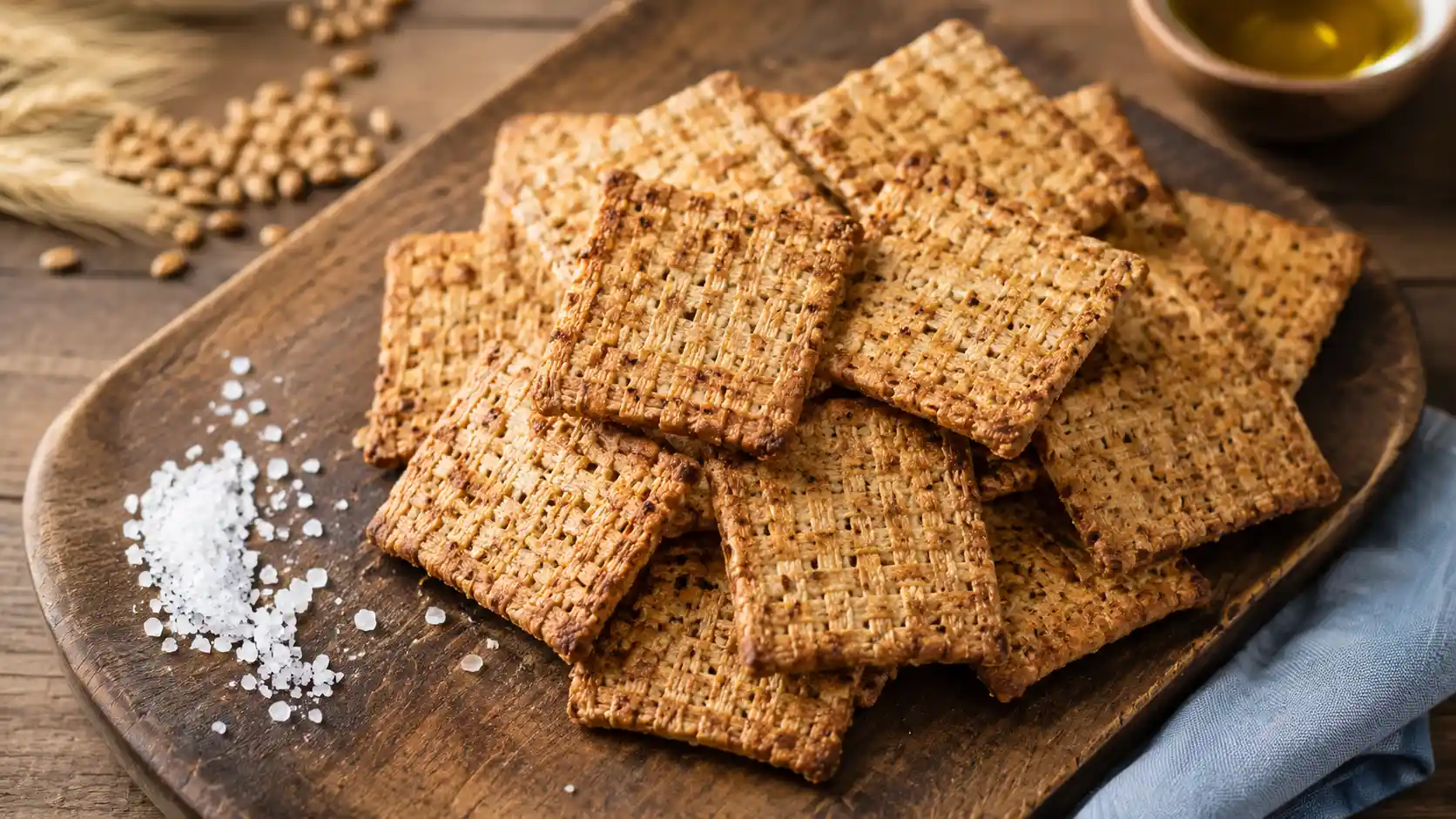

Homemade Triscuit-Style Wheat Crackers
A crisp, nutty, woven-texture whole wheat cracker made with just a handful of pantry staples. This copycat recipe recreates the iconic crunch and clean flavor of the boxed original, straight from your own oven.
Ingredients
Equipment
Method
- In a mixing bowl, whisk together the whole wheat flour and fine sea salt. Add the olive oil, then slowly mix in the water with a fork until a dough starts to form.
- Knead the dough in the bowl for about 1 minute until firm and smooth, adjusting with a little extra water or flour as needed. Cover and rest at room temperature for 15 minutes.
- Preheat the oven to 375°F (190°C) and line a baking sheet with parchment paper.
- Roll the rested dough between two sheets of parchment paper to about ⅛-inch thickness.
- Score the dough into a tight crosshatch grid (¾-inch squares) using a knife or pizza cutter. Poke a few docking holes into each square with a fork.
- Transfer the dough on its parchment to the baking sheet. Brush lightly with olive oil and sprinkle with flaky sea salt.
- Bake for 18-22 minutes, rotating the pan halfway through, until deeply golden and firm to the touch.
- Cool on the pan for at least 10 minutes, then snap apart along the scored lines.
Video
Notes
Store cooled crackers in an airtight container at room temperature for up to a week; if they soften, re-crisp them in a 300°F oven for 4-5 minutes. This dough doesn’t freeze well raw, but baked crackers freeze fine for up to 2 months in a freezer-safe bag. For a seasoned twist, see the Rosemary & Cracked Pepper or Everything-Style variations above. This recipe is not gluten-free as written, since it relies on whole wheat flour for structure and flavor.
Frequently Asked Questions
How do they actually make Triscuit crackers at the factory?
The real process starts with whole wheat berries that are boiled and tempered to a specific moisture level, then shredded into fine strands rather than mixed into a traditional dough. Those strands are pressed and crimped by patterned rollers, which is what creates the woven look, before the sheet is cut into squares, lightly oiled and salted, and baked. It’s a genuinely different method than home baking, which is why this copycat recipe uses a rolled-and-scored dough to mimic the look and bite rather than the literal shredding process.
Why are they called “Triscuit” in the first place?
The name is widely believed to come from a mash-up of “electricity” and “biscuit,” since the original crackers were baked using electric ovens back when that was a novelty worth advertising on the box. It wasn’t originally meant as a play on the word “biscuit” the way it reads today.
Are Triscuits gluten-free?
No. Standard Triscuit crackers are made from whole grain wheat, which contains gluten, so they’re not suitable for a gluten-free or celiac diet. This homemade version also uses whole wheat flour and is not gluten-free as written; you’d need to experiment with a gluten-free flour blend to adapt it, though the texture will likely differ from the wheat-based original.
Are Triscuits vegan?
Yes, the original variety is vegan, since it only contains whole grain wheat, oil, and salt with no animal-derived ingredients. This homemade recipe is naturally vegan as well.
How many calories are in a serving of Triscuit crackers?
A standard 6-cracker serving of the original boxed product comes in around 120 calories. This homemade version lands in a similar ballpark per serving, though your exact number will vary slightly based on cracker size and how much oil you brush on top.
Can I make these without a stand mixer?
Absolutely — this dough is stiff enough that it comes together easily by hand in a mixing bowl. No special equipment is needed beyond a rolling pin and a baking sheet.
How do I keep them crisp after baking?
Let them cool completely before storing, and keep them in an airtight container at room temperature. If they lose crispness from humidity, a quick 4-5 minute stint in a 300°F oven will re-crisp them right up.
Can I freeze homemade wheat crackers?
Yes, once fully baked and cooled, they freeze well for up to about 2 months in a freezer-safe bag or container. Let them thaw at room temperature and re-crisp in the oven if needed before serving.