Your favorite restaurant recipes, recreated at home — tested and easy to follow.


A steakhouse crust comes down to one thing: a heavy pan that gets screaming hot and stays hot when a cold steak hits it. Cast iron does that better than almost anything, which is why it’s the tool behind most copycat steakhouse recipes. The single most important number is thermal mass — a thicker, heavier skillet holds its heat through the sear, and that heat recovery is what builds the crust, not a fancy coating.
Below are ten cast iron pans I’d actually reach for to sear a ribeye, sorted by who each one suits. Weight, size and shape are the real differences here — not marketing.
Heads up: some links below are Amazon affiliate links. If you buy through one, I may earn a small commission at no extra cost to you — it’s what keeps every recipe on this site free.
My top pick: the Lodge 12-Inch Cast Iron Skillet — a flat, thick, 12-inch classic that gives you a full-contact sear across the whole steak and recovers heat fast after the meat goes in. It’s the one I’d hand anyone chasing a steakhouse crust at home. Check it on Amazon →
Comparison Table
| Pick | Product | Best for | Watch out for |
|---|---|---|---|
| Top Pick | Lodge 12-Inch Skillet | Full-contact steakhouse sear | Heavy; single handle |
| Best Value | Utopia Kitchen 12-Inch Skillet | Big sear surface on a budget | Factory seasoning is basic |
| Best Handling | Lodge Dual Handle Pan | Safe stovetop-to-oven lifts | Handles get hot |
| Best Grill Marks | Lodge Square Grill Pan | Grill lines + fat drainage | Ridges = less crust contact |
| Best Induction Grill Pan | NutriChef Enameled Grill Pan | Grill marks on any cooktop | Over 7 lb; ridge cleanup |
| Best Skillet + Lid | Cuisinel 12-Inch Skillet with Lid | Sear then cover/braise | Lid adds weight |
| Best Skillet Set | EWFEN 3-Piece Set | Multiple sizes at once | 6-inch too small for steak |
| Best Compact Grill Pan | HCXCQLSUY Grill Pan | One-steak grill marks, cheap | Small surface |
| Best Skillet + Lid Combo | Utopia Kitchen Skillet + Lid | Covered cooking on a budget | Nearly 8 lb; short handle |
| Best Budget Set | Simple Chef 3-Piece Set | Cheapest multi-size option | Some rust/seasoning reports |
How I Picked These
I judged every pan against the one job that matters for a copycat steakhouse ribeye: getting rippingly hot and holding that heat when a cold steak drops in. That means real thermal mass — thin, light “cast iron” is a waste of time here. I favored flat skillets for a full-contact crust, noted which grill pans are worth it for marks and fat drainage, and weighed how manageable each one is when it’s 8 pounds and 500°F. Seasoning quality out of the box, oven-safe handles, and honest cleanup effort rounded it out. Where owners flagged real problems — rust, flaking seasoning, a handle that runs too hot — I kept it in.
Lodge 12-Inch Cast Iron Skillet — Best for Full-Contact Searing
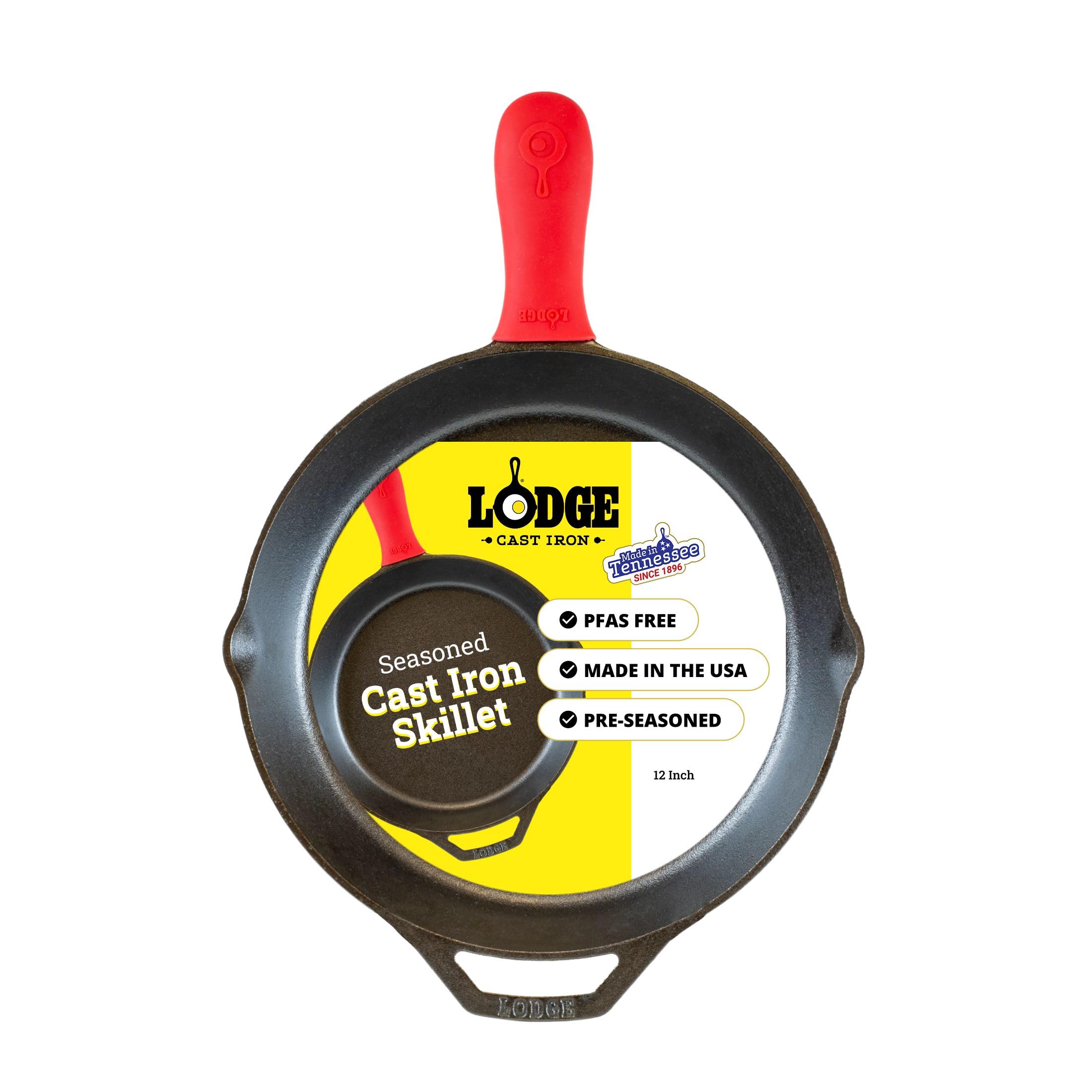
This is the one I’d buy first if a steakhouse crust is the whole point.
Pros
- Thick iron holds high heat and recovers fast after cold meat goes in
- Flat 12-inch surface gives full-contact browning, no ridges breaking the crust
- Arrives pre-seasoned and keeps improving with every cook
Cons
- Heavy to lift, especially one-handed
- Single handle means you need a mitt and care moving it to the oven
- Needs prompt drying and a light oiling to protect the seasoning
The flat surface is exactly what you want for a ribeye — every bit of the steak touches hot iron, so you get an even, edge-to-edge crust instead of the striped contact a grill pan gives. It takes a few minutes to come fully up to temperature, but that patience is the trick: rush the preheat and the crust never develops. This is the pan I’d use for our Keg-style steak at home approach to high-heat searing.
Skip it if: you want two handles for safer oven transfers — the Lodge Dual Handle below suits you better.
Check the Lodge 12-Inch Skillet on Amazon →
Utopia Kitchen 12-Inch Cast Iron Skillet — Best Value
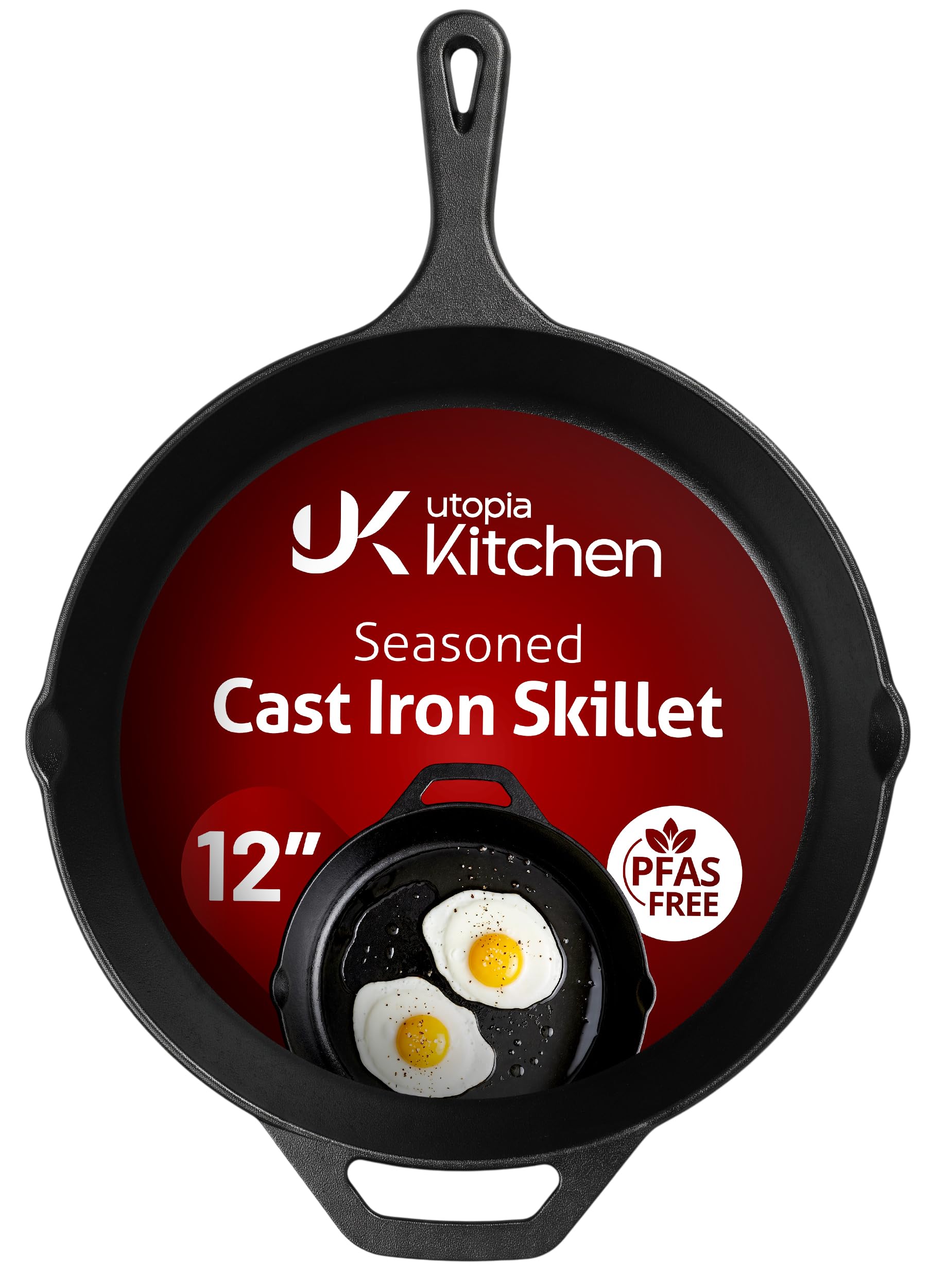
This is the one I’d buy if you want a big flat sear surface without spending much.
Pros
- Large 12-inch surface handles big steaks or several smaller cuts
- Holds heat well for a strong, steady sear
- Pre-seasoned and usable right out of the box
Cons
- Heavy and awkward to maneuver when full
- The factory seasoning is basic — worth adding a layer before first use
- Standard cast iron upkeep: dry immediately, oil regularly
For the price, this gives you the same thing that matters most — a thick, flat, heat-holding surface. I’d rub on an extra thin coat of oil and heat it before the first steak to jump-start the nonstick surface, and it’ll only get better with use. It’s the budget pick that doesn’t compromise on the actual searing job.
Skip it if: you want a refined, ultra-smooth cooking surface out of the box — budget cast iron needs a few cooks to get there.
Check the Utopia Kitchen 12-Inch Skillet on Amazon →
Lodge Dual Handle Cast Iron Pan — Best for Safe Handling
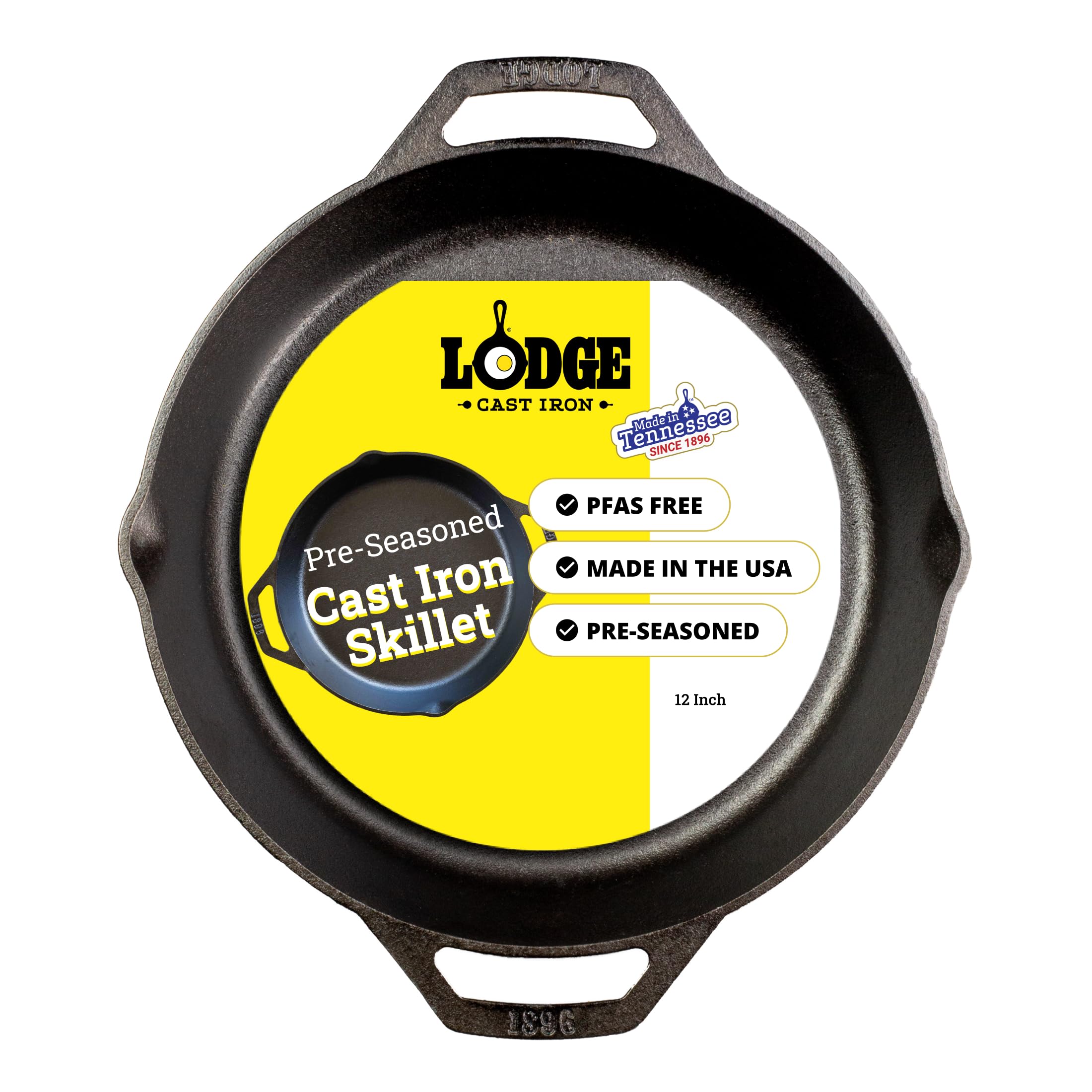
This is the one I’d buy if you finish steaks in the oven and want two hands on the pan.
Pros
- Dual assist handles make lifting and oven transfers far more secure
- Holds steady heat for a reliable crust
- Low profile leaves room to sear two steaks without crowding
Cons
- Still heavy cast iron during everyday handling
- Both handles get hot — mitts are mandatory
- Hand-wash, dry and oil like any cast iron
The reverse-sear method — sear on the stove, finish in the oven — is where this pan earns its keep, because moving a screaming-hot single-handle skillet is genuinely risky. Two grippable handles fix that. The low, open shape also gives you room for two steaks side by side without them steaming each other.
Skip it if: you only ever sear on the stovetop — you’re paying for a handling feature you won’t use.
Check the Lodge Dual Handle Pan on Amazon →
Lodge Square Cast Iron Grill Pan — Best for Grill Marks
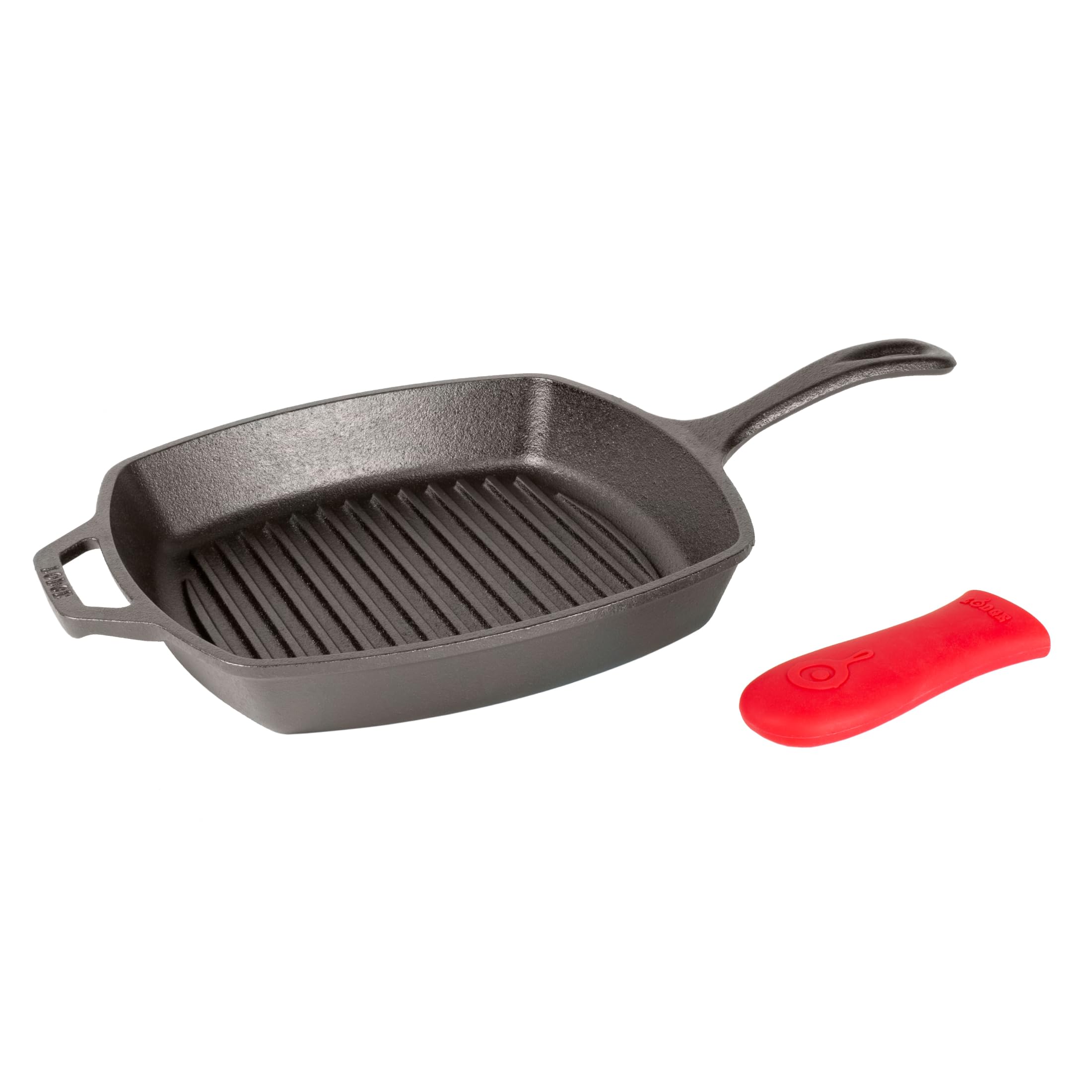
This is the one I’d buy if you want steakhouse grill lines indoors.
Pros
- Raised ridges leave pronounced grill marks and hold heat steadily
- Channels drain rendered fat away from the meat
- Square shape fits a substantial steak without crowding
Cons
- Heavy and less convenient to move when hot
- Ridges mean less full-contact surface, so less edge-to-edge crust
- Indoor use can throw noticeable smoke at searing heat
If the look of grill marks matters to you — and for a lot of copycat steakhouse plates it does — this delivers them while draining fat into the channels. Just know the tradeoff: ridges give you striped contact, not the full crust of a flat skillet. Run your vent hood on high, because at true searing temperature it smokes.
Skip it if: you’re chasing maximum crust over looks — a flat skillet browns more of the surface.
Check the Lodge Square Grill Pan on Amazon →
NutriChef Enameled Cast Iron Grill Pan — Best for Induction Cooktops
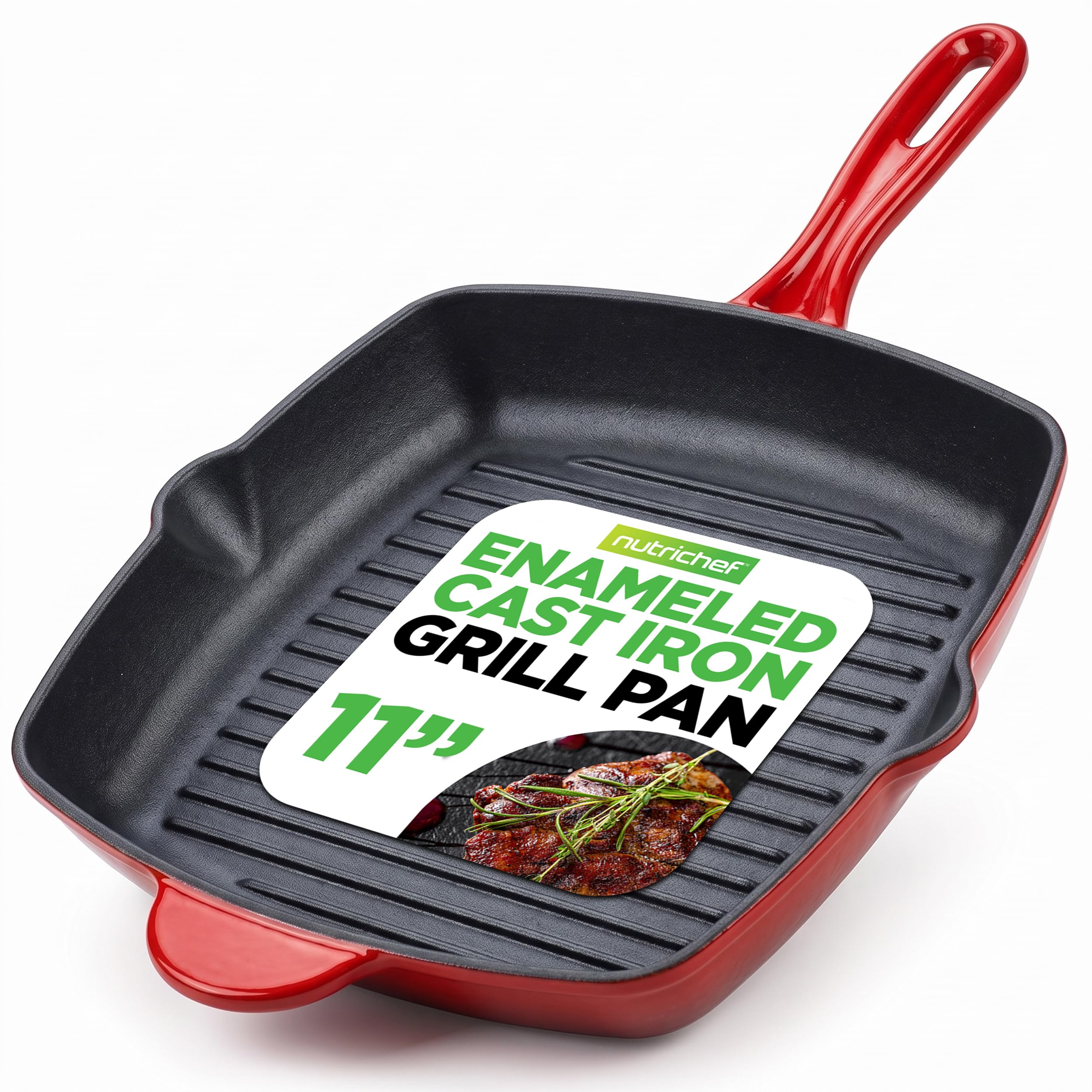
This is the one I’d buy for grill marks if you cook on glass or induction.
Pros
- Works on gas, electric, glass and induction cooktops
- Thick build holds heat well for searing steaks and burgers
- Ridges mark the meat and drain excess fat through side spouts
Cons
- Over 7 pounds — genuinely two-hand heavy
- Cleaning between the ridges takes real effort
- Treat it like enameled iron, not a slick nonstick — food clings if underheated
The broad cooktop compatibility is the reason to pick this over a bare-iron grill pan if you’re on induction or glass. It’s got the mass to sear properly, and the square face fits two steaks or a steak plus vegetables. Preheat it fully and use enough fat, or food sticks despite the “nonstick” wording.
Skip it if: you want a lightweight pan you can wave around one-handed — this is a heavy, planted grill pan.
Check the NutriChef Enameled Grill Pan on Amazon →
Cuisinel 12-Inch Cast Iron Skillet with Lid — Best Skillet + Lid

This is the one I’d buy if you want to sear a steak then cover it for melting or braising.
Pros
- Full 12-inch flat surface for one or two steaks
- Includes a cast iron lid, pan scraper and silicone handle holders
- Holds high heat well for an even crust
Cons
- Heavy enough that one-handed handling is awkward
- Lid plus pan together is a real lift
- The handle covers don’t shield every hot surface
The lid is the differentiator — sear your steak, drop a pat of compound butter and a slice of cheese on top, cover for a minute, and it melts perfectly. It also turns the pan into a capable braiser for other dishes. The bundled scraper is genuinely handy for lifting fond without soaking the pan.
Skip it if: you’ll never use the lid — a plain skillet gives the same sear for less weight.
Check the Cuisinel 12-Inch Skillet with Lid on Amazon →
EWFEN 3-Piece Cast Iron Skillet Set — Best Set
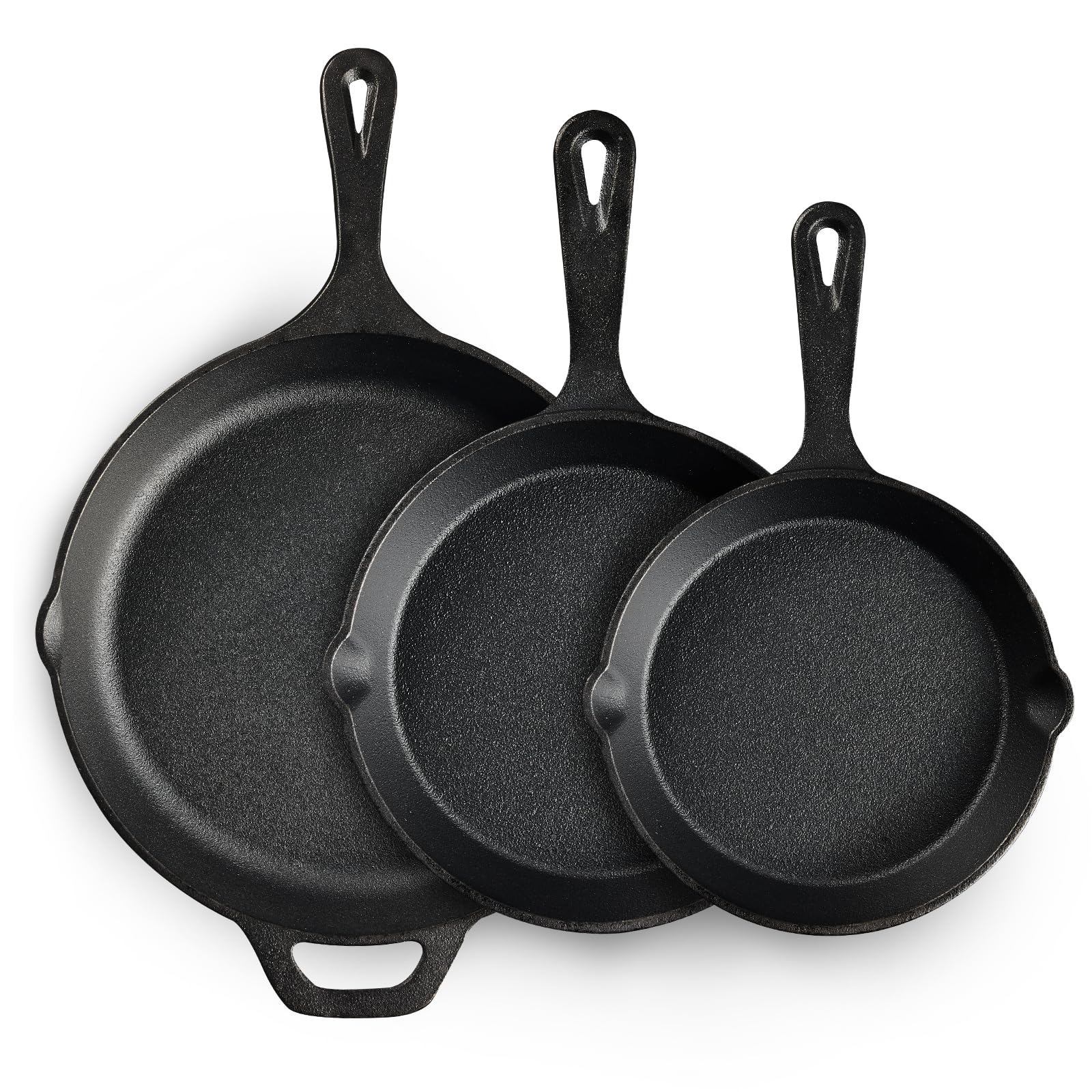
This is the one I’d buy if you want steak plus sides going at once.
Pros
- Three sizes cover a steak, sides and larger portions
- Pre-seasoned for a usable starting surface
- Works on stovetops, grills, induction and in the oven
Cons
- The 6-inch pan is too small for most steaks
- Needs extra seasoning for smoother release
- Standard hand-wash-and-oil upkeep
The 10-inch pan is the steak workhorse here — it holds heat well and builds a solid crust — while the smaller pans handle a pan sauce or a side without dirtying another pot. It’s a practical way to get a searing pan and everyday pans in one affordable buy. Add a coat of oil and a few cooks and the surface smooths out.
Skip it if: you only want one great steak pan — a single 12-inch skillet is a better use of the money.
Check the EWFEN 3-Piece Set on Amazon →
HCXCQLSUY Cast Iron Grill Pan — Best Compact Grill Pan
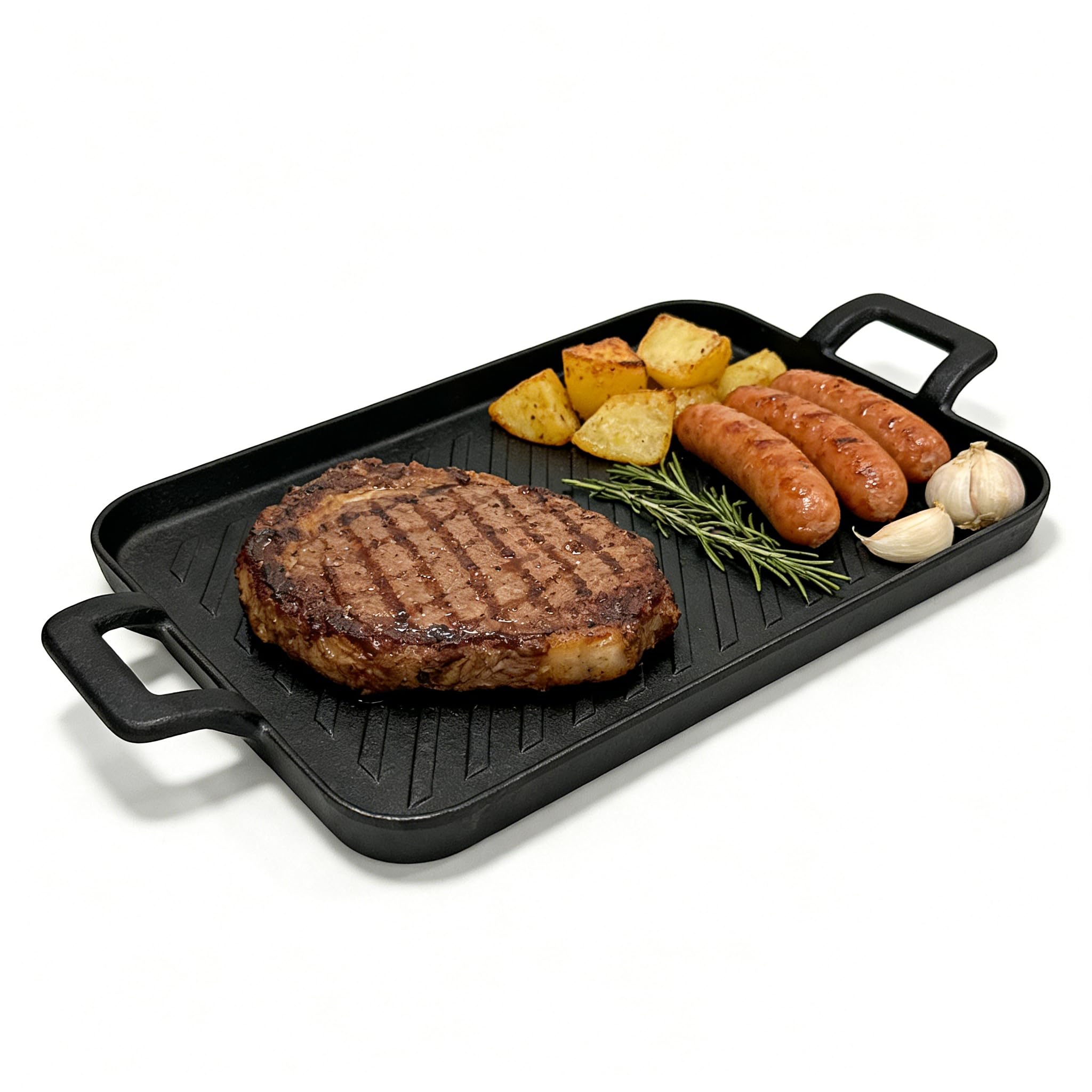
This is the one I’d buy if you cook for one and want grill marks cheaply.
Pros
- Deep ridges give distinct marks and lift the steak above its grease
- Heavy iron holds steady searing heat
- Side spouts make pouring off fat easy
Cons
- Small surface limits you to one steak or a couple of small cuts
- Cast iron drying-and-seasoning upkeep applies
- Ridges make full-surface contact harder for delicate foods
For a single ribeye, this compact grill pan gets hot, marks well, and keeps the meat out of its own juices so it sears instead of steams. It’s an inexpensive way into grill-marked steak if you’re not cooking for a crowd. The side spouts are a nice touch for draining rendered fat mid-cook.
Skip it if: you regularly cook for two or more — the surface is simply too small.
Check the HCXCQLSUY Grill Pan on Amazon →
Utopia Kitchen 12-Inch Skillet with Lid — Best Budget Skillet + Lid Combo

This is the one I’d buy for covered cooking without paying premium prices.
Pros
- Big 12-inch surface sears larger steaks without crowding
- Includes a lid for melting toppings, simmering or keeping warm
- Works indoors, on grills and over a campfire
Cons
- Nearly 8 pounds — takes effort to lift when full
- Hand-wash and oil like any cast iron
- The handle runs short, which makes some transfers awkward
This covers the same “sear then cover” trick as the Cuisinel but at a friendlier price. The lid is handy for finishing a steak with melted cheese or resting it warm while you plate sides. The silicone handle cover helps, though I’d still keep a mitt nearby given the weight and short handle.
Skip it if: you want a long, comfortable handle for confident one-handed lifts — the short handle is this pan’s real limitation.
Check the Utopia Kitchen Skillet with Lid on Amazon →
Simple Chef 3-Piece Cast Iron Skillet Set — Best Budget Set

This is the one I’d buy if you want the cheapest way into multiple pan sizes.
Pros
- Three sizes for individual steaks, sides and larger portions
- Holds heat well for stovetop searing and oven finishing
- Works on stovetops, grills, ovens and campfires
Cons
- Heavy compared with aluminum or stainless pans
- Hand-wash, dry and oil after every use
- Some owners report rust, surface flaws or seasoning that wears down
The 10-inch pan sears a steak and moves to the oven to finish, while the smaller pans handle a sauce or eggs. For the price it’s a lot of cast iron, and the surface improves as long as you avoid soaking it and dry it fully. Just go in knowing this is budget iron — the maintenance reports are the tradeoff for the price.
Skip it if: you want the most reliable seasoning and finish — spend up on a single Lodge instead of a budget set.
Check the Simple Chef 3-Piece Set on Amazon →
Buying Guide: What Actually Matters
Size: 10–12 inches is the steak sweet spot. Big enough to sear one or two steaks without crowding (crowding drops the pan temperature and you get steam, not crust), but not so big it’s a struggle to heat evenly or lift.
Thickness beats brand. The whole reason cast iron sears well is thermal mass — heavy, thick iron holds temperature when cold meat hits it. A thin, light pan cools on contact and you never build a crust. When in doubt, heavier is better for steak.
Flat skillet vs. grill pan is a real choice. A flat skillet gives edge-to-edge, full-contact crust — the best sear. A grill pan gives you marks and fat drainage but only stripes of contact. Pick based on whether you want maximum crust or the steakhouse look.
The most common buying mistake: not preheating long enough. Cast iron is slow to heat but holds it beautifully — most “my steak didn’t sear” complaints come from adding the meat before the pan is fully hot. Preheat over medium for 5–8 minutes until it’s just starting to smoke, then sear. Also skip the dishwasher entirely; it strips the seasoning and invites rust.
What You Can Skip
Skip enamel-coated pans if pure searing crust is the goal. Enamel is easier to clean, but bare seasoned cast iron builds a better crust at high heat. For steak specifically, bare iron wins.
Skip the tiny 6-inch pans in the sets for steak. They’re fine for eggs or a single sauce, but too small to sear a steak without it steaming. Don’t let a “3-piece” count fool you — you’re really buying one steak pan and two helpers.
Skip pricey seasoning sprays and conditioners. Any neutral high-smoke-point oil (canola, grapeseed, vegetable) does the same job for a fraction of the cost. Cast iron maintenance doesn’t need a special product.
Recipes to Make With This Skillet
- Cactus Club Teriyaki Chicken Rice Bowl — a hot cast iron pan gets a real sear on the chicken before it hits the bowl.
- Pistachio Crusted Salmon — cast iron takes the crust from stovetop straight into the oven in one pan.
- Cactus Club Crispy Tofu Bowl — the same high, steady heat that sears steak crisps tofu edges beautifully.
Frequently Asked Questions
What size cast iron skillet is best for steak?
A 10- to 12-inch skillet is the sweet spot for steak. It gives enough surface to sear one or two steaks without crowding, which is important because a crowded pan drops in temperature and steams the meat instead of searing it. Smaller pans work for a single steak, while a 12-inch handles larger cuts or two at once.
Is a flat skillet or a grill pan better for steak?
A flat skillet gives the best crust because the entire surface of the steak touches hot iron, producing an even, edge-to-edge sear. A grill pan gives you attractive grill marks and drains fat through its channels, but only the raised ridges contact the meat, so you get less overall crust. Choose based on whether you want maximum browning or the steakhouse look.
What is the best oil for searing steak in cast iron?
Use a neutral oil with a high smoke point, such as canola, grapeseed, avocado or vegetable oil, since cast iron searing happens at very high heat. Save butter or olive oil for basting near the end of cooking, because they burn if added at the start of a hard sear.
Why didn’t my steak sear properly in cast iron?
The most common cause is not preheating the pan long enough. Cast iron heats slowly but holds heat well, so it needs about 5 to 8 minutes over medium heat until it just begins to smoke before the steak goes in. Adding the meat too early, or overcrowding the pan, drops the temperature and steams the steak instead of searing it.
How do I clean a cast iron skillet after cooking steak?
Clean it while still warm with hot water and a brush or pan scraper, avoiding long soaking. Dry it thoroughly right away, then rub on a thin layer of neutral oil to protect the seasoning. Never put cast iron in the dishwasher, as that strips the seasoning and causes rust.
Do I need an expensive cast iron skillet for good steak?
No. What matters most for searing steak is thermal mass, meaning thick, heavy iron that holds its heat when cold meat is added, and an affordable pre-seasoned skillet delivers that just as well as a premium one. Budget pans simply need a few cooks and a little extra oiling to develop a smooth, reliable surface.
Conclusion
For the deepest, most even steakhouse crust, the Lodge 12-Inch Skillet is the one I’d buy first. On a tighter budget, the Utopia Kitchen 12-Inch Skillet gives you the same flat, heat-holding sear for less. Whichever you pick, preheat it hard and keep it out of the dishwasher — that’s most of the battle.