Your favorite restaurant recipes, recreated at home — tested and easy to follow.


The Café Zupas Ultimate Grilled Cheese doesn’t reinvent grilled cheese so much as fix the two things most people get lazy about: the spread and the cheese blend. It’s built on ciabatta with Tillamook cheddar and muenster, fresh tomato slices, and a pesto spread — that’s the whole ingredient list, and it’s exactly why it works. Two cheeses instead of one gives you sharp flavor and superior melt at the same time, and pesto in the spread does more flavor work than butter alone ever could.
What most home versions get wrong is treating pesto as an afterthought smear when it should really be doing the job mayonnaise usually does — going edge to edge, thin but complete, so every bite gets basil and garlic alongside the cheese. Get the spread and the cheese ratio right and this is a five-minute sandwich that tastes like it took real thought.
Café Zupas also runs a Brisket Grilled Cheese on the menu — brisket, muenster, provolone, parmesan, tomato, and arugula with a hot honey BBQ spread — which I’ve built as a genuine variation below rather than guessing at it. Both start from the same technique. If you’re making a full lunch, this sandwich is the natural partner to something warm and creamy, like the Zupas Wisconsin cauliflower soup — that’s the classic Café Zupas combo for a reason.
Why This Copycat Works
- Uses the real, verified ingredients — Tillamook cheddar, muenster, tomato, pesto spread on ciabatta — not a generic cheddar-only grilled cheese.
- A mayo-and-pesto spread on the outside gives a more even, crispier crust than butter alone.
- About 10 minutes, mostly hands-on at the stove.
- Hardest part: getting the cheese fully melted before the bread over-browns — low, patient heat is the fix.
Key Ingredients & Substitutions
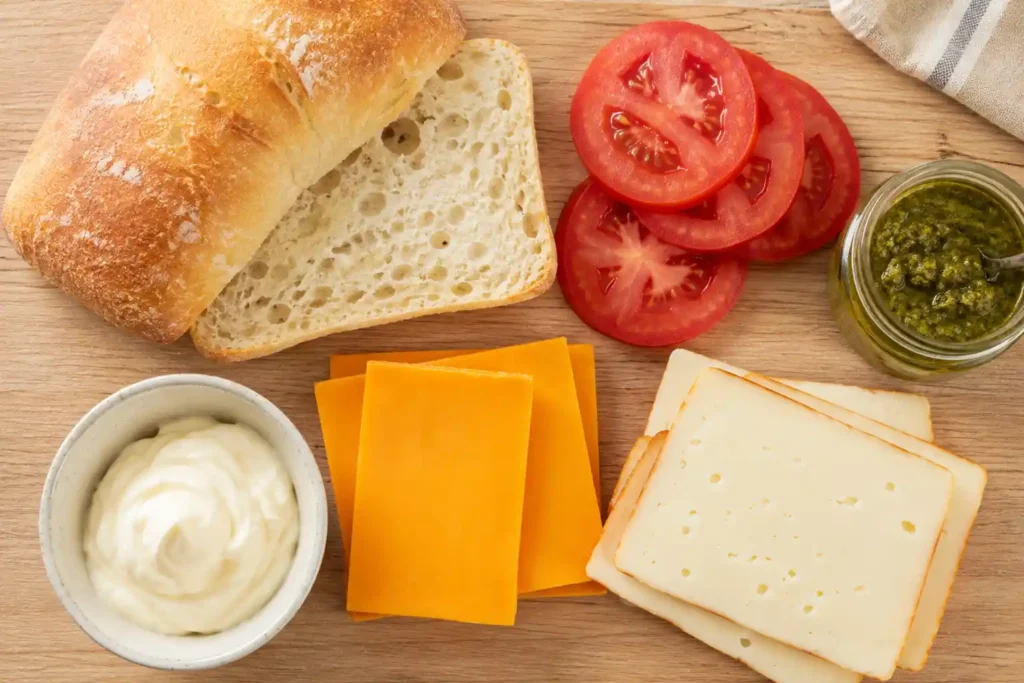
Ciabatta rolls (the bread). This is the actual bread Café Zupas builds the sandwich on, and its open, chewy crumb and sturdy crust hold up to a thick cheese-and-pesto filling without going soggy. Sourdough or a hearty multigrain are the best substitutes if you can’t find ciabatta; thin sandwich bread will work in a pinch but won’t have the same structure. Ciabatta rolls are usually in the bakery section, not the standard bread aisle.
Sharp cheddar (Tillamook, if you can get it). Tillamook is the specific brand Café Zupas uses, and its sharpness is a real part of the flavor. Any good sharp cheddar substitutes fine if Tillamook isn’t sold near you — the important thing is sharp, not mild. Grate or slice it yourself rather than using pre-shredded, which melts less smoothly.
Muenster cheese (the melt). Muenster is a genuinely excellent melting cheese — mild, soft, and it goes fully liquid without turning oily, which is what gives this sandwich its gooey pull. Provolone or a young Havarti both work as substitutes with a similar meltability, though they change the flavor slightly. Muenster is in the regular deli cheese section.
Fresh tomato (moisture and acidity). Thin slices of ripe tomato cut through the richness of two cheeses and add a little brightness. Salt the slices lightly and let them sit on a paper towel for a couple of minutes first — this pulls out excess moisture that would otherwise make the inside of the sandwich soggy.
Pesto (the signature flavor). Real basil pesto, not a jarred pasta-sauce style, is what makes this taste distinct from a plain grilled cheese. Refrigerated pesto near the fresh pasta or deli section tends to taste brighter and fresher than the shelf-stable jarred kind by the pasta. Mixing it with a little mayonnaise (see the step below) makes it spreadable edge to edge and helps the outside crisp evenly.
Butter or mayonnaise (for the outside crust). Butter gives the classic flavor; mayonnaise, because it doesn’t burn as easily and spreads more evenly at room temperature, is what a lot of professional grilled cheese cooks reach for and what gives a more consistently golden crust. This recipe uses a pesto-mayo blend on the outside for exactly that reason.
How to Make Zupas Ultimate Grilled Cheese at Home
You’ll build a pesto-mayo spread, layer the cheeses and tomato between ciabatta, and cook it low and slow in a skillet so the outside browns exactly as the inside fully melts. Total time is about 10 minutes. Cooking gently rather than on high heat is what prevents the classic grilled cheese failure — a dark, crisp outside with a cold, unmelted center.
Step 1: Make the Pesto-Mayo Spread
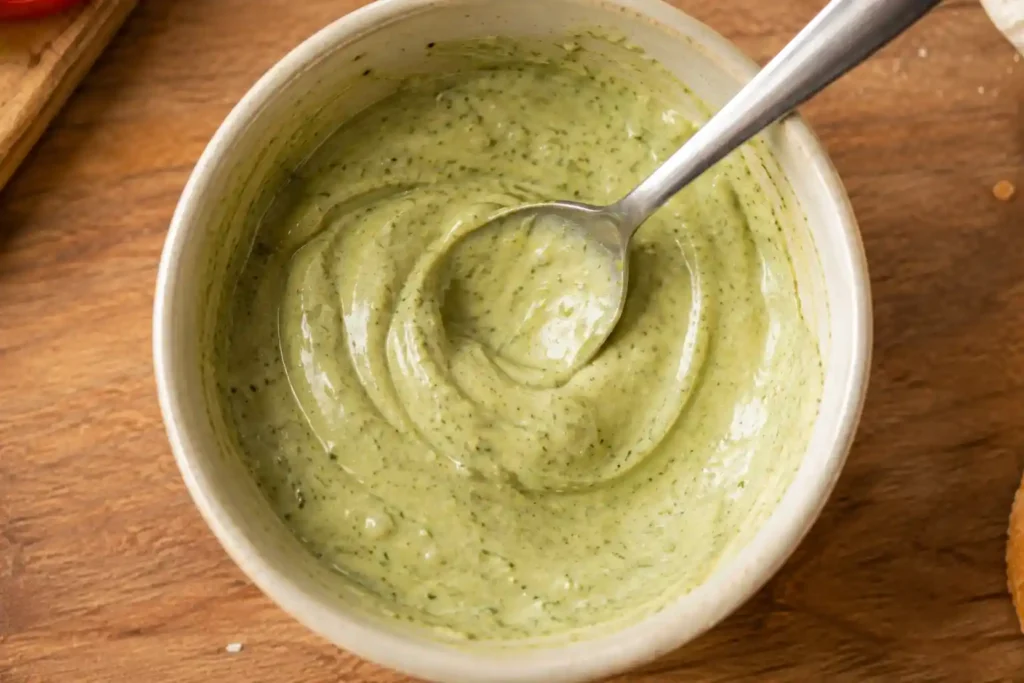
Stir together 3 tablespoons pesto and 2 tablespoons mayonnaise in a small bowl until fully combined and uniform in color. This blended spread is what goes on both the outside of the bread (for the crust) and, if you like more pesto flavor inside, a thin layer on the interior too. Make extra if you want — it keeps well and is useful for other sandwiches too.
Step 2: Build the Sandwich
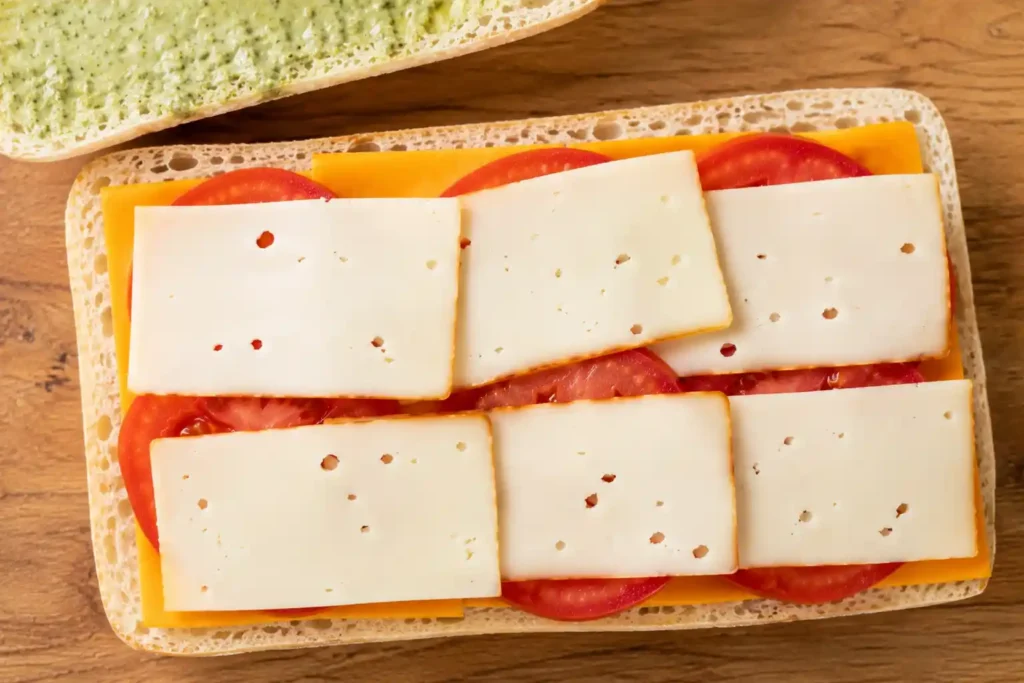
Split the ciabatta roll. On the cut side of the bottom half, layer one to two slices of cheddar, then the salted tomato slices, then one to two slices of muenster — cheese on both outer layers of the filling helps everything fuse together as it melts. Close the sandwich, then spread the pesto-mayo mixture over both outer faces of the bread, all the way to the edges, the way you’d butter a slice for regular grilled cheese.
Step 3: Cook Low and Slow
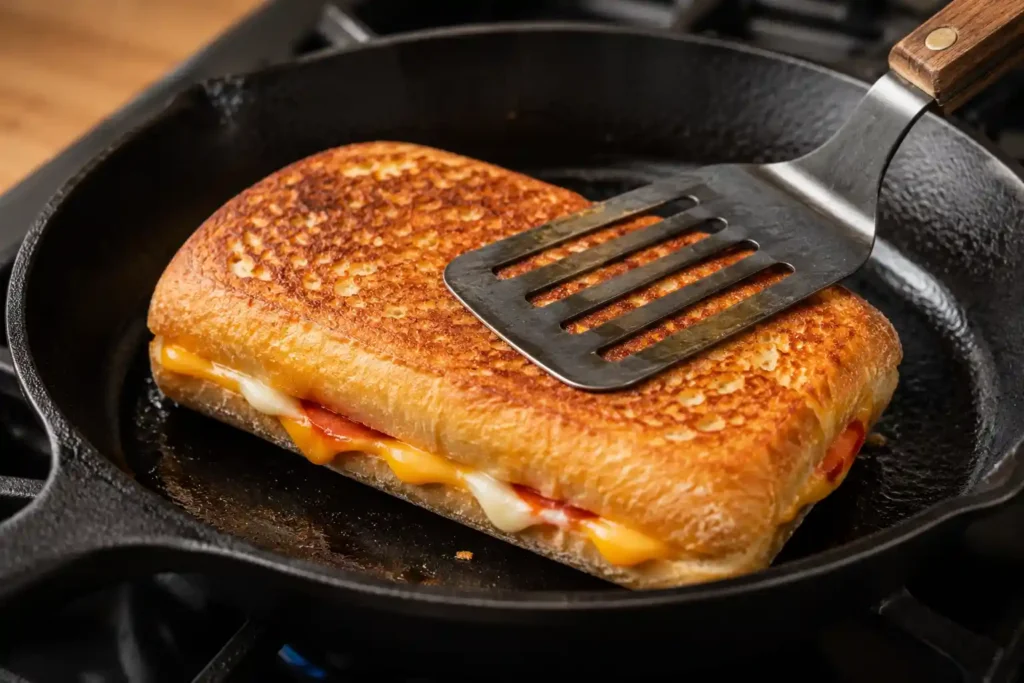
Heat a skillet over medium-low heat — resist the urge to go higher, since this is the step that makes or breaks the sandwich. Place the sandwich in the skillet and cook 3 to 4 minutes per side, pressing down gently once or twice with a spatula, until each side is deep golden brown and the cheese is visibly melting and pooling at the edges. If the outside is browning faster than the inside is melting, drop the heat further and cover the pan for the last minute or two to trap heat and finish the melt.
Pro Tip: If your ciabatta roll is thick and fluffy, weigh the sandwich down with something heavy — a second smaller skillet, or a foil-wrapped brick — while it cooks. Pressing it flattens the crumb slightly so the heat reaches the center faster and the cheese melts before the crust over-browns, which is the single biggest fix for a grilled cheese that’s dark outside and cold in the middle.
Building the Brisket Grilled Cheese Version
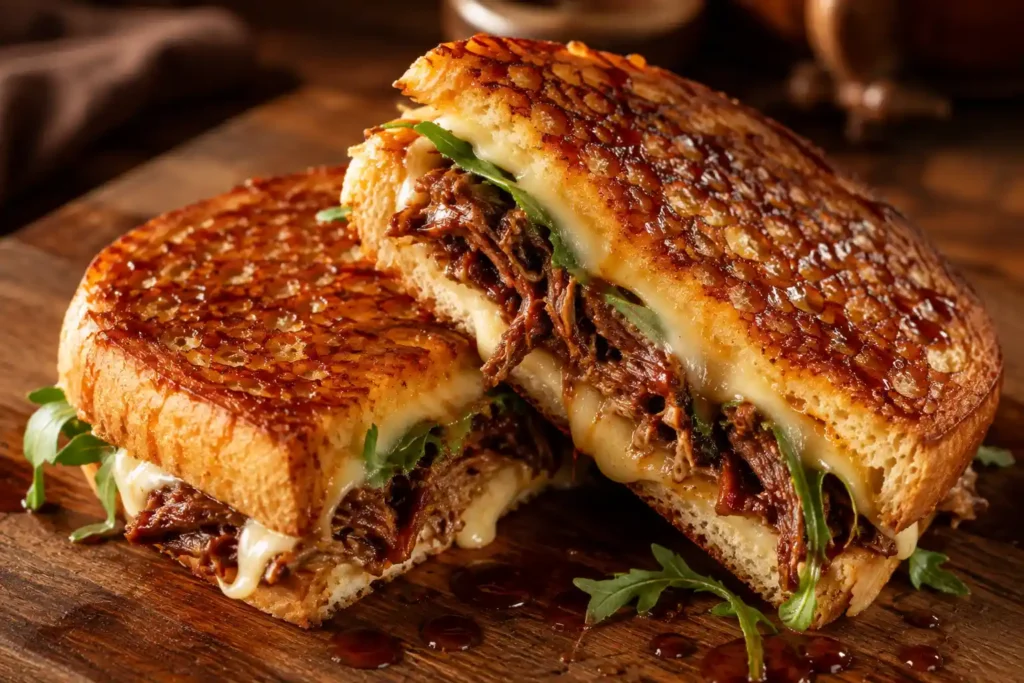
Café Zupas’ other well-known grilled cheese swaps in smoked brisket, three cheeses, and a hot-honey twist. The confirmed ingredients are brisket, muenster, provolone, and freshly grated parmesan, with tomato and arugula, finished with a hot honey BBQ spread. It’s essentially the Ultimate’s technique with heartier fillings and a sweet-spicy edge.
To build it at home: warm about 3 to 4 ounces of shredded or sliced smoked or braised brisket (leftover Ninja Woodfire brisket is perfect here) in a splash of its own juices so it’s hot and not dry. Layer it with sliced muenster and provolone and a light scatter of grated parmesan on the ciabatta, add tomato and a small handful of arugula, and spread a mix of your favorite BBQ sauce loosened with a little honey (or a store-bought hot honey) on the outside instead of the pesto-mayo. Grill exactly the same way — medium-low heat, 3 to 4 minutes per side, pressing gently.
Same technique, different filling. Low heat and a proper melt matter more than which sandwich you’re making.
Ultimate vs. Brisket: Which One to Make
| Ultimate Grilled Cheese | Brisket Grilled Cheese | |
|---|---|---|
| Cheeses | Cheddar, muenster | Muenster, provolone, parmesan |
| Protein | None (vegetarian) | Smoked brisket |
| Spread | Pesto | Hot honey BBQ |
| Extras | Tomato | Tomato, arugula |
| Best for | A quick meatless lunch | A heartier, leftover-brisket dinner |
| Effort | Lowest | A bit more, if brisket isn’t already cooked |
Fixing a Grilled Cheese That Went Wrong
The outside burned before the inside melted. Heat was too high. Drop to medium-low, and if it’s already too dark, finish the melt with a minute under a loosely tented lid rather than more direct heat.
The bread went soggy. Too much moisture from the tomato, or the pesto spread went on too thick inside. Salt and pat the tomato dry before assembling, and keep the interior pesto layer thin.
The cheese didn’t fully melt. Cheese was too cold going in, straight from the fridge, or slices were too thick. Let cheese sit out 10 minutes before assembling, and slice it thin rather than thick.
It fell apart when cut. Cut too soon. Let it rest on the cutting board for a minute before slicing so the melted cheese firms up just slightly and holds the layers together.
The pesto tasted flat. Likely a shelf-stable jarred pesto rather than fresh. Refrigerated pesto from the deli case has noticeably brighter basil and garlic flavor for this kind of quick-cook sandwich.
What to Serve With It
A grilled cheese this rich wants something to balance it. A cup of tomato soup is the obvious classic pairing and one Café Zupas itself leans into with soup-and-sandwich combos. For something different, the Zupas chicken enchilada chili is heartier and makes a genuinely filling meal alongside half a sandwich. A simple green salad with a sharp vinaigrette also cuts the richness nicely if you want something lighter.
Calories and Nutrition
Since the keyword list asks directly about calories: Café Zupas publishes nutrition information for its catering and menu items, and according to that published data, the Ultimate Grilled Cheese and the Brisket Grilled Cheese both land at 670 calories per sandwich. Those are the restaurant’s own figures, not estimates, so they’re the most reliable numbers if you’re tracking the actual menu item.
A homemade version will vary from that depending on your bread, how much cheese you use, and whether you cook with butter or mayo, so treat any calorie count for this copycat as a rough estimate rather than a match to the restaurant’s exact recipe and portions.
Make-Ahead and Storage
Grilled cheese is really a made-to-order sandwich, and it doesn’t hold well fully assembled and cooked — the bread goes soft and the crisp crust is gone within about 20 minutes. What does work well is prepping components ahead: mix the pesto-mayo spread and store it in the fridge for up to a week, pre-slice your cheeses, and even pre-assemble the unmelted sandwich (wrapped, refrigerated) up to a day ahead, then grill it fresh when you’re ready to eat.
If you do have a cooked leftover half, the best way to bring it back is a few minutes in a dry skillet over medium-low heat rather than the microwave, which turns the bread rubbery and never re-crisps it.
Equipment That Genuinely Helps
You don’t need much for a grilled cheese, and the basics are genuinely fine here. A heavy skillet — cast iron or a thick stainless pan — holds and distributes heat far more evenly than a thin nonstick pan, which is a real factor in getting consistent browning without hot spots that scorch one corner while another stays pale.
A bacon press or a second smaller skillet is worth having if you make sandwiches like this often, since even, gentle pressure speeds the melt and gives you that flatter, more uniform crust. Beyond that, a basic spatula and a cutting board cover the rest — no need for anything specialized.
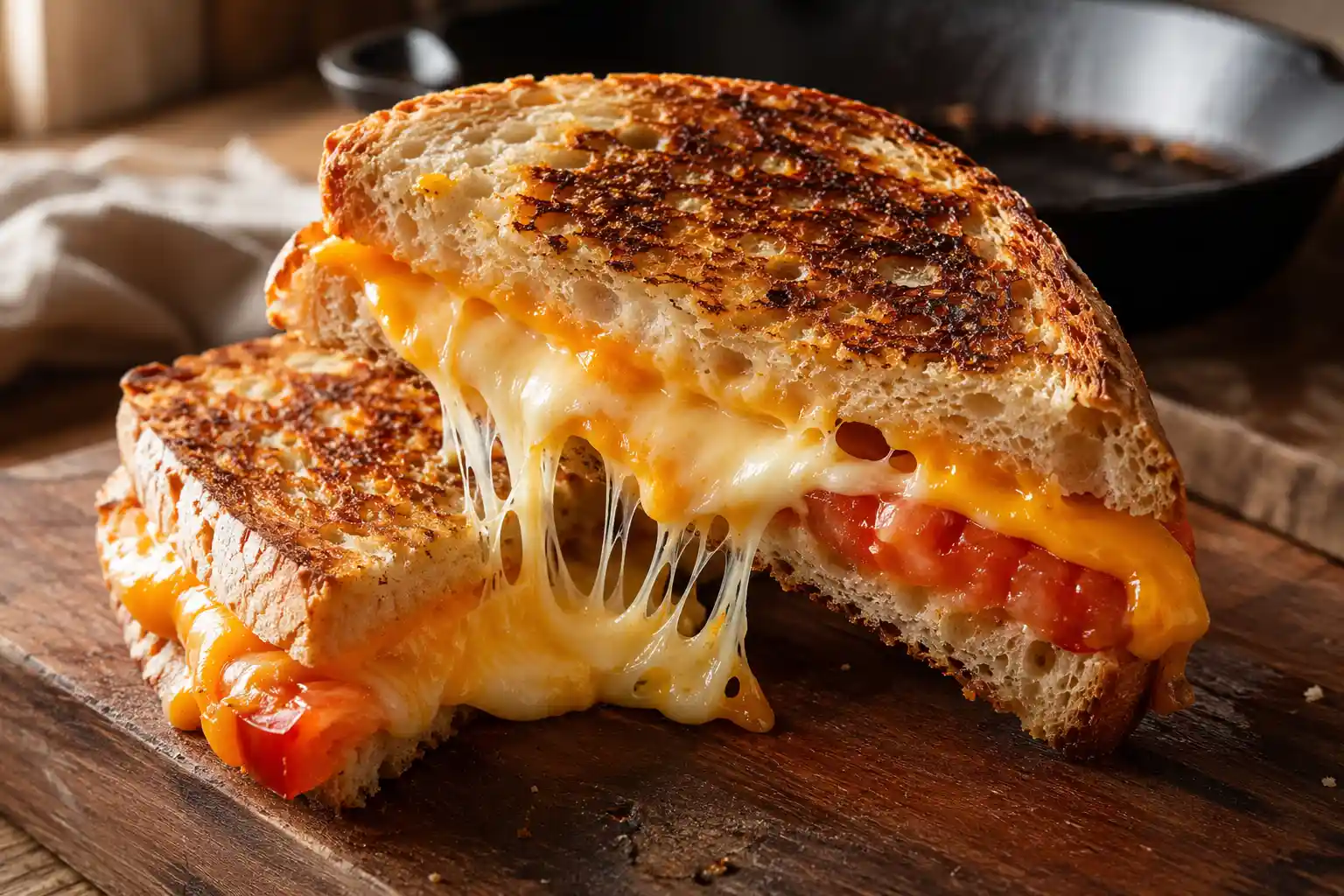

Copycat Café Zupas Ultimate Grilled Cheese
A two-cheese grilled cheese on ciabatta with sharp cheddar, muenster, fresh tomato, and a pesto-mayo spread that crisps the crust evenly. Ready in about 10 minutes, with a Brisket version variation included.
Ingredients
Equipment
Method
- Stir the pesto and mayonnaise together in a small bowl until smooth and evenly combined.
- Layer the cheddar, tomato, and muenster on the bottom half of the split ciabatta roll. Close the sandwich.
- Spread the pesto-mayo mixture over both outer faces of the bread, all the way to the edges.
- Heat a skillet over medium-low heat. Cook the sandwich 3 to 4 minutes per side, pressing gently, until deep golden brown and the cheese has fully melted. Cover briefly at the end if the inside needs more time.
- Rest 1 minute before slicing.
Video
Notes
For the Brisket Grilled Cheese variation with brisket, provolone, parmesan, arugula, and a hot honey BBQ spread, see the section above.
Grilled cheese doesn’t hold well once cooked; prep the spread and pre-slice cheese ahead, then grill fresh.
Reheat leftovers in a dry skillet, not the microwave, to bring back some crispness.
Café Zupas’ published nutrition lists both the Ultimate and Brisket versions at 670 calories per sandwich; a homemade version will vary with your bread and cheese amounts.
Frequently Asked Questions
What cheese does Café Zupas use in the Ultimate Grilled Cheese?
Café Zupas uses two cheeses: Tillamook cheddar and muenster, along with fresh tomato slices and a pesto spread on ciabatta bread. The combination of a sharp cheddar for flavor and a very meltable muenster for texture is what gives the sandwich its pull and its taste, rather than relying on a single cheese.
What is in the Zupas Brisket Grilled Cheese?
According to Café Zupas’ published ingredients, the Brisket Grilled Cheese contains brisket, muenster cheese, provolone cheese, freshly grated parmesan, tomato, and arugula, finished with a hot honey BBQ spread. It shares the same grilling technique as the Ultimate Grilled Cheese but swaps in smoked brisket and a sweet-spicy spread instead of pesto.
What kind of bread does Zupas use for their grilled cheese?
Ciabatta rolls are the bread used for the Ultimate and Brisket Grilled Cheese sandwiches, chosen for their sturdy crust and open, chewy crumb that hold up well to a thick cheese filling. Sourdough or a hearty multigrain are good substitutes if ciabatta isn’t available, though a thinner sandwich bread will work in a pinch with less structural support.
Should I use butter or mayo to grill the sandwich?
This recipe uses a pesto-mayo blend on the outside rather than plain butter, because mayonnaise spreads evenly straight from the fridge and browns more consistently without burning as easily. Butter is the more traditional flavor choice and works fine too. Either way, spreading all the way to the edges of the bread is what gives you an even, fully golden crust.
Why isn’t my grilled cheese melting all the way through?
This almost always means the heat was too high, so the outside browned before the inside had time to melt. Cook over medium-low heat for 3 to 4 minutes per side, and if the outside is already golden but the center isn’t fully melted, cover the pan loosely for the last minute or two to trap heat and finish the melt gently.
How many calories are in the Zupas grilled cheese sandwiches?
According to Café Zupas’ own published nutrition information, both the Ultimate Grilled Cheese and the Brisket Grilled Cheese come in at 670 calories per sandwich. Those figures come directly from the restaurant’s nutrition data rather than an estimate. A homemade version will vary somewhat depending on your bread, cheese amounts, and whether you cook with butter or mayonnaise.
Can I make this ahead of time?
Grilled cheese is best cooked fresh, since a fully cooked sandwich softens and loses its crisp crust within about 20 minutes. What works well is prepping ahead: make the pesto-mayo spread up to a week in advance, pre-slice your cheeses, or even assemble the unmelted sandwich a day ahead, wrapped in the fridge, and grill it fresh when you’re ready to eat.
Can I make this vegetarian, gluten-free, or dairy-free?
The Ultimate Grilled Cheese is already vegetarian as built, with no meat in the ingredient list. For gluten-free, use a certified gluten-free ciabatta or bread substitute, and check that your pesto doesn’t contain any hidden wheat-based fillers. For dairy-free, swap in your favorite plant-based cheddar and muenster-style melting cheeses and use a dairy-free pesto and mayonnaise; the technique stays exactly the same.