Your favorite restaurant recipes, recreated at home — tested and easy to follow.


Years ago a newspaper printed a reader’s attempt at Zaxby’s signature sauce, and one of the chain’s co-founders was quoted saying it was roughly half right. That’s a generous review for a recipe that was mayonnaise, ketchup, garlic powder, Worcestershire, and a blizzard of black pepper — and it’s also the exact recipe that has been copied onto a thousand blogs since. Half right is why so many people mix a batch, taste it, and think: this is fry sauce. Where’s the Zax?
Here’s the thing that changed my batches completely. The bottled Zax Sauce you can now buy in grocery stores carries a full ingredient statement, and there is no ketchup on it. There’s oil, water, tomato paste, sugar, Worcestershire sauce, distilled vinegar, egg yolk, dried garlic, ground mustard, spices, and caramel color. That reads differently than mayo-and-ketchup. Tomato paste gives you tomato depth without the vinegar-sugar-onion-clove profile that ketchup drags along; the separate vinegar gives you sharpness you can control; and ground mustard supplies a low, dusty heat that most copycats leave out entirely. Zax sauce isn’t sweet and pink. It’s darker, tangier, and more peppery than fry sauce, and those three ingredients are why.
So this version is built backwards from the label rather than forwards from the old newspaper recipe. It still takes five minutes and a whisk. It just tastes like the cup that comes with the Fingerz instead of like something you’d put on a burger. If you like reverse-engineered dipping sauces, my Copycat Swiss Chalet Sauce Recipe came together the same way — by ignoring the popular version and starting from what’s actually in the original.
Why This Copycat Works
- Tomato paste plus a splash of vinegar instead of ketchup — closer to the published ingredient statement, and the single change that fixes the flavor.
- Ground mustard and coarse black pepper carry the savory bite that plain mayo-and-ketchup versions are missing.
- Five minutes of whisking, then an overnight rest in the fridge.
- Hardest part: resisting the urge to add more sugar. Zax sauce is less sweet than people remember.
Key Ingredients & Substitutions
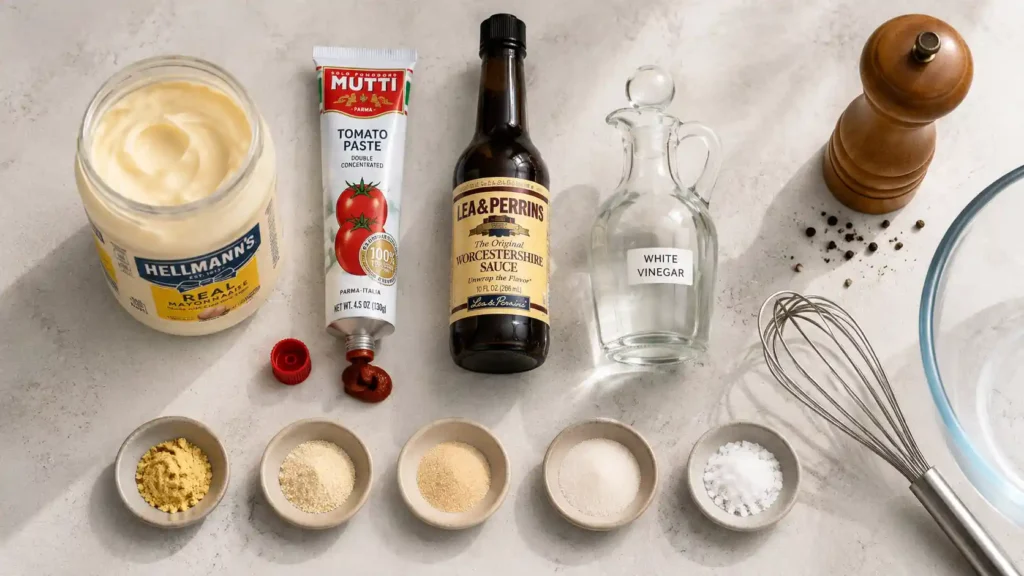
Mayonnaise (the body). The restaurant version is built from oil, water, and egg yolk — which is essentially mayonnaise made in a factory. Using good full-fat mayo gets you there in one step. Choose a plain, neutral brand; a very tangy Southern-style mayo will stack acidity on top of the vinegar you’re already adding. Avocado-oil mayo swaps in one for one with no change to the result.
Tomato paste (color and depth). This is the swap that matters. Paste gives concentrated tomato flavor and a deeper, brick-tinted color without the extra sugar, onion, and clove notes that ketchup carries. If you only have ketchup, use 1/4 cup ketchup in place of the paste and cut the sugar and vinegar entirely — the result is decent fry sauce, but it won’t read as Zax. Tomato paste is stocked in the canned-vegetable aisle, and the tube version keeps far better in the fridge if you only need a spoonful at a time.
Distilled white vinegar (the tang). Separating the acid from the tomato lets you dial the sharpness exactly. Cider vinegar works but leaves a fruity edge; lemon juice is a reasonable stand-in and a few people swear it gets them closer.
Worcestershire sauce (savory backbone). It’s listed high on the real label, and it’s doing real work — molasses, vinegar, and the anchovy-driven savoriness in one bottle. Don’t skip it and don’t substitute soy sauce unless you have to, because you’ll lose the molasses note.
Ground mustard (the quiet ingredient). Powdered mustard shows up on the label and almost never in copycats. It adds a dry, faintly bitter heat that keeps the sauce from tasting flat. Dijon works in a pinch at double the volume, though it thins the sauce and adds more vinegar. It sits in the spice aisle of any supermarket.
Coarsely ground black pepper. Grind it coarse. The restaurant sauce has a real peppery bite and visible specks, and pre-ground fine pepper just disappears into the mayo.
Sugar (a small amount). Sugar is on the label, but low. One teaspoon balances the vinegar without making the sauce candy-sweet. Molasses is a good swap in the same volume and pushes the color darker.
Garlic powder, onion powder, salt. Dried garlic and dried onion are both on the label, and powders are correct here — fresh garlic keeps getting sharper in the fridge and will run the sauce over in two days.
How to Make Zax Sauce at Home
This is a cold emulsion, so there’s no cooking and nothing to burn. You’ll loosen tomato paste into mayonnaise, add the liquids, whisk in the dry seasonings, and then leave it in the fridge overnight. Active time is about five minutes. The rest matters because ground mustard, garlic powder, and coarse pepper all need hours in a fatty base to hydrate — mixed and eaten immediately, they taste dusty and separate rather than like one sauce.
Step 1: Loosen the Tomato Paste
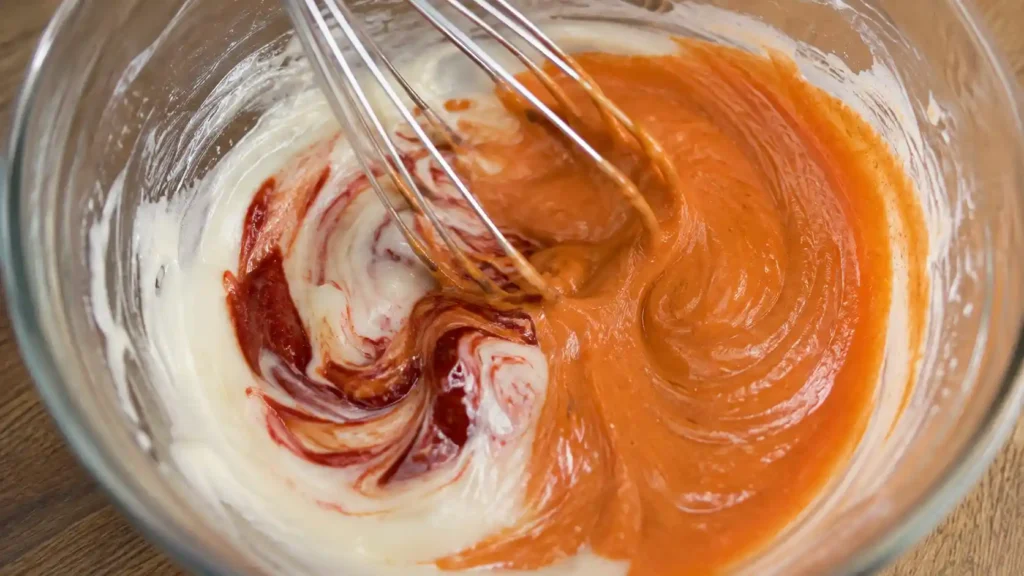
Put 2 tablespoons tomato paste in a medium bowl with about 1/4 cup of your measured mayonnaise and work them together with a small whisk or fork until the mixture is a smooth, uniform orange-red with no dark clumps. This takes about 30 seconds. Doing this first is the difference between a smooth sauce and one with stubborn specks of paste that never disperse — tomato paste is stiff and won’t break up properly if you dump it into a full bowl of mayo.
Step 2: Add the Remaining Mayo and the Liquids
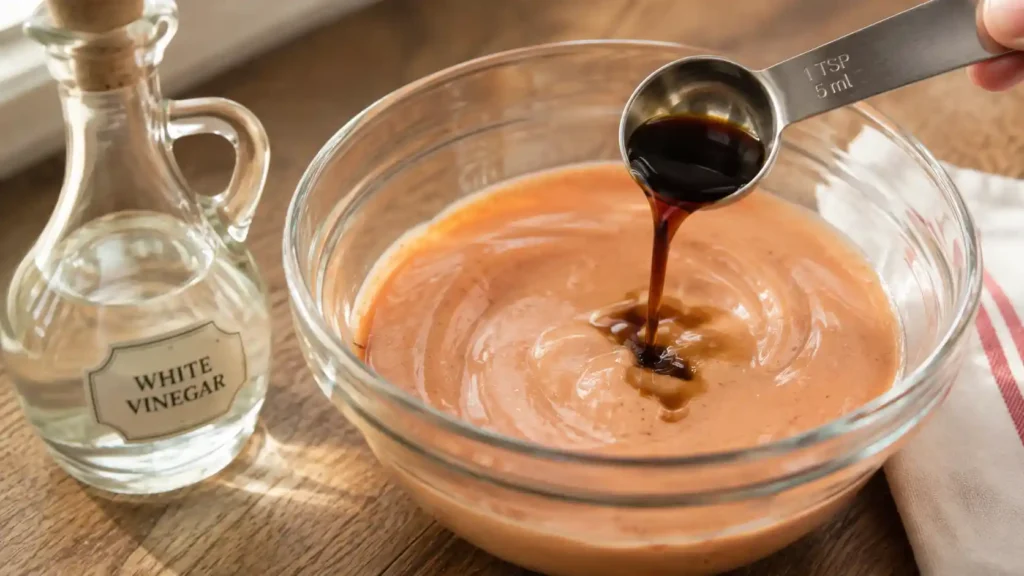
Add the rest of the mayonnaise (3/4 cup, for 1 cup total), 1 tablespoon Worcestershire sauce, and 2 teaspoons distilled white vinegar. Measure the Worcestershire into a spoon rather than pouring from the bottle; the neck pours fast and an extra splash darkens and over-salts the whole batch. Whisk until the color is even, a soft salmon-tan. You’ll notice the sauce loosens noticeably once the vinegar goes in — that’s correct, Zax sauce is a pourable sauce, not a stiff one.
Step 3: Whisk In the Dry Seasonings
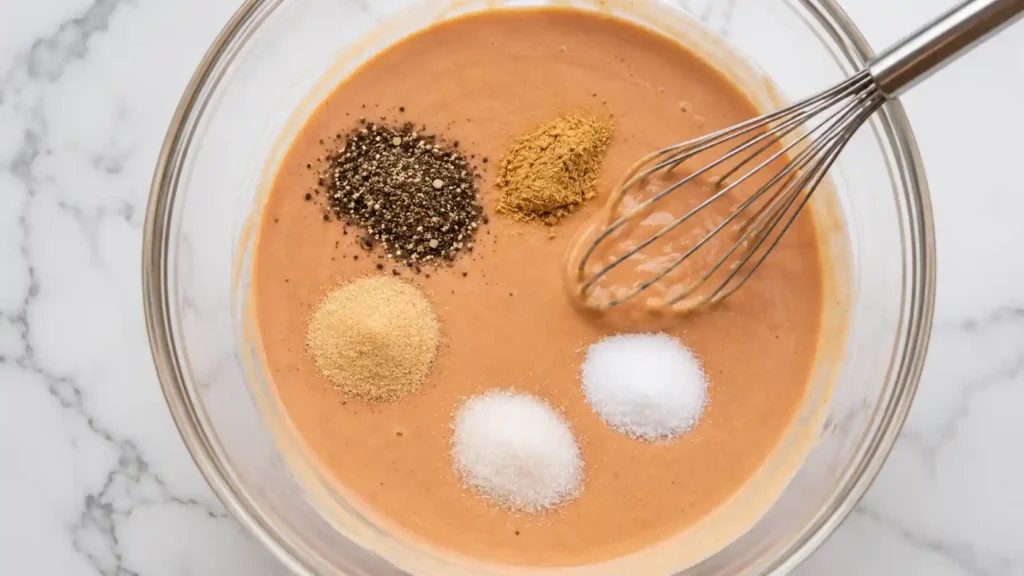
Add 1 1/2 teaspoons coarsely ground black pepper, 1 teaspoon granulated sugar, 3/4 teaspoon garlic powder, 1/2 teaspoon ground mustard, 1/2 teaspoon kosher salt, and 1/4 teaspoon onion powder. Whisk hard for a full 45 to 60 seconds, scraping the sides and the bottom edge of the bowl where dry seasoning likes to hide. You’re done when the sauce is one uniform color with black pepper suspended evenly through it and no pale streaks of powder anywhere.
Chef’s Note: Taste it now, then ignore what you tasted. Ground mustard is aggressive and raw-tasting on day one and mellows into savoriness by morning. Nearly every complaint I’ve read about homemade Zax sauce being “harsh” or “off” comes from someone judging it within ten minutes of mixing and then over-correcting with sugar or extra mayo.
Step 4: Chill Overnight
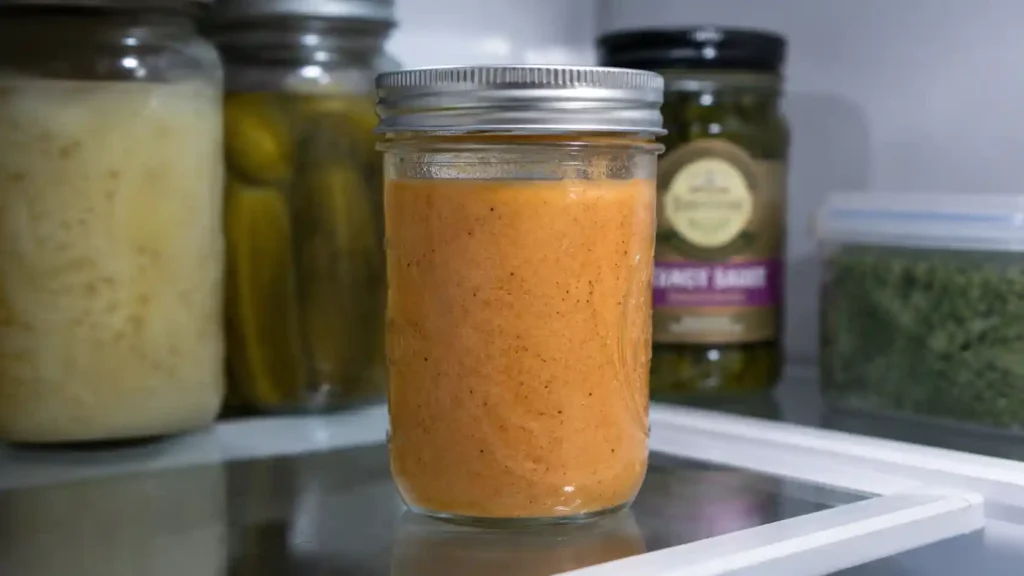
Scrape the sauce into an airtight jar, seal it, and refrigerate at least 8 hours, ideally 24. Give it a stir before serving. If a thin line of liquid has gathered at the edge, that’s ordinary separation from the vinegar — stir it back in and it won’t come back.
The One Swap That Fixes Most Copycat Batches
If you take one thing from this post, take this: the mayo-and-ketchup formula that dominates search results is not what the restaurant sauce is built on. People who have A/B tested against a real cup keep landing on the same conclusion independently — swapping ketchup for tomato paste, adding a little acid separately, and keeping the sweetness low gets you dramatically closer. It makes sense once you read the label, where tomato paste and vinegar appear as separate ingredients and ketchup appears nowhere at all.
The second gap is ground mustard. It’s on the label, it’s in almost no copycat, and it’s the thing people are reaching for when they say a homemade batch tastes “flat” or “like something’s missing.”
Zax sauce isn’t mayo and ketchup wearing a costume. It’s tomato, vinegar, mustard, and pepper on a mayonnaise base — and that’s a different sauce entirely.
What’s Actually on the Label
The bottled retail version publishes a full ingredient statement, and it’s worth knowing if you’re cooking for someone with allergies. The classic sauce lists egg yolk, and its Worcestershire component contains hydrolyzed soy protein and wheat flour, so the product carries egg, soy, and wheat allergen declarations — plus celery and mustard in some listings, and anchovy arrives by way of the Worcestershire. There’s also caramel color, which is part of why the restaurant sauce looks darker than anything you’ll mix at home from mayonnaise. Zaxby’s also states that its restaurant items are prepared on shared equipment where cross-contact with major allergens is possible, so anyone with a serious allergy should check the current allergen guide directly rather than relying on a recipe blog.
Making it at home lets you control all of that. Vegan mayonnaise removes the egg. A gluten-free Worcestershire (some are made with malt vinegar or wheat) removes the gluten concern. Nothing in the homemade version needs caramel color, preservatives, or high-fructose corn syrup — the color just lands a little lighter, which is a fair trade.
Fixing a Batch That Tastes Off
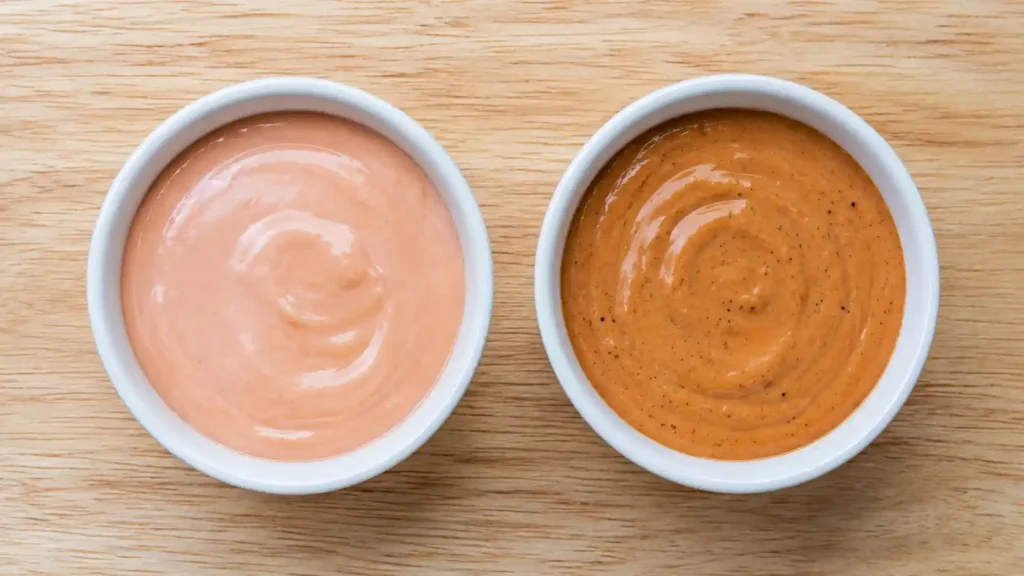
It tastes like fry sauce. You used ketchup, or too much of it. Tomato paste plus a teaspoon of sugar and two teaspoons of vinegar does the same job with a cleaner tomato flavor.
It’s too sweet. Cut the sugar entirely on the next batch and add another 1/4 teaspoon of pepper. Pepper cuts perceived sweetness better than salt.
It’s flat and creamy but not interesting. Missing acid or missing mustard. Add 1 teaspoon vinegar and 1/4 teaspoon ground mustard, whisk, and rest it again overnight before deciding.
It’s harsh or bitter. Too much mustard powder, or you tasted it too soon. Give it a full day. If it’s still sharp, whisk in an extra tablespoon of mayonnaise.
There are gritty specks. Undissolved tomato paste from skipping Step 1, or fine-ground pepper that never hydrated. Whisk hard and rest overnight.
It’s too thin. Usually an over-pour of Worcestershire or vinegar. Add mayonnaise a tablespoon at a time until it coats a spoon and drips slowly.
Common mistake: Correcting the seasoning twice. Flavors concentrate overnight, so a batch you salted, sugared, and peppered “to taste” while it was fresh will taste overdone the next day. Season to the written measurements, sleep on it, then adjust once.
Spicy Zax Sauce and Other Versions Worth Making
Spicy. The chain’s spicy version leans on red jalapeño, so that’s the honest route: stir in 1 tablespoon of finely minced pickled red jalapeño plus 1 teaspoon of the brine, or 2 teaspoons of a red jalapeño hot sauce. Cayenne works and adds cleaner heat, but you lose the fruity pepper flavor that makes the restaurant version taste like a distinct sauce rather than the classic with fire added.
Low-calorie. Swap half the mayonnaise for plain Greek yogurt and keep every other measurement identical. The sauce comes out tangier and thinner and loses richness, but the mustard-pepper-tomato character survives, which is what people actually recognize. Going all yogurt tips it into something closer to a dressing.
Smoky. A scant 1/4 teaspoon of smoked paprika. Start lower than feels right; it takes over quickly.
Extra peppery. Double the black pepper. If you like the restaurant version specifically because of the bite, this is the version to make. Many longtime fans go heavier on pepper than any published recipe suggests.
If a creamy sauce with real chile heat is more your speed, the Tim Hortons chipotle sauce uses the same cold-mixing method with smoke and adobo instead of tomato and mustard.
Bottled, Restaurant, or Homemade?
Zax Sauce is now sold in bottles at grocery stores, which changes the calculation a little. Here’s how the three stack up honestly.
| Restaurant cup | Store-bought bottle | This homemade version | |
|---|---|---|---|
| Flavor | The benchmark | Very close to the restaurant | Close after an overnight rest |
| Color | Deep, from caramel color | Deep | Lighter — no caramel color used |
| Texture | Thin, pourable | Thin, pourable | Matches if you don’t overload the mayo |
| Ingredients | Includes stabilizers and preservatives | Same | Pantry staples only |
| Cost per serving | Extras are charged individually | Moderate | Cheapest by a wide margin |
Tools That Matter, and Ones That Don’t
You need a bowl and a whisk, and cheap ones are completely fine. This is not a recipe where equipment buys you quality.
Two things genuinely change the result, though. A pepper mill with a coarse setting matters more than anything else on this list — the visible flecks and the bite are half the sauce’s identity, and pre-ground fine pepper can’t deliver either. A tube of tomato paste rather than a can isn’t equipment exactly, but it saves you from throwing out most of a can every time you make a batch. A small balloon whisk works better than a spoon for breaking down paste, and a squeeze bottle is worth having if you’re serving a crowd, since Zax sauce is thin enough to squeeze cleanly and it stops people from double-dipping into your storage jar.
Storage, Batch Size, and Serving
Keep the sauce in a sealed glass jar in the coldest part of the fridge, not in the door, and it holds about a week. Because it’s mayonnaise-based, warmth and contamination are what shorten its life — always serve with a clean spoon, never dip food straight into the storage jar, and put it back in the fridge after the meal rather than leaving it out on the table.
Don’t freeze it. Mayonnaise emulsions split when thawed into a weeping, curdled texture, and whisking won’t bring them back.
It scales up cleanly with no technique changes, and it’s actually better made two days ahead — the same way a good make-ahead spinach dip improves overnight. As for what to put it on: chicken fingers and crinkle fries first, obviously, then Texas toast, burgers, wraps, and thinned with a splash of vinegar as a salad dressing. It’s very good with crispy chicken wings when you want something creamy and peppery instead of buffalo, and I’ve been known to eat it straight off homemade Triscuit-style crackers while the rest of dinner finishes.
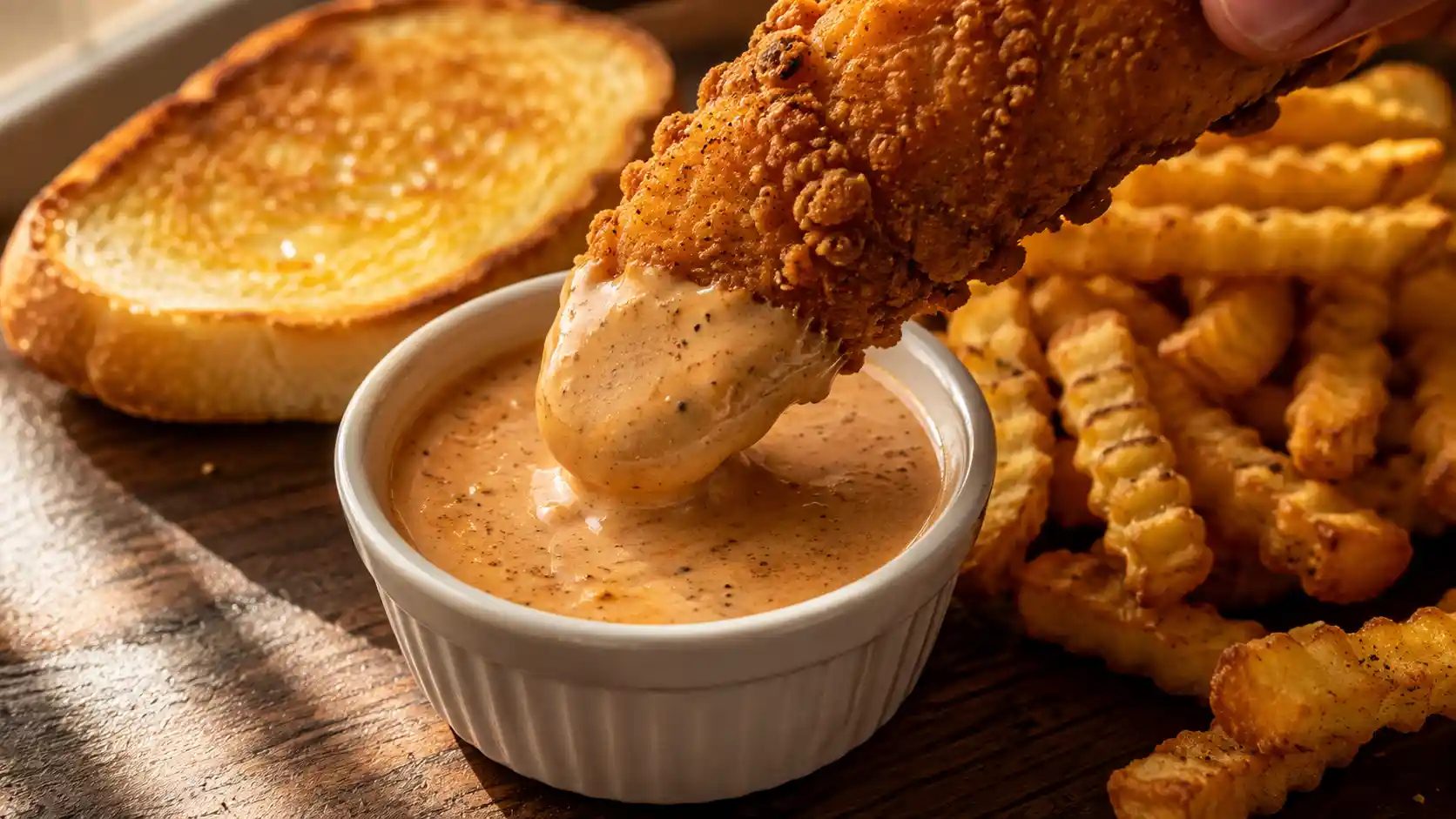

Copycat Zax Sauce (Zaxby’s Signature Sauce)
A peppery, tangy dipping sauce built from tomato paste and vinegar instead of ketchup — the swap that makes homemade actually taste like the restaurant cup. Five minutes of whisking, then an overnight rest in the fridge. Makes far more than a takeout cup for pantry-staple cost.
Ingredients
Equipment
Method
- In a medium bowl, whisk the tomato paste with about 1/4 cup of the mayonnaise until completely smooth and uniformly orange-red, roughly 30 seconds, with no dark clumps remaining.
- Add the remaining 3/4 cup mayonnaise, the Worcestershire sauce, and the vinegar. Measure the Worcestershire in a spoon rather than pouring from the bottle. Whisk until the color is even and the sauce has loosened.
- Add the black pepper, sugar, garlic powder, ground mustard, salt, and onion powder. Whisk hard for 45 to 60 seconds, scraping the sides and the bottom edge, until no pale streaks of dry seasoning remain and the pepper is evenly suspended.
- Transfer to an airtight jar, seal, and refrigerate at least 8 hours, preferably 24. Stir before serving.
- If the sauce is thicker than you want, whisk in water 1 teaspoon at a time. If it’s too thin, add mayonnaise 1 tablespoon at a time.
Video
Notes
Store sealed in the fridge for up to about a week. Always use a clean utensil and never dip directly into the storage jar.
Do not freeze — the mayonnaise emulsion breaks on thawing.
No tomato paste? Use 1/4 cup ketchup and omit the sugar and vinegar. The result is good but noticeably closer to fry sauce.
For the spicy version, low-calorie version, smoky version, and extra-peppery version, see the variations covered above.
Season to the written measurements rather than to taste on day one; the flavors concentrate overnight.
Frequently Asked Questions
What are the actual zax sauce ingredients?
The bottled retail version carries a published ingredient statement that lists vegetable oil, water, tomato paste, sugar, Worcestershire sauce, distilled vinegar, salt, egg yolk, spices, dried garlic, ground mustard, and caramel color, among other items. Notably, there is no ketchup on that list. That is why this copycat uses tomato paste plus vinegar and a small amount of sugar rather than the mayo-and-ketchup formula that dominates most recipes online.
Why does my homemade zax sauce just taste like fry sauce?
Almost always because the recipe used ketchup. Ketchup brings its own sugar, onion, and clove notes that push the sauce toward standard fry sauce and away from the tangier, more peppery restaurant flavor. Swap in tomato paste, add vinegar separately so you control the acidity, and include ground mustard. That combination is what closes the gap.
Has Zaxby’s ever confirmed a copycat recipe?
The company has never published the recipe. A widely circulated version printed in an Atlanta newspaper years ago was reportedly shown to a Zaxby’s co-founder, who called it roughly half right, and that half-right recipe is the one most blogs still repeat. Treat every version online, including mine, as a reverse-engineered approximation rather than the official formula.
Do I have to let the sauce chill overnight?
You can eat it right away, but it will not taste like the restaurant version. Ground mustard, garlic powder, and coarse black pepper all need hours in a fatty base to hydrate, and before that they taste dusty and harsh. Eight hours gets you most of the way and twenty-four hours is better. Judging a fresh batch is the most common reason people think the recipe failed.
How do I make spicy zax sauce at home?
The restaurant’s spicy version leans on red jalapeno, so use that rather than generic heat. Stir 1 tablespoon of finely minced pickled red jalapeno plus 1 teaspoon of its brine into a full batch, or use 2 teaspoons of a red jalapeno hot sauce. Cayenne works if that is what you have, though you lose the fruity pepper flavor that gives the spicy version its own character.
How long does homemade zax sauce keep, and can I freeze it?
Sealed in a glass jar in the coldest part of the fridge, it holds well for about a week. Always serve with a clean spoon and never dip food directly into the storage jar, since contamination shortens a mayonnaise-based sauce’s life faster than anything else. Do not freeze it. The emulsion splits on thawing into a curdled, watery texture that whisking will not repair.
Can I make a low calorie or healthy zax sauce recipe?
Replace half the mayonnaise with plain Greek yogurt and keep every other measurement exactly the same. The sauce comes out tangier and thinner and loses some richness, but the tomato, mustard, and pepper character stays intact, which is what makes it recognizable. Using all yogurt tips it into something closer to a salad dressing than a dipping sauce.
Is zax sauce gluten-free or dairy-free, and can I make it egg-free?
The retail bottle carries egg, soy, and wheat allergen declarations, with the wheat and soy arriving through its Worcestershire component, and some listings also flag celery and mustard. Zaxby’s states its restaurant items are prepared on shared equipment, so check the current allergen guide if you have a serious allergy. At home you have more control: use a certified gluten-free Worcestershire, and swap in vegan mayonnaise for an egg-free and dairy-free version.