Your favorite restaurant recipes, recreated at home — tested and easy to follow.


Smoked salmon has a reputation for being something you buy, not something you make — either the delicate, silky cold-smoked kind from a deli counter, or the flakier, more rustic hot-smoked version sold vacuum-sealed at the grocery store. What most people don’t realize is that the second style, hot-smoked salmon, is genuinely easy to make at home, and the Ninja Woodfire Grill is particularly well suited to it, since it can hold a steady low temperature while real wood pellets do the flavor work.
This recipe uses a short dry brine to season the fish and firm up its texture, followed by a low, slow smoke using the grill’s Smoker function. The result is salmon with a glossy, slightly tacky exterior, a deep smoky flavor that goes all the way through the flesh (not just on the surface), and a tender, moist center — the kind of result that’s easy to get wrong on a regular grill or smoker if you don’t know what internal temperature to actually pull it at.
Below, you’ll find the real ingredient breakdown, a full step-by-step method with actual times and temperatures, a printable recipe card, and answers to the questions people most commonly run into when trying to smoke salmon on this specific grill.
Key Ingredients & Substitutions
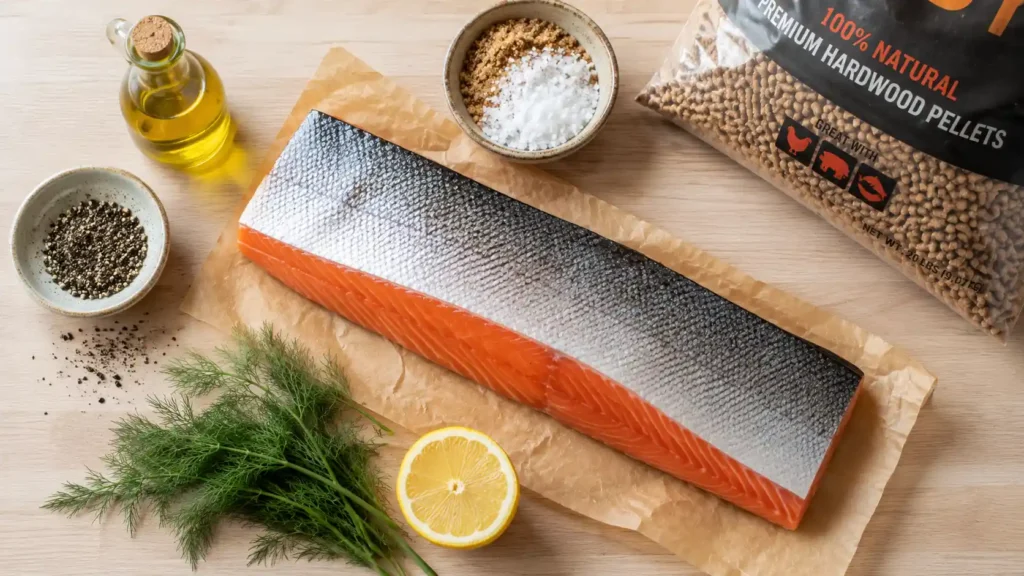
Salmon fillet, skin-on (center-cut, 1–1.5 inches thick) — Skin-on fillets hold together better during smoking and are easier to lift off the grill grate cleanly. A center-cut piece gives you an even thickness, which matters a lot here, since thin tail-end pieces will finish far sooner than a thick center portion and can dry out while you wait on a thicker piece next to it.
Kosher salt and brown sugar (for the dry brine) — This isn’t optional if you want true smoked-salmon texture and flavor, not just “salmon that spent time near smoke.” The salt draws out surface moisture and firms up the flesh, while the sugar balances the salt and helps the exterior take on a slightly glossy, tacky finish once it hits the smoker. Table salt can substitute for kosher salt in a pinch, but use less by volume since it’s more concentrated.
Black pepper and fresh dill (optional) — A classic pairing for salmon that won’t fight with the smoke flavor. Swap in lemon pepper, garlic powder, or a simple everything-bagel blend if you want a different direction; the brine and smoking method underneath stay the same either way.
Neutral oil or a light brush of olive oil — Helps seasoning adhere and keeps the surface from sticking to the grill grate. A light coating is all you need; salmon has enough natural fat that you’re not trying to add much here.
Ninja Woodfire pellets — mild wood, like apple, alder, or cherry — Fish takes on smoke flavor faster and more intensely than red meat or poultry, so a milder wood is usually the better call; heavier woods like mesquite or hickory can quickly overpower salmon’s delicate flavor. If Ninja’s lineup only offers All-Purpose or Robust blends where you are, All-Purpose is the closer match to a mild wood for fish.
Lemon (optional, for serving or a bed under the fillet) — Sliced lemon under the fillet keeps it from sticking directly to the grate and adds a subtle citrus note as it warms through, though it’s a nice-to-have rather than essential.
How to Make Ninja Woodfire Grill Smoked Salmon
This method uses a short dry brine to season and firm up the fish, then a low, steady smoke using the Smoker function rather than high heat, since salmon dries out quickly if it’s rushed. Active prep time is around 15 minutes, the brine needs 1–4 hours in the fridge, and the actual smoke takes anywhere from 30 minutes to about an hour and a half depending on the thickness of your fillet. Here’s the full walkthrough.
Step 1: Dry-Brine (Cure) the Salmon
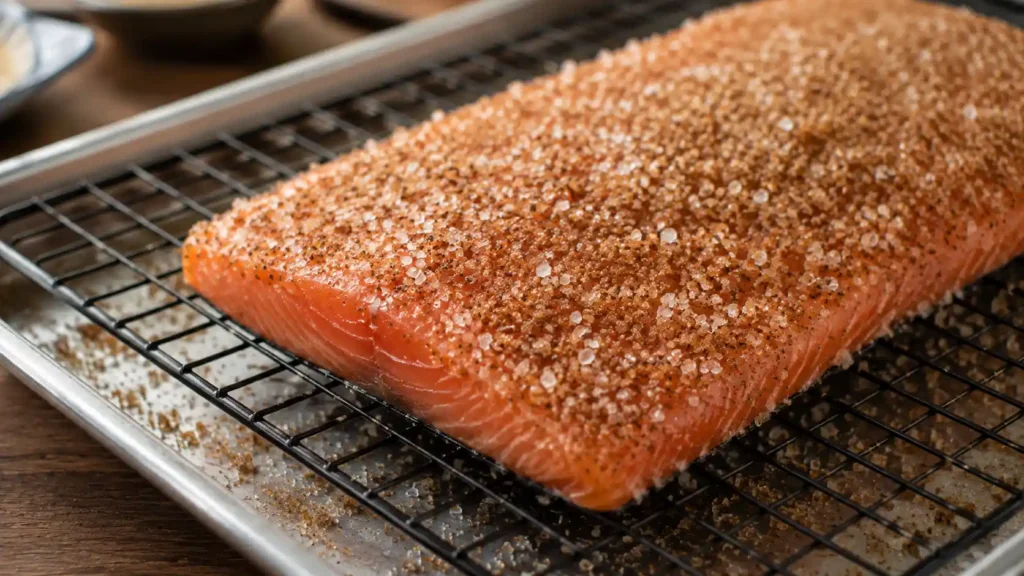
In a small bowl, mix 2 tablespoons kosher salt with 2 tablespoons brown sugar. Pat the salmon fillet dry, then coat both sides evenly with the salt-sugar mixture. Place it on a rack set over a tray or plate and refrigerate uncovered for at least 1 hour, up to 4 hours for a firmer texture and deeper flavor. Rinse the fillet briefly under cold water to remove excess surface salt, then pat it completely dry again.
Step 2: Let the Pellicle Form
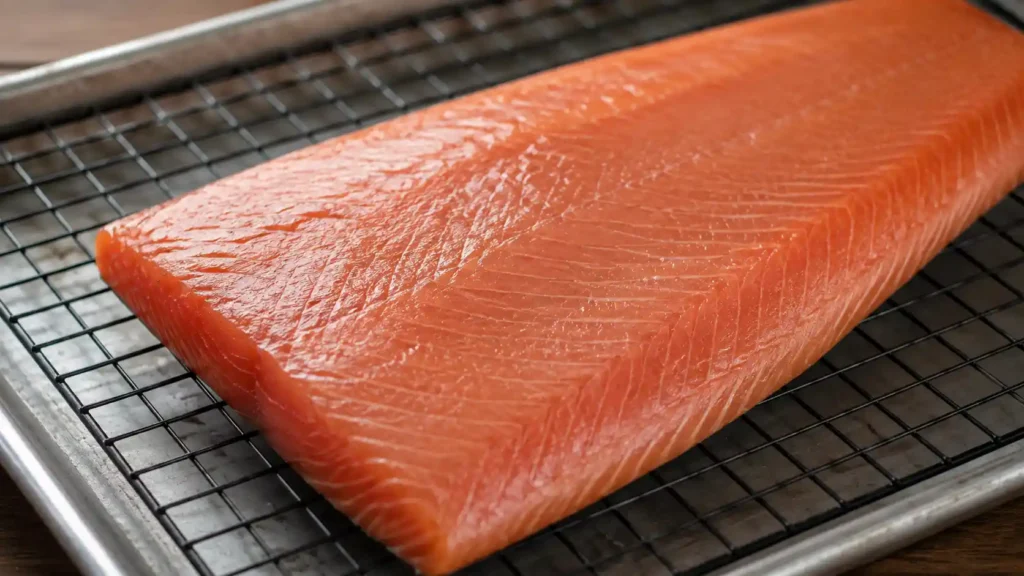
Return the rinsed, dried salmon to the rack, uncovered, and let it sit in the fridge for another 30–60 minutes. During this time, the surface proteins form a thin, slightly tacky layer called a pellicle. This step is easy to skip, but it’s genuinely worth the wait, since smoke clings to a tacky pellicle far better than it does to a wet or freshly rinsed surface, giving you noticeably deeper smoke flavor for almost no extra effort.
Step 3: Season and Load the Smoke Box
Brush the salmon lightly with oil, then season the flesh side with black pepper and fresh dill, if using. Lift the smoke box lid on the grill and fill it with your chosen mild wood pellets, then close the lid. If you’re using a lemon bed, arrange the slices directly on the grill grate where the salmon will sit.
Step 4: Smoke the Salmon
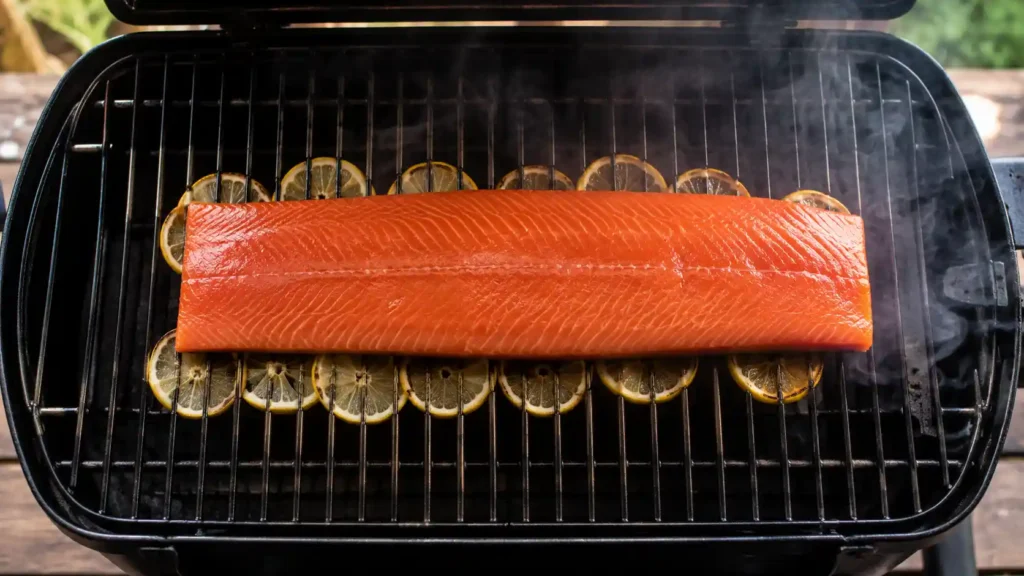
Place the salmon skin-side down on the grill grate (on top of the lemon bed, if using), leaving space around it for smoke and heat to circulate. Turn the dial to the Smoker function and set the temperature to 225°F. A thinner fillet (under an inch) will often finish in 30–40 minutes, while a thick center-cut piece can take 60–90 minutes, so start checking the internal temperature at the earlier end of that range rather than assuming a fixed time. Insert a probe thermometer into the thickest part of the fillet and pull the salmon at 130–135°F for a moist, tender result, or let it go to 140–145°F if you prefer a firmer, more traditional “cooked through” texture.
Step 5: Rest and Serve
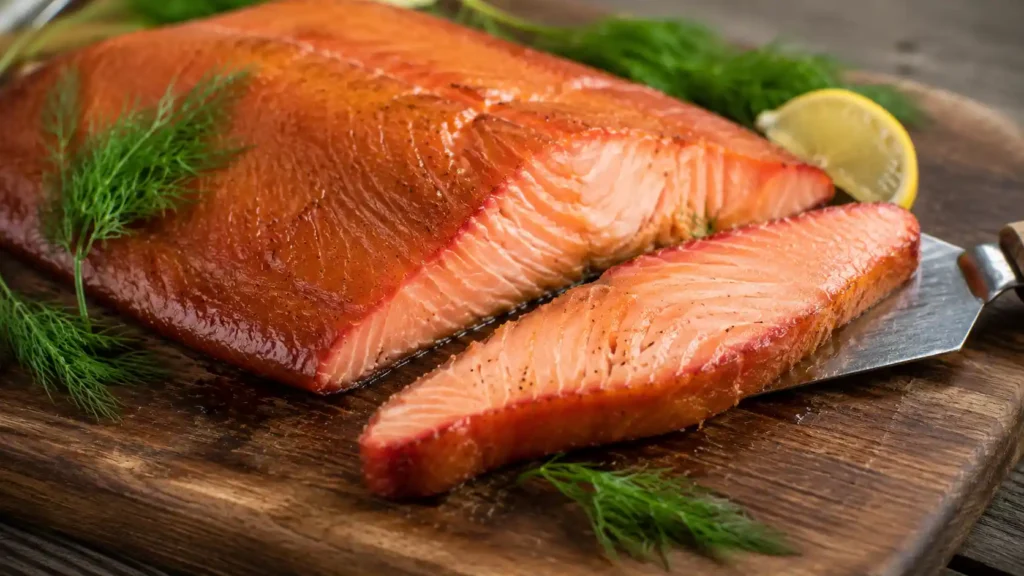
Let the salmon rest for 5 minutes before serving; carryover heat will bring it up a few more degrees, so pulling slightly early in Step 4 accounts for this. Serve warm, at room temperature, or chilled — smoked salmon made this way holds up well cold and works nicely flaked over salads, bagels, or scrambled eggs the next day.
You may also like:
Choosing the Right Wood for Smoked Salmon
Not every pellet in the Ninja Woodfire lineup is a good match for fish. Because salmon smokes relatively quickly compared to a brisket or a whole chicken, it has less time to develop a balanced smoke flavor, which means bold, resinous woods like mesquite or heavy hickory tend to come through as bitter or overwhelming rather than complementary. Milder, slightly sweet woods — apple, alder, or cherry — are the better match, since they add real smoky depth without masking the delicate flavor of the fish itself. If your pellet options are limited to Ninja’s standard All-Purpose and Robust blends, reach for All-Purpose here and save Robust for heartier cuts like ribs or a pork shoulder.
Hot-Smoked vs. Cold-Smoked Salmon: What This Recipe Actually Makes
A lot of people searching for smoked salmon recipes are picturing the thinly sliced, silky, almost raw-textured salmon served at brunch spots and delis — but that’s cold-smoked salmon, made at temperatures under 90°F over many hours, and it requires specialized equipment to hold that low a temperature safely. The Ninja Woodfire Grill, like most home smokers and grills, is built for hot smoking, which cooks the fish through at 200–225°F while infusing it with smoke at the same time. The result is a flakier, more opaque texture, closer to a smoked trout or a flaky smoked fish you’d find at a seafood counter, rather than deli-style lox. This recipe is written specifically for that hot-smoked style, since it’s what this grill actually does well and safely.
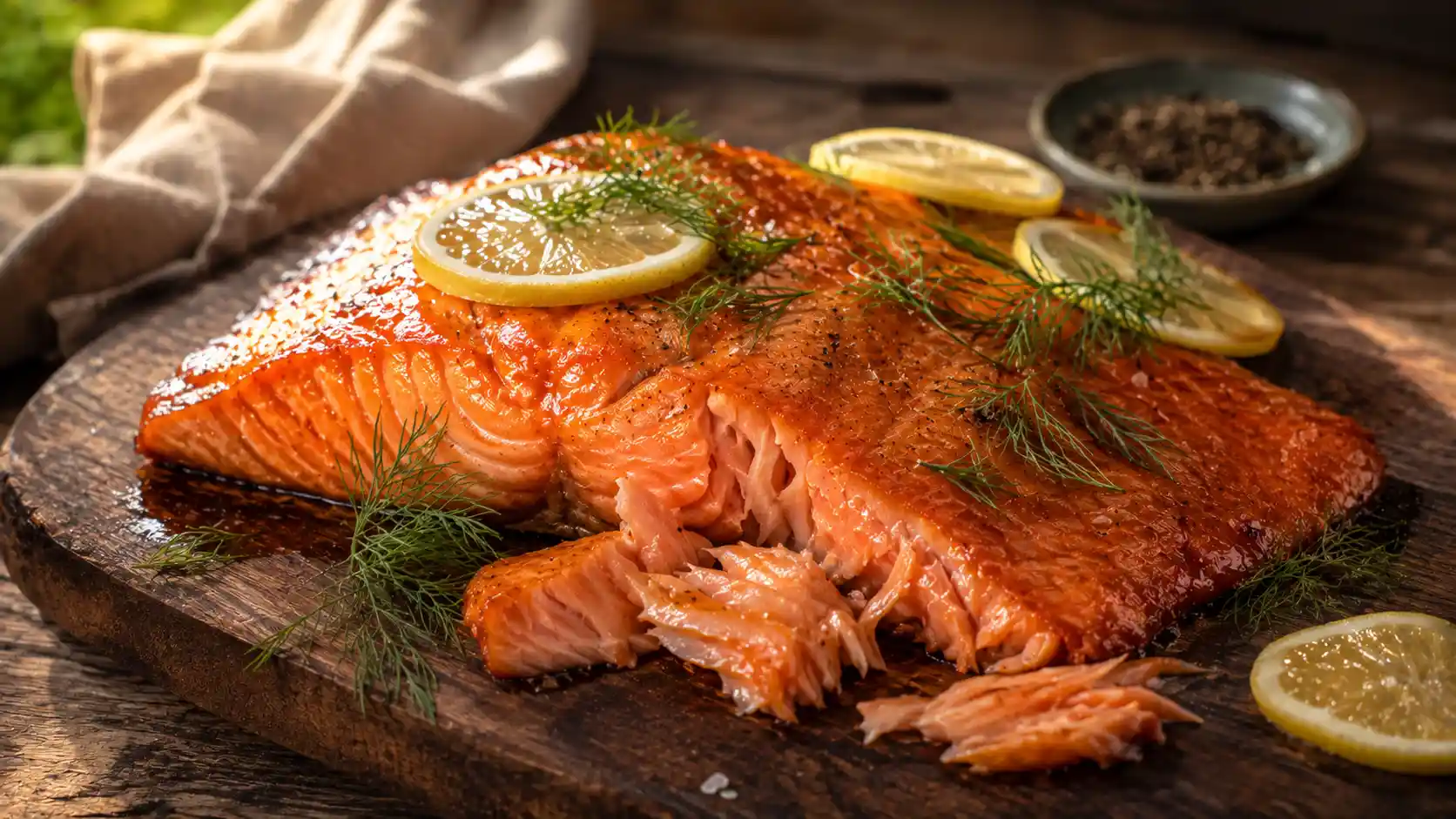

Ninja Woodfire Grill Smoked Salmon
A simple hot-smoked salmon made on the Ninja Woodfire Grill’s Smoker function. A quick dry brine and a low, steady smoke over mild wood pellets give you moist, flaky salmon with real smoky depth throughout.
Ingredients
Equipment
Method
- Mix the kosher salt and brown sugar. Pat the salmon dry and coat both sides evenly with the mixture. Place on a rack over a tray and refrigerate uncovered for 1–4 hours.
- Rinse the salmon briefly under cold water to remove excess salt, then pat completely dry. Return to the rack and refrigerate uncovered for another 30–60 minutes to form a pellicle.
- Brush the salmon lightly with oil and season with black pepper and dill, if using. Fill the smoke box with mild wood pellets.
- If using, arrange lemon slices on the grill grate. Place the salmon skin-side down on the grate (on the lemon bed, if using).
- Set the grill to the Smoker function at 225°F. Smoke for 30–90 minutes depending on thickness, checking internal temperature starting around the 30-minute mark for thinner fillets.
- Pull the salmon at 130–135°F for a moist result, or 140–145°F for a firmer texture. Rest for 5 minutes before serving.
Video
Notes
Store leftover smoked salmon in an airtight container in the fridge for up to 4 days; it’s excellent served cold over salads or bagels. To freeze, wrap tightly and store for up to 2 months, then thaw overnight in the fridge. This recipe is naturally gluten-free and dairy-free as written. See the wood pairing and hot-vs-cold smoking notes above if you’re deciding how to season or serve it.
Frequently Asked Questions
What temperature do you smoke salmon at on the Ninja Woodfire Grill?
This recipe uses the Smoker function set to 225°F, which is low enough to let the wood pellets flavor the fish fully without rushing it and drying it out.
How long does it take to smoke salmon on a Ninja Woodfire Grill?
It depends heavily on thickness. Thinner fillets under an inch thick often finish in 30–40 minutes, while a thick center-cut piece can take 60–90 minutes, so it’s best to start checking internal temperature early rather than relying on a fixed time.
What internal temperature should smoked salmon reach?
For a moist, tender texture, pull the salmon at 130–135°F. If you prefer a firmer, more traditionally “cooked through” texture, 140–145°F also works, though the fish will be noticeably drier at the higher end of that range.
Do you need to brine salmon before smoking it?
Yes, a short dry brine of salt and sugar is strongly recommended. It seasons the fish, firms up the texture so it holds together better on the grill, and helps form the tacky pellicle that lets the fish take on smoke flavor properly.
What’s the best wood pellet for smoked salmon?
Mild, slightly sweet woods like apple, alder, or cherry work best. Salmon smokes relatively quickly, so it doesn’t have much time to mellow out a bold wood like mesquite or heavy hickory, which can come through as bitter rather than complementary.
Can you cold smoke salmon on a Ninja Woodfire Grill?
No. The Ninja Woodfire Grill is built for hot smoking at 200°F and above, not the under-90°F range true cold-smoked (deli-style) salmon requires. This recipe produces flakier, fully cooked hot-smoked salmon rather than lox-style cold-smoked salmon.
How do you store and reheat leftover smoked salmon?
Keep it in an airtight container in the fridge for up to 4 days. It’s genuinely great served cold straight from the fridge; if you do want it warm, reheat gently in a low oven or covered skillet rather than the microwave, which can dry it out further.
Is this recipe gluten-free or dairy-free?
Yes, as written with just salmon, salt, sugar, oil, and dried or fresh herbs, this recipe is naturally both gluten-free and dairy-free. Double-check any glaze or sauce you add on the side, since some prepared options include soy sauce or dairy.