Your favorite restaurant recipes, recreated at home — tested and easy to follow.


Some restaurant dishes get famous because they’re flashy. This one got famous by being almost stubbornly simple — a small roast chicken, dry-brined for a day or two, set on top of a warm bread salad, and that’s genuinely it. No sauce, no elaborate plating, nothing hiding underneath. Judy Rodgers built this dish at Zuni Café in San Francisco, and it’s stayed on the menu for decades because it does one thing — really good roast chicken — better than almost anywhere else, and pairs it with a salad that’s smart enough to catch every drop of the drippings instead of wasting them.
What makes the original genuinely different from a normal roast chicken dinner is the bread salad underneath. It’s built from torn, chewy country bread, toasted until it’s crisp on the edges, then tossed with vinegar-plumped currants, pine nuts, garlic, scallions, and peppery greens like frisée or mustard greens. When the rested chicken goes on top, its juices soak straight down into the bread, so the salad isn’t a side dish so much as the second half of the main course.
This copycat version walks through the same two-part method at home: a properly dry-brined, high-heat roasted chicken, and a bread salad built to actually catch the drippings the way the original intends. It takes some patience — the dry brine really does need time — but very little of it is hands-on work, and the result is a genuinely restaurant-caliber dinner from a short, honest ingredient list.
Key Ingredients & Substitutions
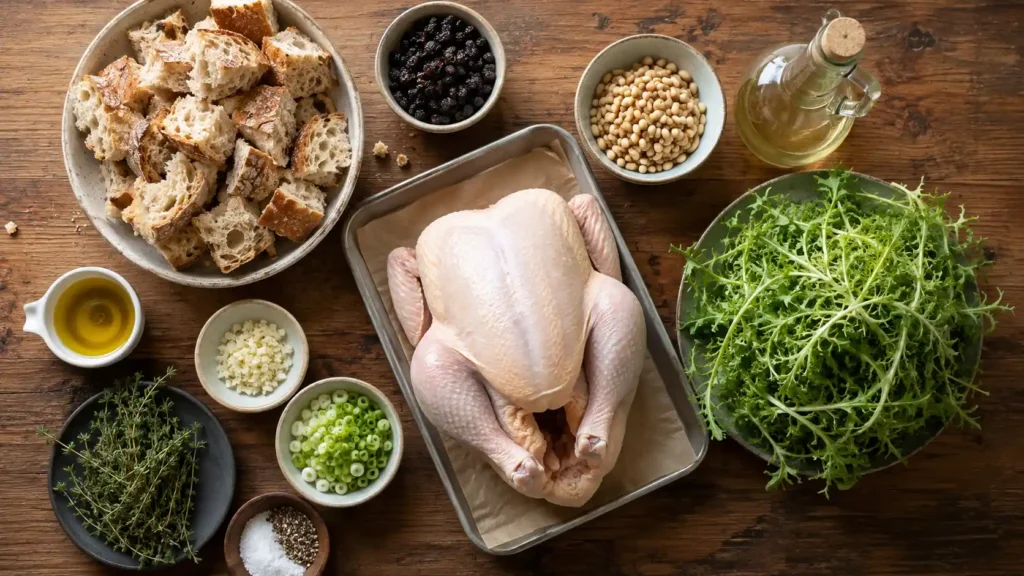
A small whole chicken (2.75-3.5 lbs) — The original calls for a smallish fryer rather than a large roaster, and it matters — a smaller bird cooks through faster at high heat, which is how you get crisp skin without drying out the meat. If all you can find is a larger chicken, it’ll still work, just budget more roasting time and watch the internal temperature closely.
Kosher salt — This is the backbone of the dry brine, which is really just salting the chicken well ahead of time and letting it sit uncovered in the fridge. It seasons the meat all the way through and helps the skin dry out, which is what gives you that shatteringly crisp exterior.
Fresh herbs (thyme, sage, or rosemary) — Tucked under the skin during the dry brine, these slowly perfume the meat as the chicken sits. Any sturdy fresh herb works; just avoid delicate ones like basil, which won’t hold up to the long dry-brine time or the roasting heat.
Stale, chewy country-style bread (not sourdough) — This one’s specific for a reason: sourdough’s tang competes with the vinegar in the bread salad instead of complementing it. A rustic peasant-style loaf, a day or two old, holds its shape and soaks up the pan drippings without turning to mush.
Dried currants — Plumped briefly in warm water and a splash of red wine vinegar, these add little bursts of sweetness that balance the vinegary, savory bread salad. Golden raisins, chopped, are a reasonable substitute if currants aren’t available.
Pine nuts — Toasted lightly, these bring richness and crunch. Slivered almonds work in a pinch, though the flavor won’t be quite as buttery.
Scallions and garlic — Both get sautéed briefly to build the savory base of the bread salad before everything else gets tossed in.
Peppery greens (frisée, arugula, or mustard greens) — These get folded in warm, right at the end, so they wilt slightly from the residual heat without fully cooking down. The bitterness and peppery bite are what keep the whole dish from tasting too rich.
White wine vinegar and mild olive oil — Used to dress the bread salad. The vinegar is doing a lot of work here — this salad should taste distinctly tangy, not just oily, so don’t be shy with it.
How to Make Zuni Café Chicken Bread Salad at Home
This is genuinely a two-part project: the chicken needs to dry-brine in the fridge for at least a day before it ever sees the oven, and the bread salad comes together while the chicken roasts and rests. Active cooking time on roast day is under an hour, but plan ahead — the dry brine is not a step you can skip or rush if you want the real result.
Step 1: Dry-Brine the Chicken
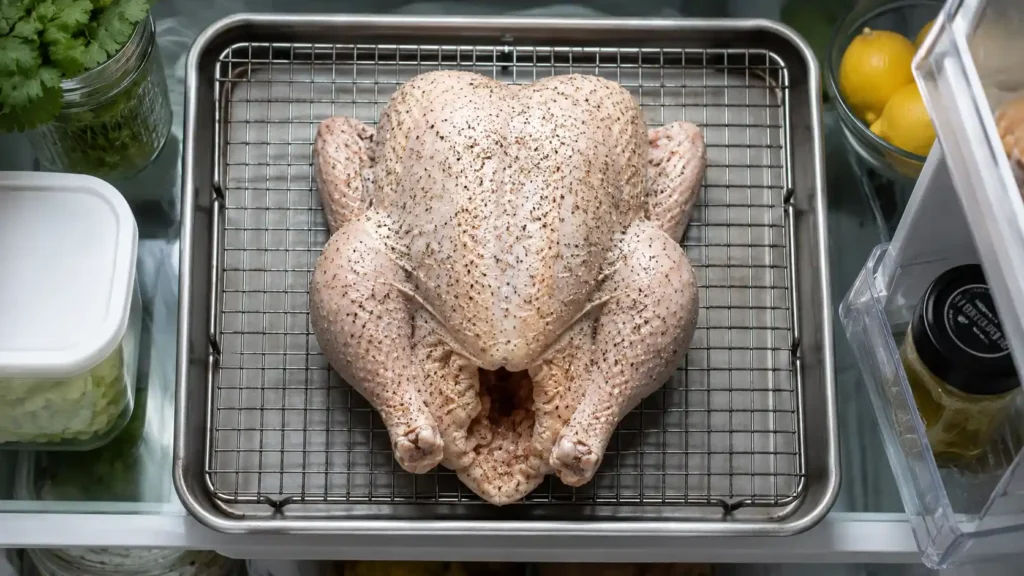
A day or two before you plan to cook, remove any excess fat from inside the chicken cavity, then rinse and pat the bird completely dry, inside and out — this matters more than it sounds like it should, since a wet chicken steams instead of browning. Loosen the skin over the breasts and thighs with your fingers to create small pockets, and tuck a few sprigs of thyme or sage underneath. Season the entire chicken generously with kosher salt (roughly ¾ teaspoon per pound) and a good amount of black pepper, then place it uncovered on a rack set over a plate or sheet pan in the fridge for 24-48 hours.
Step 2: Roast the Chicken
When you’re ready to cook, remove the chicken from the fridge about 30 minutes ahead to take some of the chill off. Preheat your oven to 475°F. Heat a splash of oil in a heavy oven-safe skillet (cast iron is ideal) over medium-high heat, then place the chicken breast-side up in the hot pan — it should sizzle immediately. Transfer to the oven and roast for about 30 minutes, then carefully flip the chicken breast-side down and roast for another 20-25 minutes, until a thermometer inserted into the thickest part of the thigh reads 165°F and the skin is deeply golden and crackling-crisp.
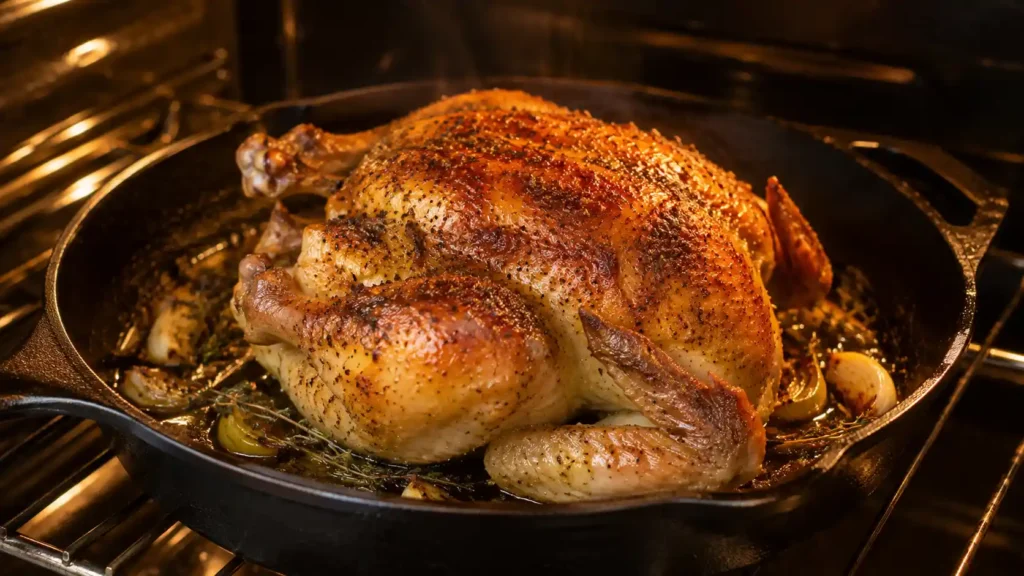
Step 3: Rest the Chicken and Reserve the Drippings
Transfer the chicken to a cutting board and let it rest for at least 10-15 minutes before carving — this step is non-negotiable, since it’s what lets the juices settle back into the meat instead of running out onto the board. While it rests, pour off the pan drippings into a small bowl or measuring cup and set aside; you’ll use these to dress the bread salad, and they’re genuinely one of the best parts of this dish.
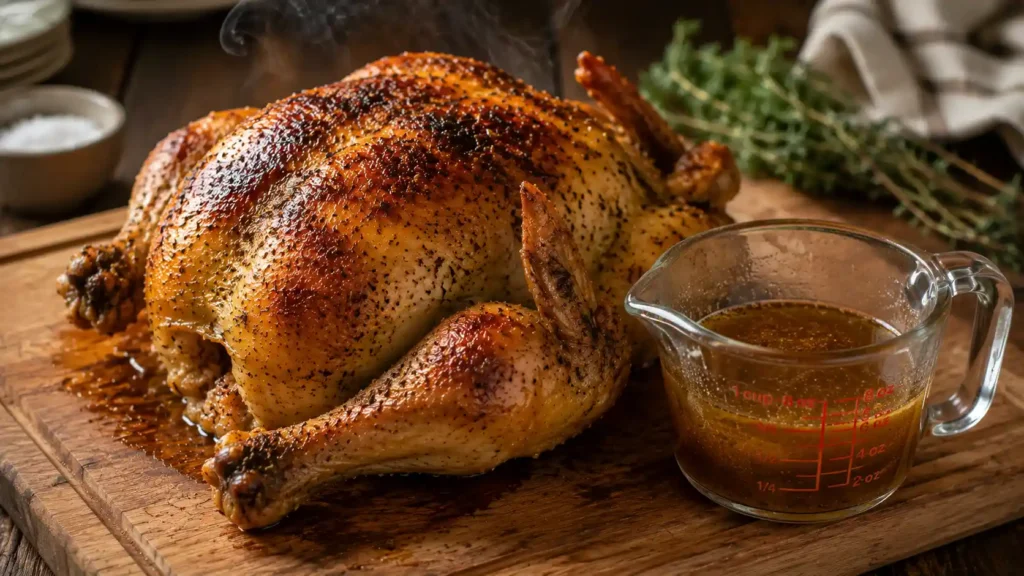
Step 4: Build the Bread Salad
While the chicken roasts, tear the stale bread into large, rustic chunks and toast them in a 400°F oven for about 8-10 minutes, until the edges are crisp but the centers stay a little chewy. In a small pan, plump the currants in warm water and a splash of red wine vinegar for about 10 minutes, then drain. Toast the pine nuts in a dry skillet for 2-3 minutes until golden, watching closely since they burn fast. Sauté the sliced scallions and garlic in a little olive oil for a minute or two, just until fragrant, then toss everything together — bread, currants, pine nuts, scallions and garlic — with white wine vinegar, olive oil, salt, and pepper.
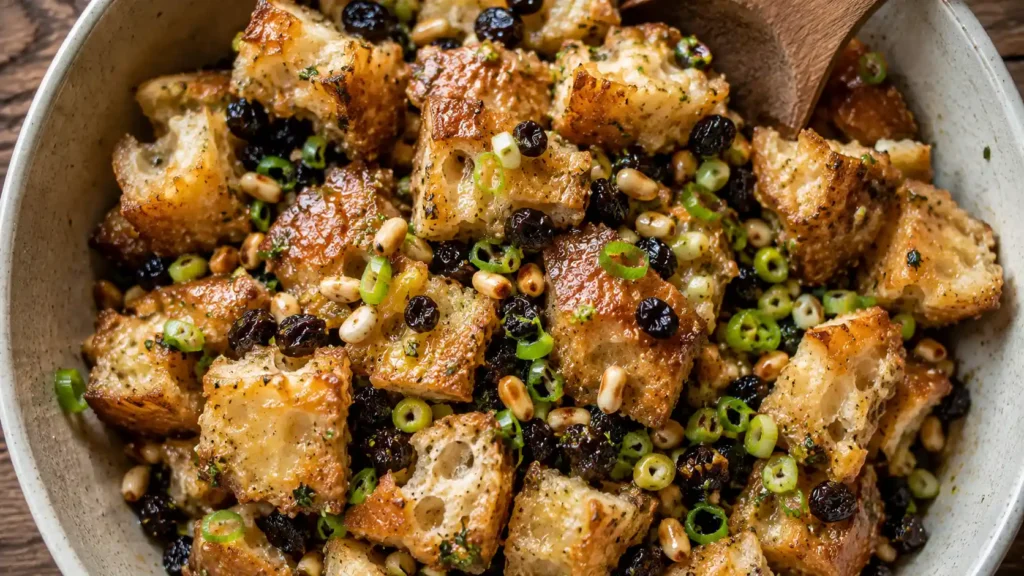
Step 5: Finish and Assemble
Pour the warm reserved pan drippings over the bread salad and toss well — this is the step that ties the entire dish together, since the bread should be soaking up real chicken flavor, not just vinaigrette. Fold in the peppery greens just until they wilt slightly from the residual heat. Pile the bread salad onto a platter, carve the chicken, and arrange the pieces directly on top so any last juices drip down into the salad as it’s served.
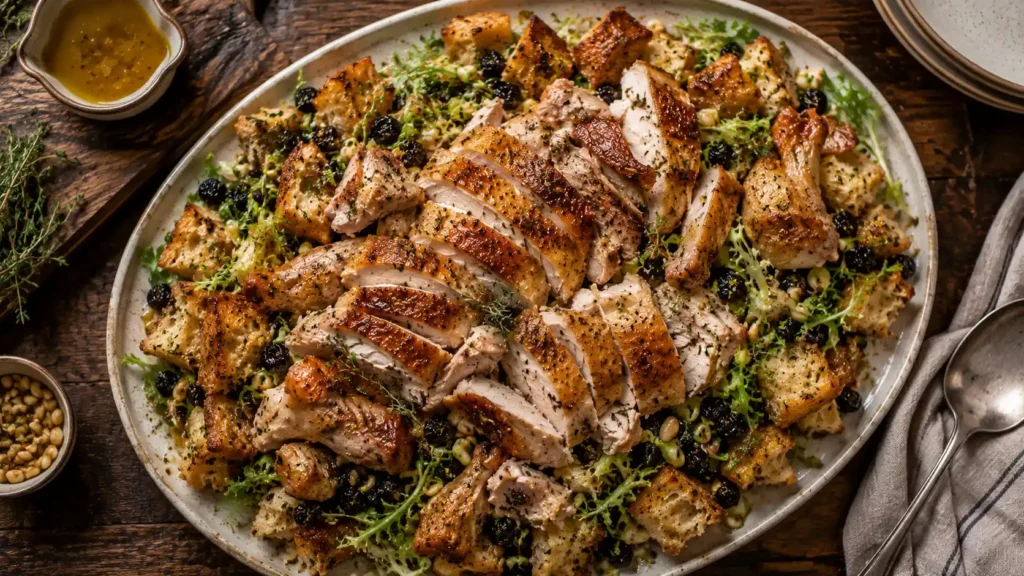
Why the Dry Brine Isn’t Optional Here
It’s tempting to skip the 24-48 hour wait and just salt the chicken right before roasting, but that shortcut changes this dish more than almost any other step. A same-day salted chicken seasons only the surface and doesn’t have time to draw moisture out and reabsorb it, which is the mechanism that makes dry-brined meat taste seasoned all the way through instead of just on the outside. It’s also what dries the skin out enough in the fridge to get genuinely crackling-crisp results in the oven, rather than the pale, slightly rubbery skin you get from a chicken that went in wet. If you only have a few hours, it’s still worth salting ahead — but the real result this dish is known for comes from planning a day or two in advance.
Why Not Sourdough
This is one detail people frequently get wrong when adapting the recipe, and it’s worth calling out specifically: sourdough’s inherent tang fights with the vinegar in the dressing instead of working with it, leaving the finished salad tasting muddled rather than bright. A plain, chewy country loaf or peasant-style bread gives the vinaigrette room to be the dominant tangy note, which is what the dish is actually built around.
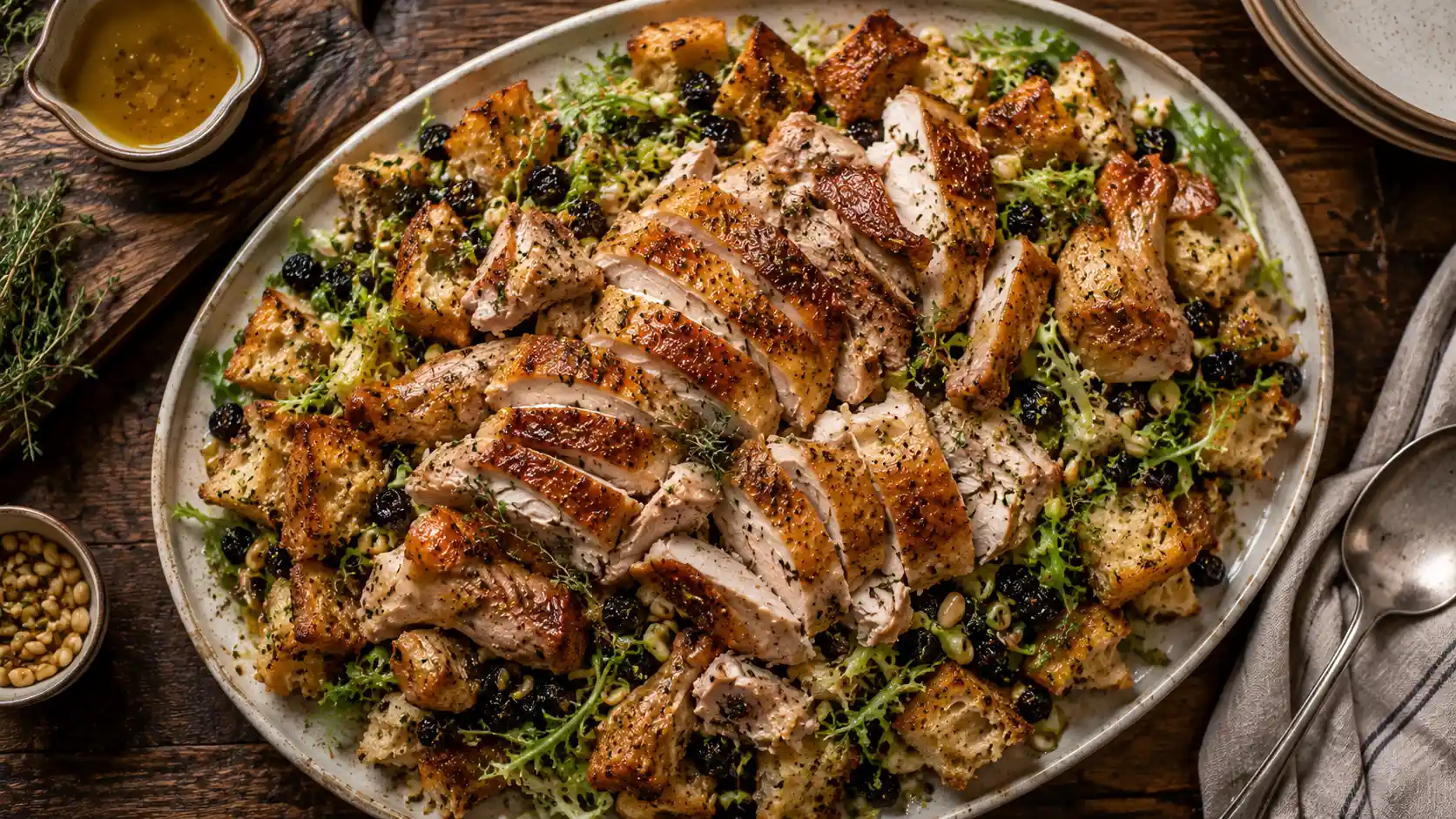

Copycat Zuni Café Chicken Bread Salad
A dry-brined, high-heat roasted chicken served over a warm bread salad with currants, pine nuts, and peppery greens, finished with the pan drippings. This copycat recreates the iconic Zuni Café dish at home.
Ingredients
Equipment
Method
- Remove excess fat from the chicken cavity, rinse, and pat completely dry. Loosen the skin and tuck herb sprigs underneath. Season generously with salt and pepper, place uncovered on a rack, and refrigerate for 24-48 hours.
- Let the chicken sit at room temperature for 30 minutes before roasting. Preheat oven to 475°F.
- Heat oil in an oven-safe skillet over medium-high heat. Place chicken breast-side up in the pan and transfer to the oven. Roast 30 minutes, then flip breast-side down and roast another 20-25 minutes, until internal temperature reaches 165°F.
- Rest the chicken 10-15 minutes on a cutting board. Reserve the pan drippings.
- Toast torn bread chunks at 400°F for 8-10 minutes until crisp at the edges.
- Plump currants in warm water and red wine vinegar for 10 minutes, then drain. Toast pine nuts in a dry skillet 2-3 minutes until golden. Sauté scallions and garlic in a little olive oil for 1-2 minutes.
- Toss toasted bread with currants, pine nuts, scallions, garlic, olive oil, white wine vinegar, salt, and pepper.
- Pour warm reserved pan drippings over the bread salad and toss well. Fold in the greens until just wilted.
- Arrange bread salad on a platter, carve the chicken, and place it on top.
Video
Notes
Leftover chicken and bread salad keep separately in airtight containers in the fridge for up to 3 days; the bread salad is best eaten the same day, since it softens further as it sits. This recipe doesn’t freeze well due to the bread salad component, though leftover carved chicken alone freezes fine for up to 2 months. For a gluten-free version, substitute a sturdy gluten-free country loaf, though texture will vary from the original.
Frequently Asked Questions
Why does Zuni Café’s chicken use a dry brine instead of a wet brine?
Judy Rodgers championed dry brining specifically because it seasons the meat all the way through while also drying out the skin in the fridge, which leads to noticeably crispier skin than a wet brine typically produces. It’s the technique the dish is most known for, and it’s genuinely worth the planning time.
Can I make this with a boneless chicken or chicken breasts instead of a whole bird?
You can, but it changes the dish meaningfully — the whole-bird roast is what produces the flavorful pan drippings that make the bread salad work, and bone-in, skin-on pieces hold up much better to the high roasting heat than boneless breasts, which tend to dry out fast at 475°F.
Why does the recipe specifically call for a small chicken?
A smaller bird (under about 3.5 lbs) cooks through more quickly at high heat, which helps the skin crisp deeply without the interior drying out in the process. A larger roasting chicken will still work, but expect to add roasting time and check the temperature more carefully.
What bread should I use if I don’t have a country-style loaf?
Any chewy, rustic, slightly stale bread works, as long as it’s not sourdough — the goal is a loaf sturdy enough to hold its shape and soak up the drippings without turning mushy. A day-old baguette or ciabatta are good substitutes.
Can I make the bread salad without meat drippings for a vegetarian version?
Yes, though it will taste noticeably different from the original, since the pan drippings are a major flavor component. A good vegetable stock or extra olive oil warmed briefly can stand in, paired with roasted mushrooms or a vegetarian protein if you want a heartier substitute for the chicken.
How long does the chicken actually need to dry-brine?
At minimum, a few hours makes a noticeable difference, but the full effect — deeply seasoned meat and very crisp skin — really shows up closer to 24-48 hours. If you’re short on time, salting even a couple hours ahead is still better than salting right before roasting.
Can I prepare the bread salad ahead of time?
The toasted bread, plumped currants, and toasted pine nuts can all be prepped a few hours ahead and combined right before serving. Hold off on adding the pan drippings and greens until just before serving, since those are what make the salad best enjoyed fresh and warm.
How do I store and reheat leftovers?
Store leftover chicken and bread salad in separate airtight containers in the fridge for up to 3 days. Reheat the chicken gently in a low oven to keep the skin from going soft, and warm the bread salad briefly in a skillet rather than the microwave, which will make it soggy.