Your favorite restaurant recipes, recreated at home — tested and easy to follow.


Ask any regular Olive Garden diner what they order and there’s a very good chance “Chicken Alfredo” comes up in the first three answers. The sauce is the whole reason — thick, silky, and so rich it practically hugs each strand of fettuccine, made from just a handful of ingredients but somehow tasting like it took hours. It’s not a delicate sauce, and it’s not trying to be. It’s pure comfort food, and it’s stayed a menu staple for decades because nobody’s tired of it.
What’s genuinely interesting is that Olive Garden’s version isn’t the traditional fettuccine Alfredo at all. The original dish, created in Rome in the early 1900s by a restaurateur named Alfredo di Lelio, was really just fresh fettuccine tossed with butter and Parmesan, emulsified into a sauce using the pasta’s starchy cooking water — no cream involved. The American, cream-based version most people know today (Olive Garden’s included) evolved from that much simpler original into something richer and heavier, built on butter, heavy cream, and a blend of Parmesan and Romano cheese instead.
This copycat recipe rebuilds that American-style, restaurant-thick Alfredo sauce at home, tossed with juicy grilled chicken and fettuccine, using the same core ingredients Olive Garden’s kitchen relies on. No flour needed, no fussy technique — just a handful of dairy and cheese, cooked low and slow until it’s glossy and thick enough to coat a spoon.
Key Ingredients & Substitutions
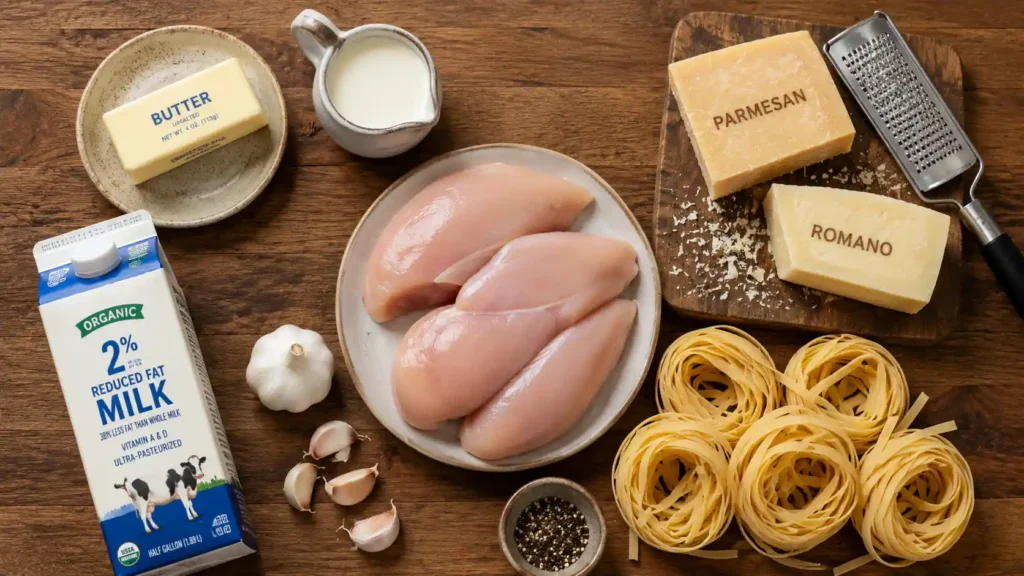
Butter — This is the flavor base the entire sauce builds on. Use unsalted butter so you can control the seasoning yourself, since Parmesan and Romano both bring plenty of salt on their own.
Heavy cream — Gives the sauce its signature thick, luxurious body. This isn’t a place to swap in milk or a lower-fat cream — the sauce genuinely needs the fat content in heavy cream to thicken properly without any flour.
Whole milk or half-and-half — Cuts the heavy cream just slightly so the sauce isn’t overwhelmingly thick, while still staying rich. Half-and-half works as a simple one-ingredient substitute if you’d rather not measure out both milk and cream separately.
Garlic — Just enough to add warmth and depth without turning this into a garlicky pasta sauce. Fresh minced garlic gives the best flavor, though garlic powder works in a pinch if that’s what you have.
Parmesan cheese — The primary cheese in the sauce, giving it a nutty, savory backbone. Buy a block and grate it fresh rather than using pre-shredded — the anti-caking coating on packaged shredded cheese keeps it from melting smoothly, which can leave your sauce grainy instead of silky.
Romano cheese — Sharper and saltier than Parmesan, this is what gives the sauce its slightly bold, tangy edge rather than tasting purely mild and buttery. If you can’t find Romano, extra Parmesan works, though the flavor will be a touch milder.
Chicken breast — Grilled or pan-seared and sliced, this is what turns the Alfredo sauce into the full “Chicken Alfredo” dish. Chicken thighs work well too if you prefer dark meat, and they’re more forgiving if slightly overcooked.
Fettuccine — The traditional pasta shape for Alfredo, wide and flat enough to really hold onto the thick sauce. Any long pasta works if that’s what’s on hand, but fettuccine is worth seeking out for the most authentic result.
How to Make Chicken Alfredo Sauce at Home
This comes together in two parts that run at the same time — the chicken cooks while the sauce simmers — so the whole dish is realistically done in about 30 minutes. The sauce itself needs gentle, steady heat and gets stirred often; rushing it or cranking the heat too high is the most common way homemade Alfredo turns grainy instead of silky.
Step 1: Cook the Chicken
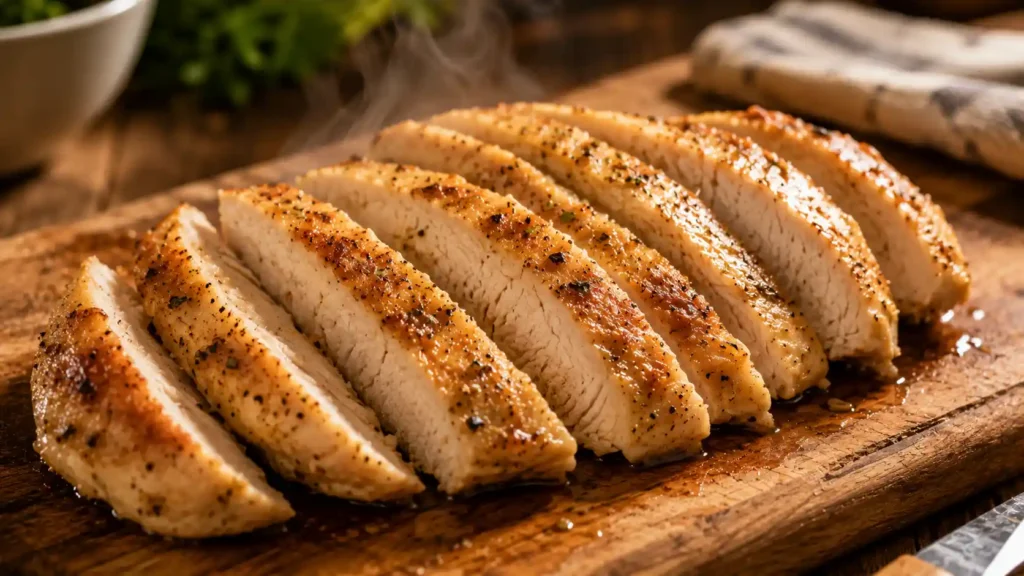
Season chicken breasts with salt, pepper, and a little garlic powder. Heat a tablespoon of butter or oil in a skillet over medium-high heat and cook the chicken for 5-6 minutes per side, until it reaches an internal temperature of 165°F and has good golden color on both sides. Let it rest for 5 minutes, then slice it into strips.
Step 2: Melt the Butter and Garlic
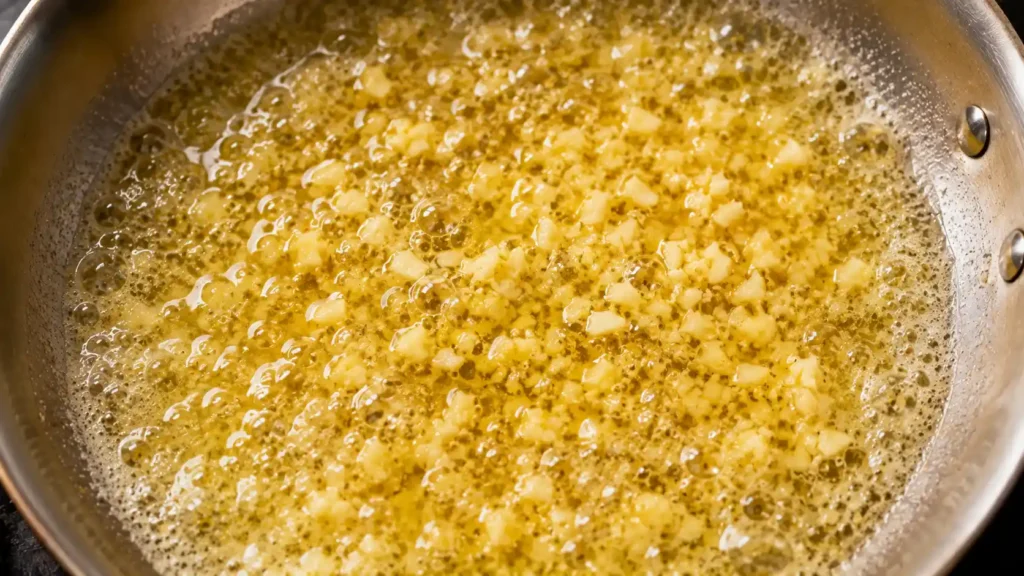
In a large saucepan or skillet, melt 6 tablespoons of butter over medium heat. Add the minced garlic and cook for about 30 seconds to a minute, just until fragrant — don’t let it brown, since burnt garlic will turn the whole sauce bitter.
Step 3: Add the Cream and Milk
Pour in the heavy cream and milk, whisking to combine, and bring the mixture to a gentle simmer over medium-low heat — you want small bubbles around the edges, not a rolling boil. Let it simmer for 3-4 minutes, stirring occasionally, to reduce slightly and start thickening.
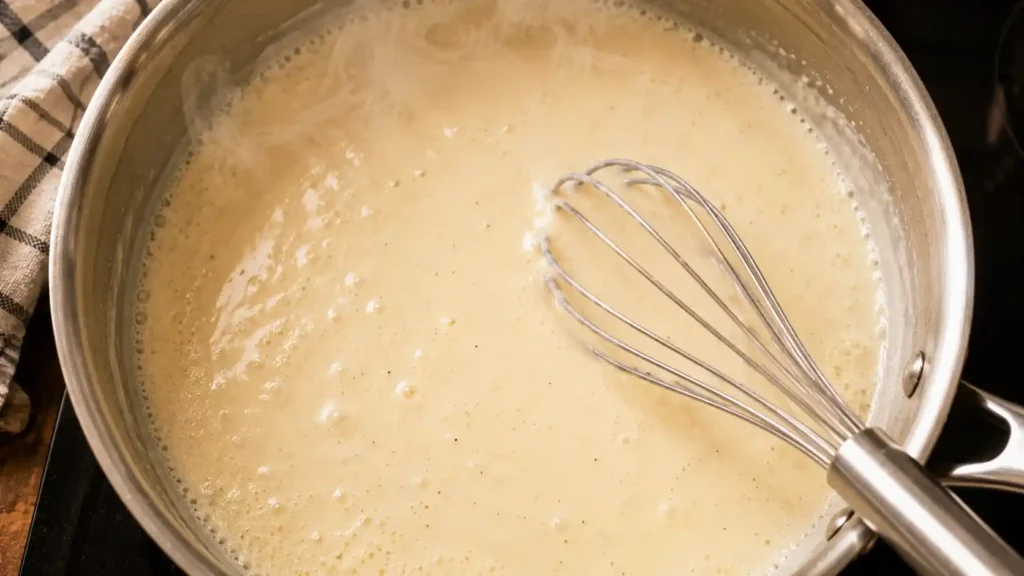
Step 4: Whisk in the Cheese
Reduce the heat to low and add the grated Parmesan and Romano a handful at a time, whisking continuously as each addition melts before adding more. This gradual approach is what keeps the sauce smooth instead of clumpy — dumping all the cheese in at once, especially over heat that’s too high, is the most common reason homemade Alfredo separates. Continue until the sauce is smooth, glossy, and thick enough to coat the back of a spoon, about 3-5 minutes.
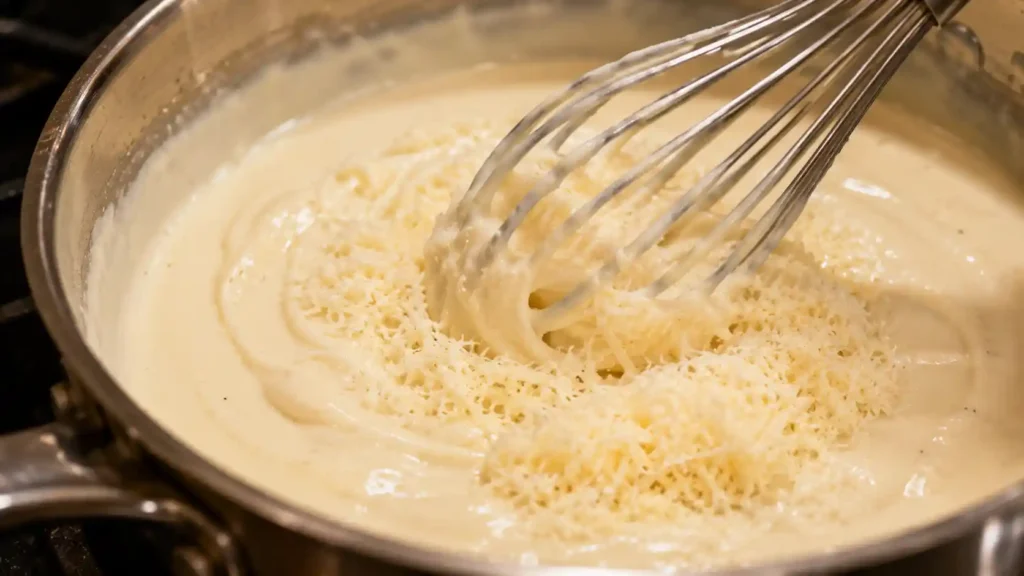
Step 5: Combine and Serve
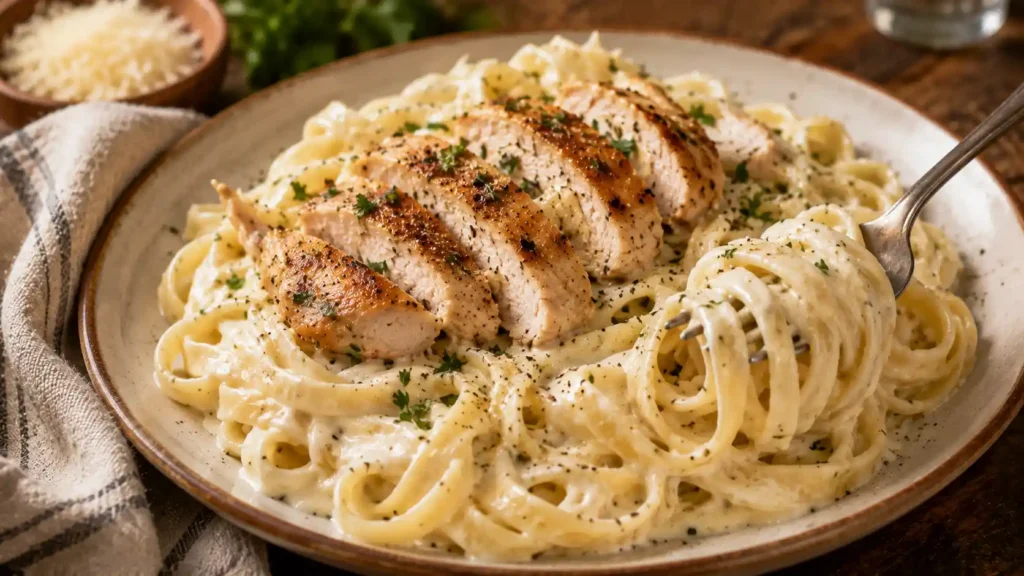
Season the sauce with salt and pepper to taste, then toss it with cooked, drained fettuccine until every strand is coated. Top with the sliced chicken and an extra sprinkle of Parmesan, and serve immediately while the sauce is still warm and at its thickest.
Why This Sauce Doesn’t Need Flour
A lot of Alfredo copycats add a couple tablespoons of flour early on to guarantee a thick sauce, but the more traditional restaurant-style method (and the one used here) skips it entirely. Heavy cream and a generous amount of good melting cheese are naturally enough to thicken the sauce on their own with a little patience and low heat — flour just isn’t necessary, and leaving it out also means this sauce is naturally gluten-free as written, which matters if you’re serving it over a gluten-free pasta.
Common Mistakes That Make Homemade Alfredo Grainy
This is one of the most frequent frustrations people run into with homemade Alfredo, and it almost always comes down to heat and cheese quality. Adding cold cheese straight from the fridge, using pre-shredded cheese with anti-caking starch on it, or letting the cream mixture get too hot before the cheese goes in are the three biggest culprits behind a broken, grainy sauce. Letting the cheese come closer to room temperature first, grating it fresh, and keeping the heat on low once the cheese is added will solve almost every case of this.

Copycat Olive Garden Chicken Alfredo Sauce
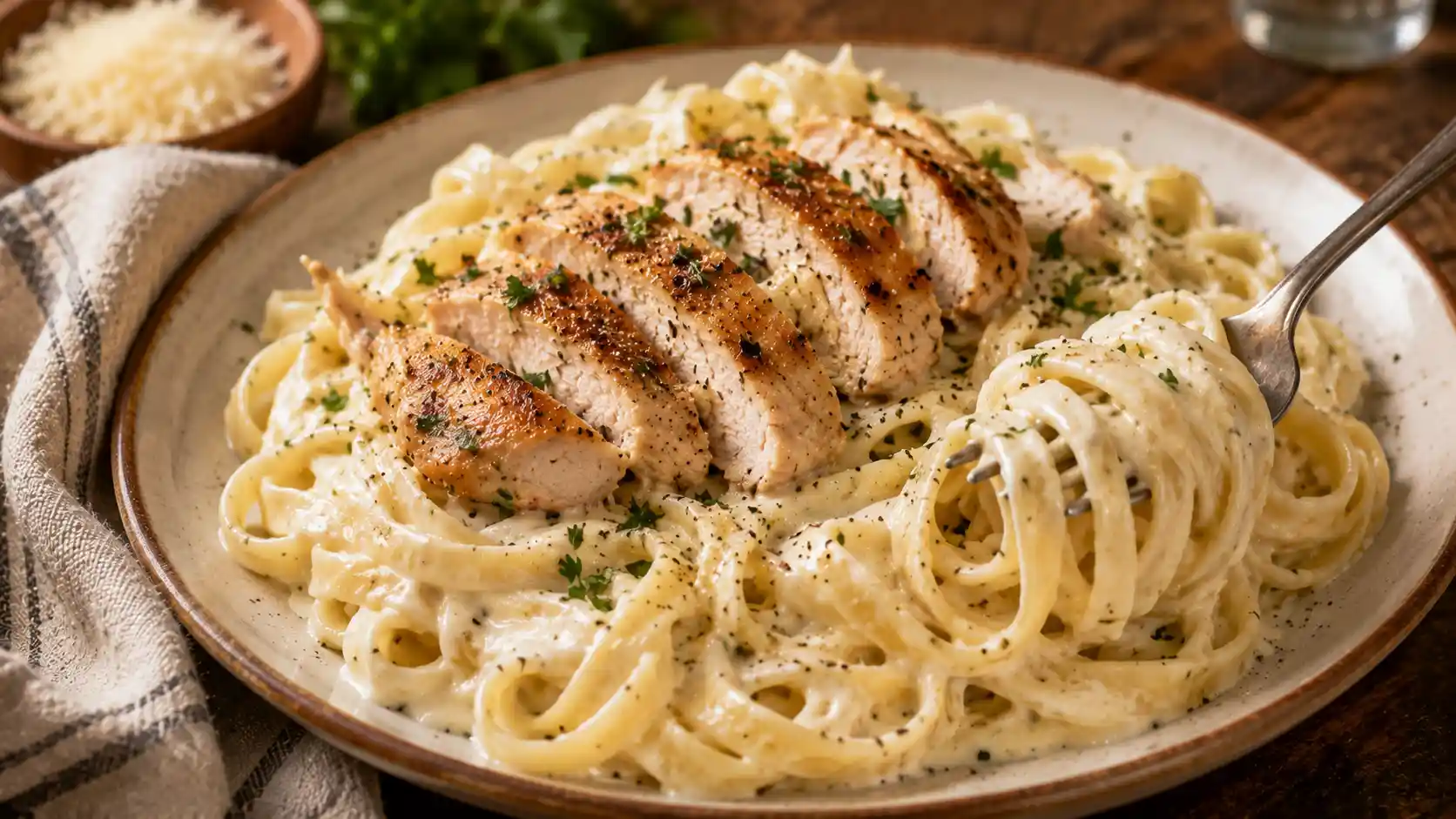
A rich, restaurant-style Alfredo sauce made with butter, cream, Parmesan, and Romano, tossed with fettuccine and juicy grilled chicken. This copycat recreates Olive Garden’s most popular pasta dish at home.
Ingredients
Equipment
Method
- Season chicken breasts with salt, pepper, and garlic powder. Cook in a skillet with butter over medium-high heat, 5-6 minutes per side, until internal temperature reaches 165°F. Rest 5 minutes, then slice.
- In a saucepan, melt butter over medium heat. Add garlic and cook 30 seconds to 1 minute until fragrant.
- Pour in heavy cream and milk, whisking to combine. Simmer gently over medium-low heat for 3-4 minutes.
- Reduce heat to low. Add Parmesan and Romano a handful at a time, whisking continuously until fully melted and smooth, 3-5 minutes total.
- Season sauce with salt and pepper to taste.
- Toss cooked fettuccine with the sauce until fully coated.
- Top with sliced chicken and extra Parmesan. Serve immediately.
Video
Notes
This sauce is best served fresh, since it can separate slightly when reheated; if you do have leftovers, reheat gently over low heat with a splash of extra cream or milk, stirring constantly. It doesn’t freeze well due to the dairy base. This recipe is naturally gluten-free as written (no flour used) — just pair it with a gluten-free pasta to keep the full dish gluten-free. See the notes above on avoiding a grainy sauce for best results.
Frequently Asked Questions
What is Olive Garden’s Alfredo sauce actually made of?
Based on how Olive Garden and most detailed copycat sources describe it, the sauce is a cream-based mixture of butter, heavy cream, Parmesan, and Romano cheese, with garlic for depth — no flour or egg-based thickener involved. This copycat recipe uses that same simple combination.
How many calories are in Olive Garden’s Chicken Alfredo?
Reported figures vary across nutrition trackers, generally landing somewhere between roughly 1,400 and 1,700 calories for a full restaurant-sized order, largely due to the rich cream sauce and generous pasta portion. This homemade version, made in more standard portion sizes, comes in considerably lower per serving.
Is Olive Garden’s Chicken Alfredo the same as traditional Italian fettuccine Alfredo?
Not exactly. The original dish, created in Rome in the early 1900s, was simply butter and Parmesan tossed with pasta and its starchy cooking water — no cream at all. The rich, cream-based version most American restaurants (including Olive Garden) serve today evolved from that simpler original into something heavier and more indulgent.
Why did my homemade Alfredo sauce turn out grainy?
This almost always comes down to heat being too high when the cheese is added, or using pre-shredded cheese, which contains anti-caking starch that resists melting smoothly. Keep the heat low once the cheese goes in, add it gradually, and use freshly grated cheese for the best texture.
Can I make this Alfredo sauce gluten-free?
Yes, this recipe is naturally gluten-free as written, since it doesn’t use any flour to thicken. Just make sure to pair it with a gluten-free pasta if you want the complete dish to be gluten-free.
Can I make a lighter version of this sauce?
You can substitute half-and-half for some or all of the heavy cream to cut down on richness, though the sauce will be noticeably thinner and less indulgent as a result. Using less cheese overall will also thin it out, but that’s really the flavor source, so cut it carefully.
Can I use pre-shredded cheese instead of grating it myself?
You can, but it’s genuinely one of the biggest reasons homemade Alfredo turns out grainy instead of smooth, since pre-shredded cheese is coated in a starch that prevents smooth melting. Freshly grated cheese from a block makes a noticeably bigger difference here than in most other recipes.
How do I store and reheat leftover Chicken Alfredo?
Store in an airtight container in the fridge for up to 3 days. Reheat gently on the stovetop over low heat with a small splash of extra cream or milk, stirring frequently, since microwaving or reheating over high heat is likely to cause the sauce to separate.