Your favorite restaurant recipes, recreated at home — tested and easy to follow.


The Ninja Woodfire doesn’t burn pellets as fuel the way a big pellet grill does — an electric element does the heating, and a small scoop of pellets sits in the smoke box purely to throw flavor. That changes everything about which pellets are worth buying. You’re choosing a flavor, not a fuel, so a small bag lasts far longer than you’d expect and wood type matters more than bag size.
Get the wood wrong and a delicate salmon tastes like a campfire, or a brisket comes out barely kissed with smoke. Below are the seven I’d actually reach for, matched to what you’re cooking.
Heads up: some links below are Amazon affiliate links. If you buy through one, I may earn a small commission at no extra cost to you — it’s what keeps every recipe on this site free.
My top pick: Ninja Woodfire All-Purpose Pellets — the cherry, maple and oak blend is mild enough for fish and vegetables but still reads as real smoke on chicken, so it’s the one bag that covers almost every cook. If you only keep one on the shelf, make it this. Check it on Amazon →
Comparison Table
| Pick | Product | Best for | Watch out for |
|---|---|---|---|
| Top Pick | Ninja Woodfire All-Purpose Pellets | An everyday do-it-all blend | Too mild for heavy-smoke fans |
| Bold Flavor Pick | Ninja Woodfire Robust Blend Pellets | Brisket, ribs, big beef cuts | Can overpower delicate foods |
| Variety Pick | Kona Ninja Woodfire Variety Pack | Trying 8 woods before committing | Some blends taste alike |
| Convenience Pick | Kona Ninja Woodfire Smoke Pods | No-measure, tear-and-pour cooks | Pricier per session |
| Balanced Everyday Pick | Kona Premium Blend Pellets | Seafood, veg, cheese, mac | Watch the bag for moisture |
| Premium Pods Pick | Kona Premium Blend Smoke Pods | Short, tidy weeknight smokes | More packaging waste |
| Strong Single-Wood Pick | Kona Hickory Ninja Woodfire Pellets | Classic bacon-y pork & ribs | Burns a touch faster |
How I Picked These
I judged these against the cooks people actually fire a Ninja Woodfire up for — brisket, ribs, wings, salmon — not against what a full pellet grill needs. Because the Woodfire only uses a scoop per session, cost-per-bag matters far less than flavor and how cleanly the pellets smoke. I looked for blends that light and stay lit in the smoke box, feed without jamming, and match the food rather than bulldozing it. Where owners flagged real issues — pellets going out, bags arriving with a pinhole, a flavor that leaned acidic — I kept that in rather than pretending every bag is perfect.
Ninja Woodfire All-Purpose Pellets — Best Everyday Blend

This is the bag I’d tell a new Woodfire owner to buy first, before anything else.
Pros
- Cherry, maple and oak blend lands mild and slightly sweet — flattering on almost anything
- One scoop throws clean, noticeable smoke without going acrid
- Ninja-made, so it’s tuned to feed and light in the Woodfire smoke box
Cons
- Too subtle for anyone chasing heavy, aggressive smoke on beef
- Only compatible with Ninja Woodfire appliances
- Like all pellets, results dip if the bag takes on moisture
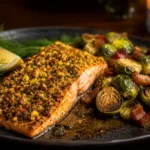
For fish and vegetables this is the one — it adds real wood character without steamrolling the natural flavor, which is exactly where a heavier wood ruins a fillet. On richer meats you’ll just want a longer cook to build the same depth. If you’re working through our Ninja Woodfire smoked salmon recipe, this is the blend I’d load.
Skip it if: you mostly cook big beef and want a punch-you-in-the-face smoke ring — go Robust or Hickory instead.
Check the Ninja Woodfire All-Purpose Pellets on Amazon →
Ninja Woodfire Robust Blend Pellets — Best for Big Beef
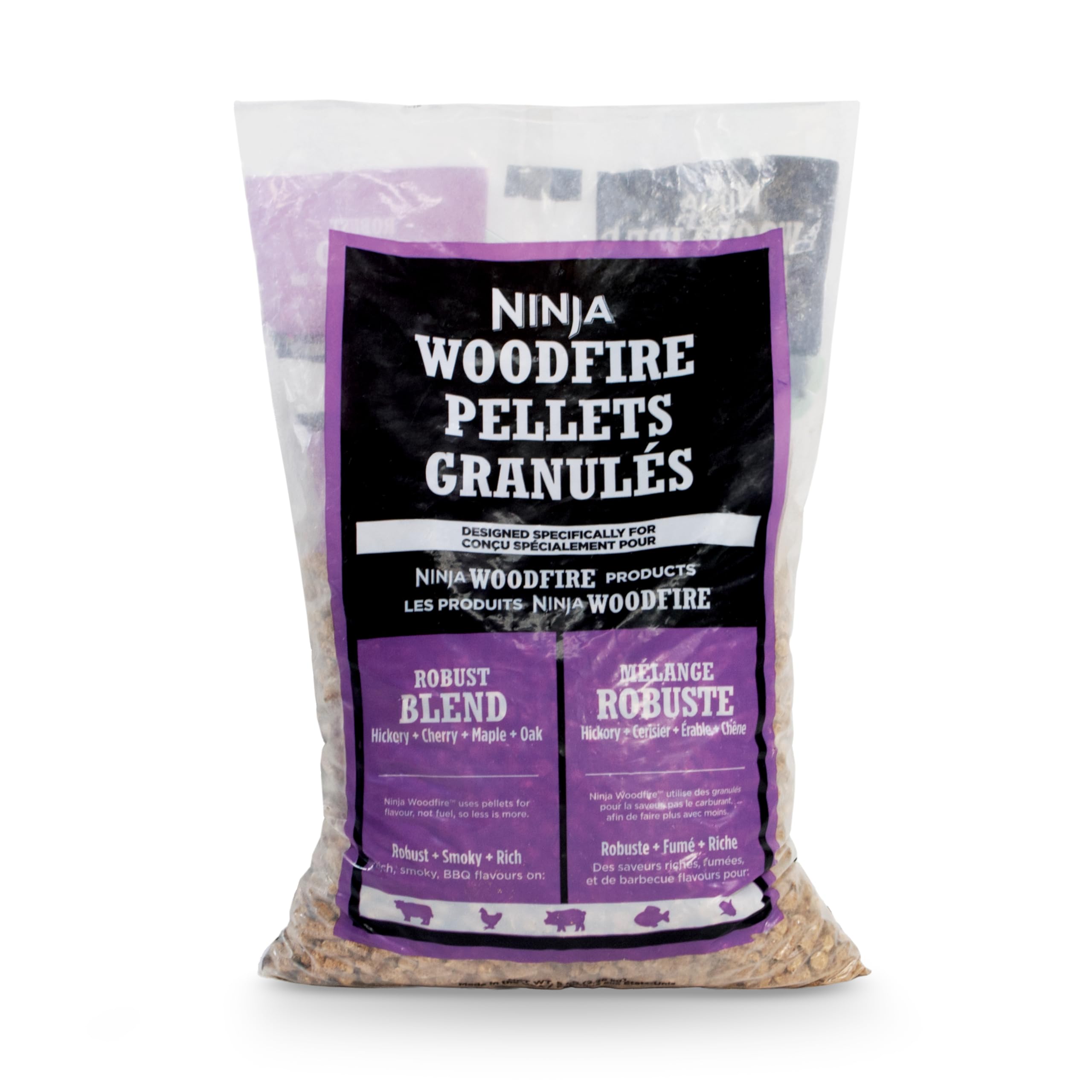
This is the one I’d buy if brisket and ribs are why you bought the grill.
Pros
- Hickory, cherry, maple and oak give a bold but balanced BBQ profile
- Steady, reliable smoke output in the Woodfire box
- A little goes a long way — the bag lasts across many cooks
Cons
- The bold profile can bully delicate foods like white fish
- Ninja Woodfire only — no crossover to other grills
- Reads pricey next to a big standard pellet bag, though you use far less
The smoke shows up fast on pork, beef and chicken, which is exactly what you want under a long brisket or rack of ribs. This is the blend I’d pair with our Ninja Woodfire brisket recipe and Ninja Woodfire ribs recipe — both want a wood that can stand up to hours in the smoke.
Skip it if: most of your cooks are fish, veg, or quick weeknight chicken — it’s more wood than those need.
Check the Ninja Woodfire Robust Blend Pellets on Amazon →
Kona Ninja Woodfire Variety Pack — Best for Trying Flavors
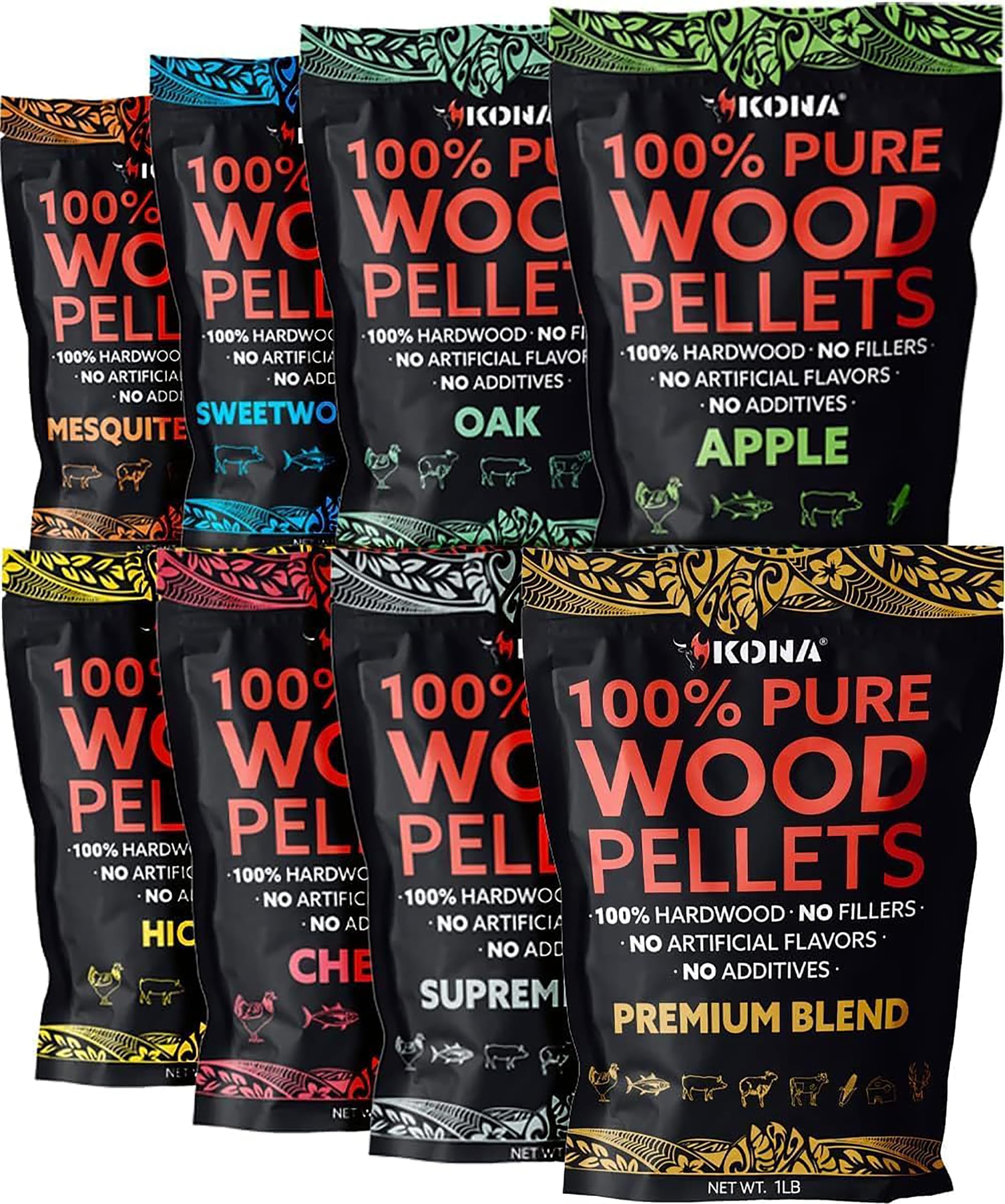
This is the pack I’d get if you don’t know your favorite wood yet.
Pros
- Eight distinct hardwoods and blends in one box
- Clean smoke with genuine flavor separation between the single woods
- Small portions make it easy to switch flavor between cooks
Cons
- A few of the blends taste more alike than the labels suggest
- Needs airtight storage once opened or the pellets pick up moisture
- Not for hopper-fed pellet grills — this is for supplemental smoking
Apple and cherry lean light and sweet for poultry and fish; hickory and mesquite bring the muscle for beef. Being able to change wood between a wings cook and a salmon cook without opening a full bag of each is genuinely useful, and it’s a cheap way to learn what you actually like before committing to a big bag.
Skip it if: you already know you only ever cook one style — just buy that single wood in bulk.
Check the Kona Ninja Woodfire Variety Pack on Amazon →
Handy across our whole Ninja Woodfire wings recipe rotation, where switching woods changes the whole character of the wing.
Kona Ninja Woodfire Smoke Pods — Best for Convenience
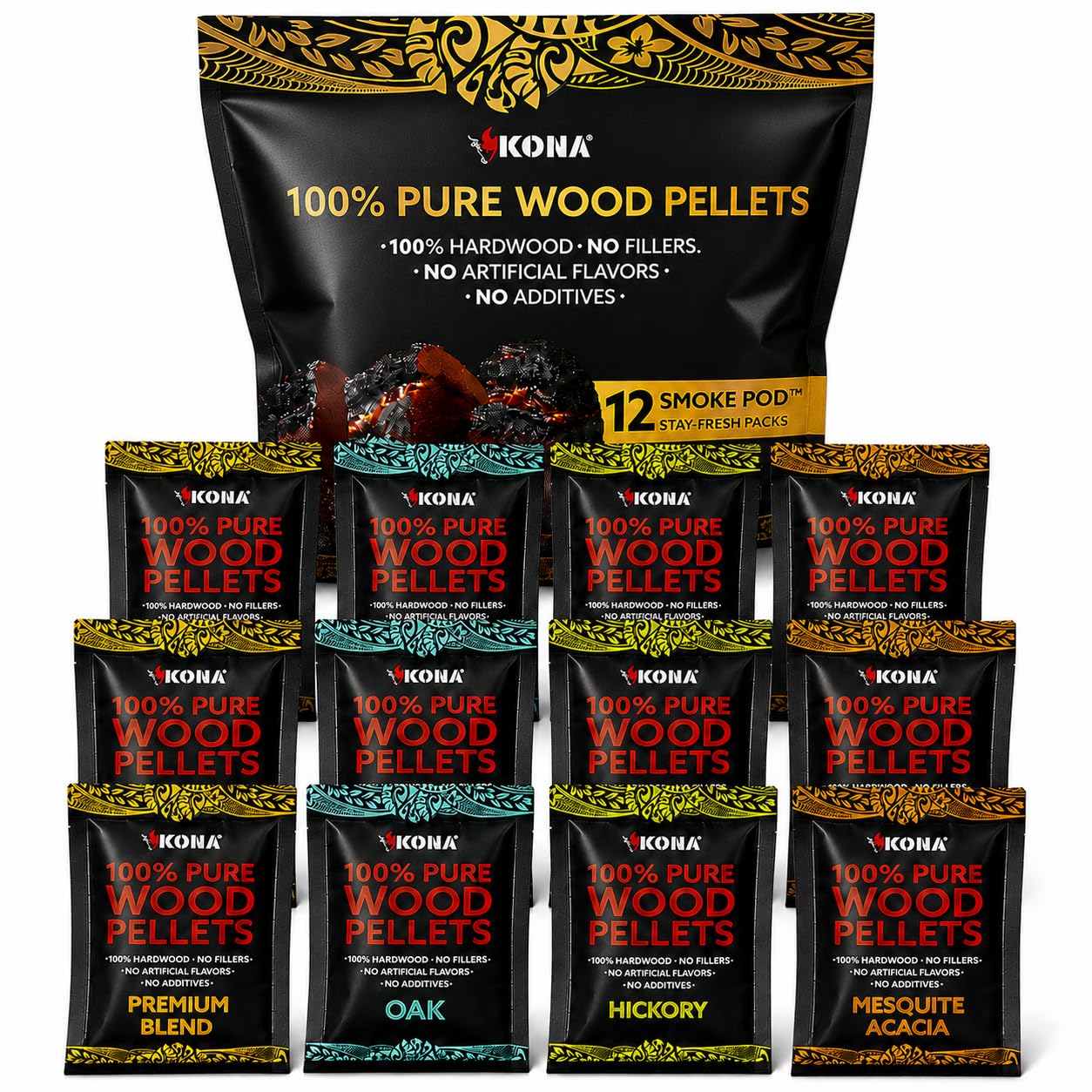
This is the one I’d buy if measuring loose pellets annoys you.
Pros
- Individually sealed pouches keep pellets dry and ready
- Pre-measured to roughly one Woodfire session — tear, pour, cook
- Variety of woods (oak, hickory, mesquite acacia, premium blend) to compare
Cons
- One pouch per session gets expensive if you cook often
- More packaging waste than a single bag
- Burn time can feel short on longer low-and-slow cooks
The tear-and-pour format is genuinely cleaner than scooping from a bag, and the sealed pouches mean nothing goes stale if you only fire the grill up occasionally. Oak suits lighter foods; hickory and mesquite push harder on meat.
Skip it if: you smoke several times a week — the per-cook cost adds up fast versus a resealable bag.
Check the Kona Ninja Woodfire Smoke Pods on Amazon →
Kona Premium Blend Pellets — Best Balanced Everyday Bag
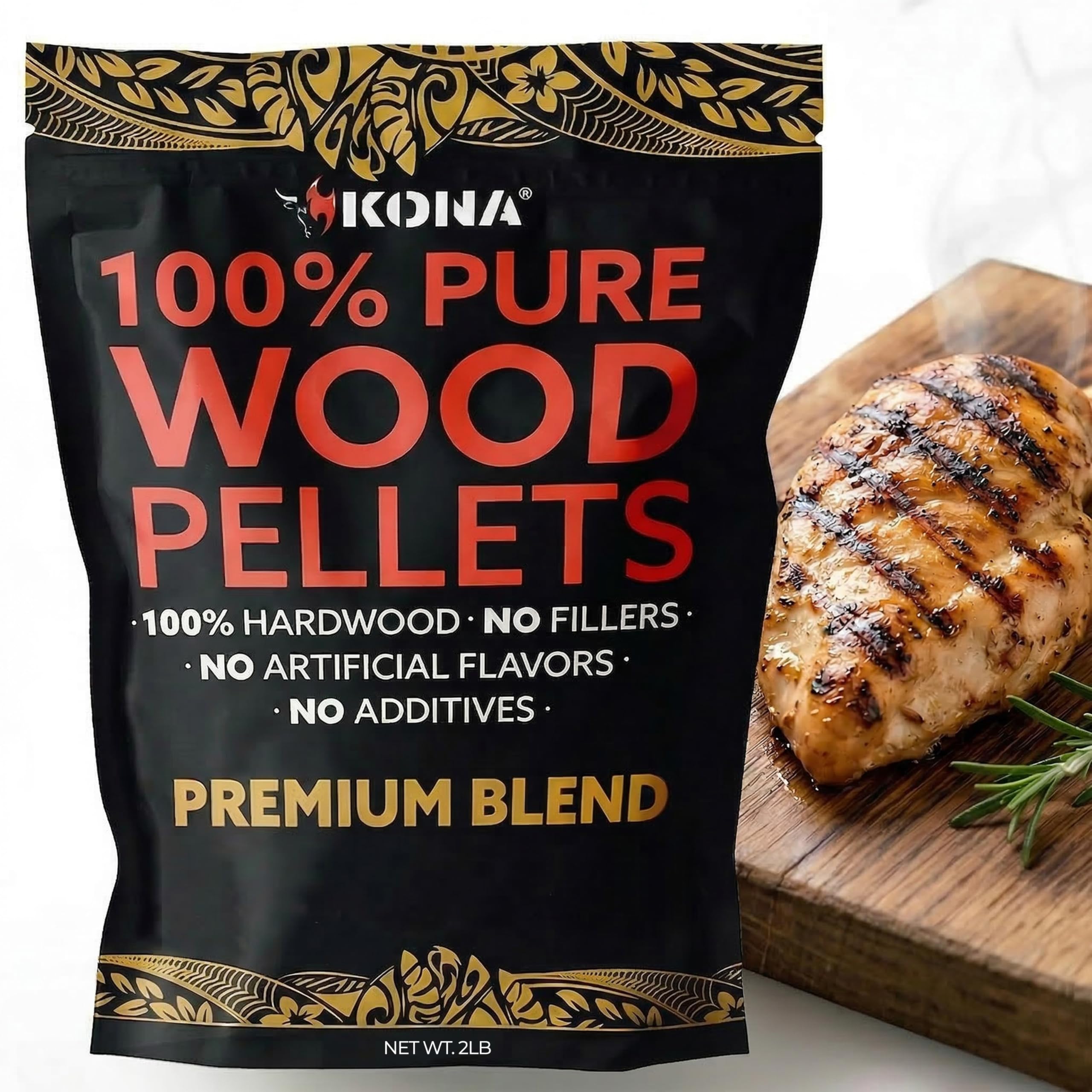
This is the bag I’d keep next to the All-Purpose for anything that isn’t beef.
Pros
- Balanced mild-to-savory profile suits meat, seafood, veg and even cheese
- Burns clean with very little leftover residue
- A small scoop covers several sessions
Cons
- The resealable bag benefits from extra moisture protection
- Smoke intensity shifts with food and cook time
- Reads premium next to basic pellets
A small scoop adds real wood-fired depth without steamrolling chicken, seafood or vegetables, and it shines in less obvious places — smoked salsa, or a mac and cheese that wants a savory back note. One buyer reported a pinhole in the bag, so decant into an airtight container and you’ll sidestep the one real complaint.
Skip it if: you want an unmistakable heavy smoke — this is deliberately balanced, not bold.
Check the Kona Premium Blend Pellets on Amazon →
Kona Premium Blend Smoke Pods — Best Premium Pods
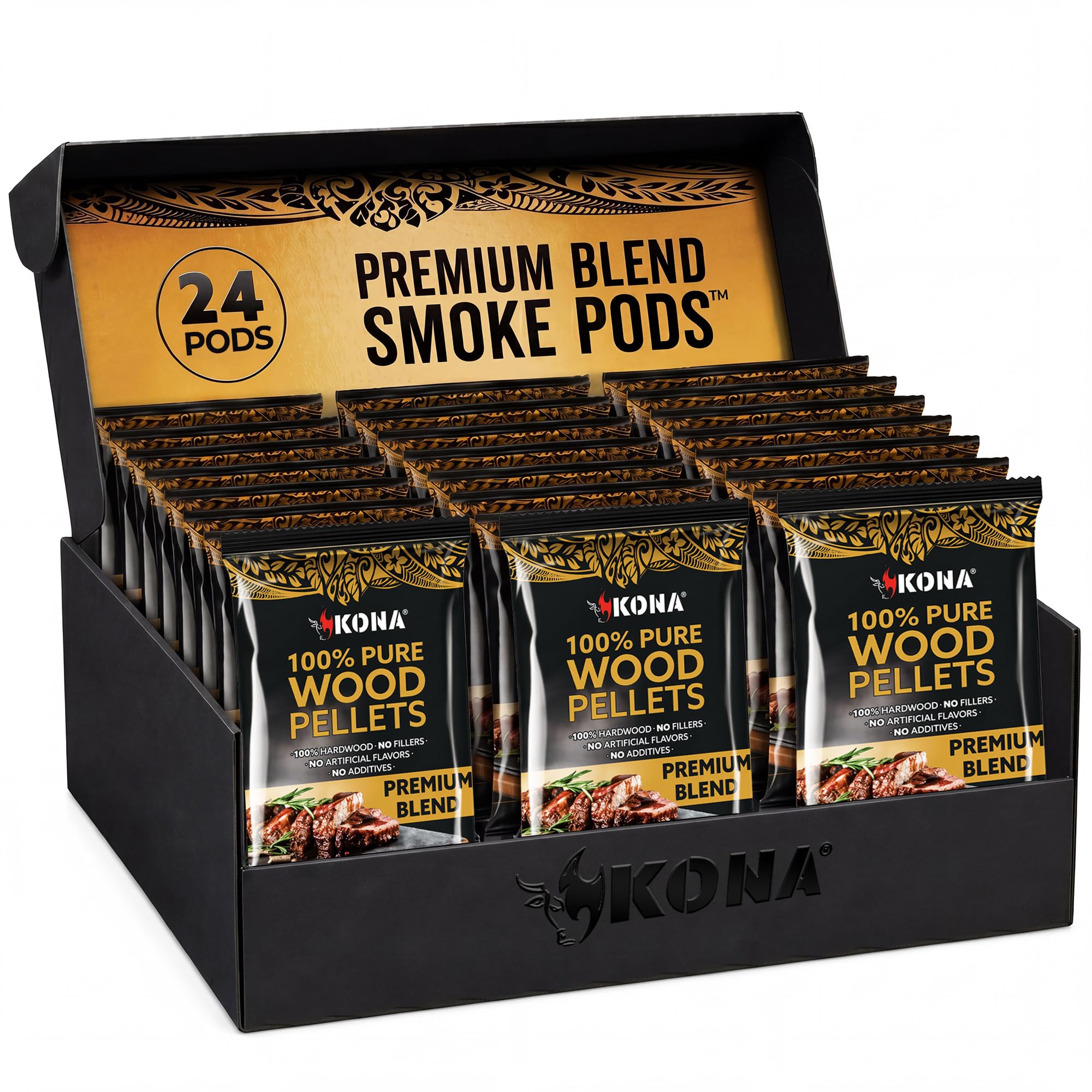
This is the one I’d buy for tidy, measured weeknight smokes.
Pros
- Pre-measured pouches make loading quick and mess-free
- Sealed packaging keeps each portion fresh
- Mild, versatile smoke works across meat, seafood and vegetables
Cons
- Single-use portions cost more than bulk pellets
- The mild profile won’t satisfy heavy-smoke fans
- More packaging than a single bag
These are the Premium Blend in pod form — gentle sweetness and a savory BBQ note, ideal for vegetables and smaller cuts where a stronger wood would take over. They fit Woodfire Grills, Ovens and Smokers, but they’re built for convenience, not lowest cost per cook.
Skip it if: cost-per-session is your priority — a resealable bag of the same blend is cheaper over time.
Check the Kona Premium Blend Smoke Pods on Amazon →
Kona Hickory Ninja Woodfire Pellets — Best Single-Wood for Pork
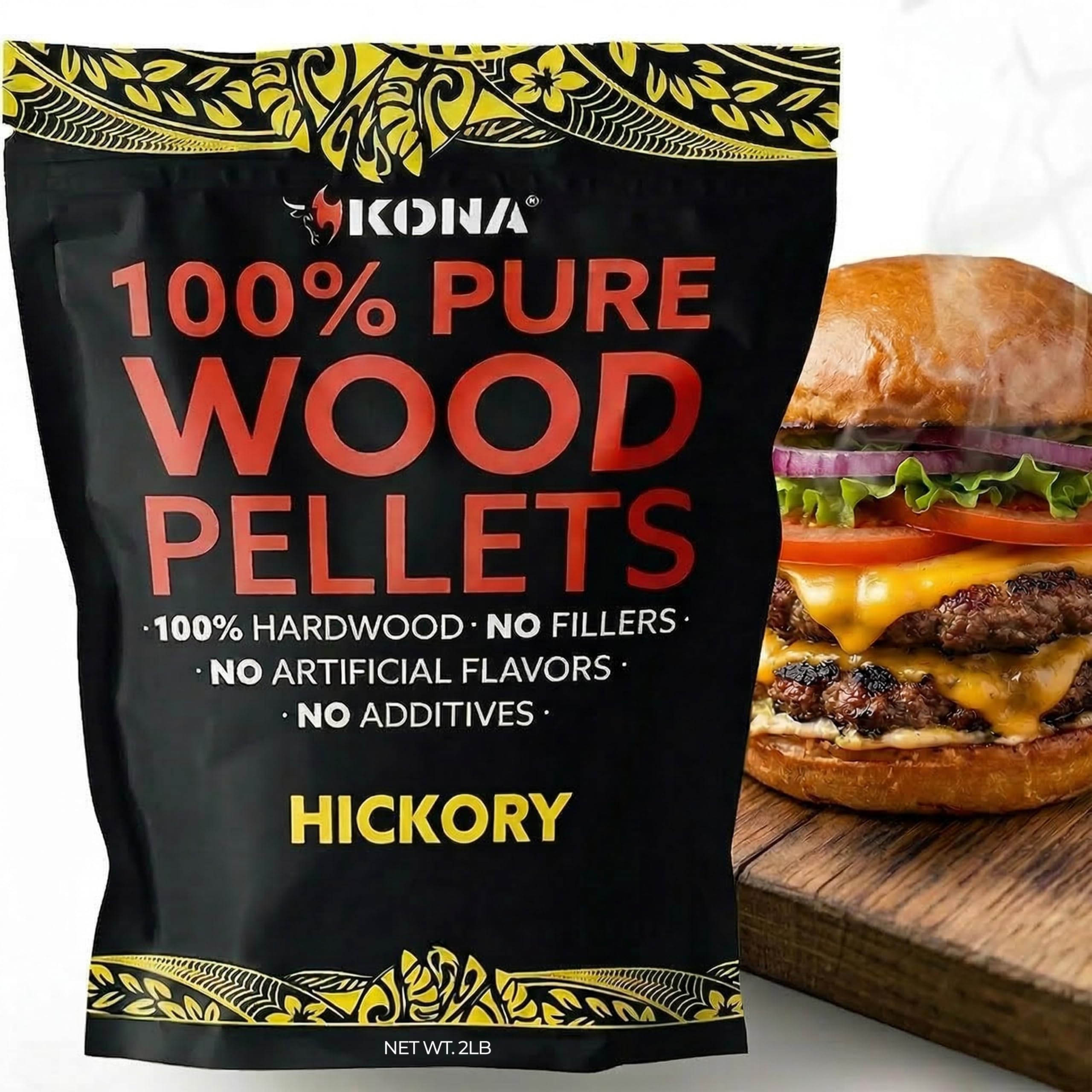
This is the one I’d buy if you want that classic bacon-y hickory smoke and nothing else.
Pros
- Deep, savory, bacon-like smoke made for beef, pork, burgers and ribs
- Compact resealable bag is easy to store and resist moisture
- Burns cleanly and feeds smoothly in the Woodfire
Cons
- Too bold for delicate fish or vegetables
- Some owners find it burns a touch faster than Ninja’s own pellets
- Smaller bag holds less than big standard pellet packs
Kept to a modest scoop, the hickory gives a full, deep smoke without turning harsh — exactly the profile you want on pulled pork or a rack of ribs. It also crosses over to charcoal grills and smoker tubes, though like all these it’s meant for supplemental smoking, not as hopper fuel.
Skip it if: you cook a lot of salmon or veg — hickory will dominate them.
Check the Kona Hickory Ninja Woodfire Pellets on Amazon →
Buying Guide: What Actually Matters
Match the wood to the food, not to the bag size. Because the Woodfire uses so little per cook, a “small” bag lasts months — so pick on flavor. Mild cherry/maple/oak blends flatter fish and vegetables; hickory and robust blends belong under beef and pork.
Ninja Woodfire pellets are for smoke, not fuel. The electric element does the cooking. That’s why you only load a scoop, and why pellet quantity matters far less than most buyers expect coming from a traditional pellet grill.
Storage is the whole ballgame for “pellets not burning.” Almost every “won’t stay lit” or “won’t ignite” complaint traces back to damp pellets. Keep them sealed in an airtight container in a dry spot and the problem largely disappears.
The most common mistake: treating the Woodfire like a hopper-fed pellet grill and overloading the smoke box, or trying to run it “on pellets” as fuel. It isn’t one — the element heats, the pellets only flavor. Overfilling can choke airflow and is a big reason people report pellets not igniting or smoking properly. Use the scoop amount Ninja specifies and keep the pellets bone dry.
What You Can Skip
Skip generic hopper-grill pellets bought purely because the bag is huge. Bargain bulk bags meant for Traeger-style hoppers are built to be fuel, and coming from a damp warehouse pallet they’re the usual culprit behind “won’t stay lit” in a Woodfire. You use so little per cook that a big cheap bag is a false economy.
Skip buying every single-wood bag at once. Grab the variety pack or the All-Purpose blend first, learn what you actually reach for, then buy that one wood in a resealable bag. Most people end up using two woods, not eight.
Skip pods if you smoke often. They’re brilliant for the occasional tidy cook, but if you’re grilling several times a week, the per-session cost runs well above a resealable bag of the same blend.
Recipes to Make With These Pellets
- Ninja Woodfire Brisket Recipe — a long beef cook that wants the Robust or Hickory blend to stand up to the hours in smoke.
- Ninja Woodfire Ribs Recipe — hickory’s bacon-y depth is the classic match here.
- Ninja Woodfire Wings Recipe — a great place to experiment with the variety pack and find your house flavor.
- Ninja Woodfire Smoked Salmon Recipe — go mild here; the All-Purpose blend adds smoke without overpowering the fish.
Frequently Asked Questions
Why do my Ninja Woodfire pellets keep going out or not burning?
The most common cause is moisture. Damp pellets struggle to ignite and stay lit, so store them sealed in an airtight container in a dry place. Also make sure you are using the scoop amount Ninja specifies rather than overfilling the smoke box, since too many pellets can choke airflow and stop them smoking properly.
Can I use regular wood pellets instead of Ninja Woodfire pellets?
You can use other food-grade hardwood pellets designed for supplemental smoking, such as Kona’s Ninja-compatible pellets, and many owners do. What you should avoid is treating the Woodfire like a hopper-fed pellet grill or using low-quality bulk fuel pellets, which are more likely to arrive damp and fail to stay lit.
How long does one bag of Ninja Woodfire pellets last?
Longer than most people expect. The Ninja Woodfire only uses a small scoop of pellets per session because an electric element does the actual heating and the pellets are there for flavor, not fuel. Even a compact bag can cover many cooks, which is why flavor matters more than bag size when choosing.
Which Ninja Woodfire pellets are best for brisket versus salmon?
For brisket and other big beef cuts, a bold option like the Robust Blend or single-wood Hickory stands up to the long cook. For salmon, vegetables and other delicate foods, a mild cherry, maple and oak blend like the All-Purpose pellets adds smoke without overpowering the natural flavor.
Do Ninja Woodfire pellets work in the Woodfire oven and pizza oven too?
Yes. Ninja Woodfire pellets and Ninja-compatible pellets are designed to work across Ninja Woodfire Grills, Ovens and Smokers. Always follow the manufacturer guidance for the specific model and load only the recommended amount into the pellet or smoke box.
Are pods or bagged pellets better for the Ninja Woodfire?
Pods are pre-measured and sealed, which makes them cleaner and more convenient for occasional cooks, but they cost more per session. Resealable bags are more economical for frequent grilling as long as you store them airtight to keep moisture out.
Conclusion
For the one bag that covers almost every cook, the Ninja Woodfire All-Purpose Pellets are what I’d buy first. If brisket and ribs are your thing, add the bolder Robust Blend or single-wood Kona Hickory. And whichever you pick, keep them bone dry — that alone solves most “won’t stay lit” headaches.