Your favorite restaurant recipes, recreated at home — tested and easy to follow.


The clever thing about Café Zupas’ chicken enchilada chili is right there in the name — it isn’t a chili with a little chili powder standing in for Mexican flavor. It’s built on actual enchilada sauce, the same tomato-and-chile base you’d pour over rolled tortillas, which is why a spoonful tastes like a chicken enchilada that someone turned into soup. That’s the distinction most copycats miss when they reach for a generic taco-seasoning chili and wonder why it doesn’t land.
What makes the restaurant version work is that enchilada-sauce backbone carrying tender shredded chicken, beans, and corn in a broth that’s thick and hearty without being a heavy paste. It sits somewhere between a chili and a brothy tortilla soup, and it’s finished the way you’d finish enchiladas — melty cheese, a little cream, avocado, crunchy tortilla strips. It’s genuinely one of the easier restaurant soups to recreate because the flavor engine is a sauce you can buy or make in ten minutes.
This copycat leans on that enchilada-sauce base and the toppings that make it feel like the real bowl. It comes together in about 40 minutes, faster if you start with cooked chicken. If you like this style of Southwestern comfort bowl, the same warm, tomato-and-chile flavor family runs through other recipes on the site — it’s a close cousin to a good chicken tortilla soup in spirit, just chunkier and chili-thick.
Why This Copycat Works
- Built on real red enchilada sauce, not generic chili powder, which is what makes it taste like enchiladas in a bowl.
- Beans and a little masa or blended beans thicken it naturally, so it’s hearty without turning to paste.
- About 40 minutes start to finish, or 25 with pre-cooked or rotisserie chicken.
- Hardest part: getting the thickness right — thick and hearty, not gluey, and the fix is easy.
Key Ingredients & Substitutions
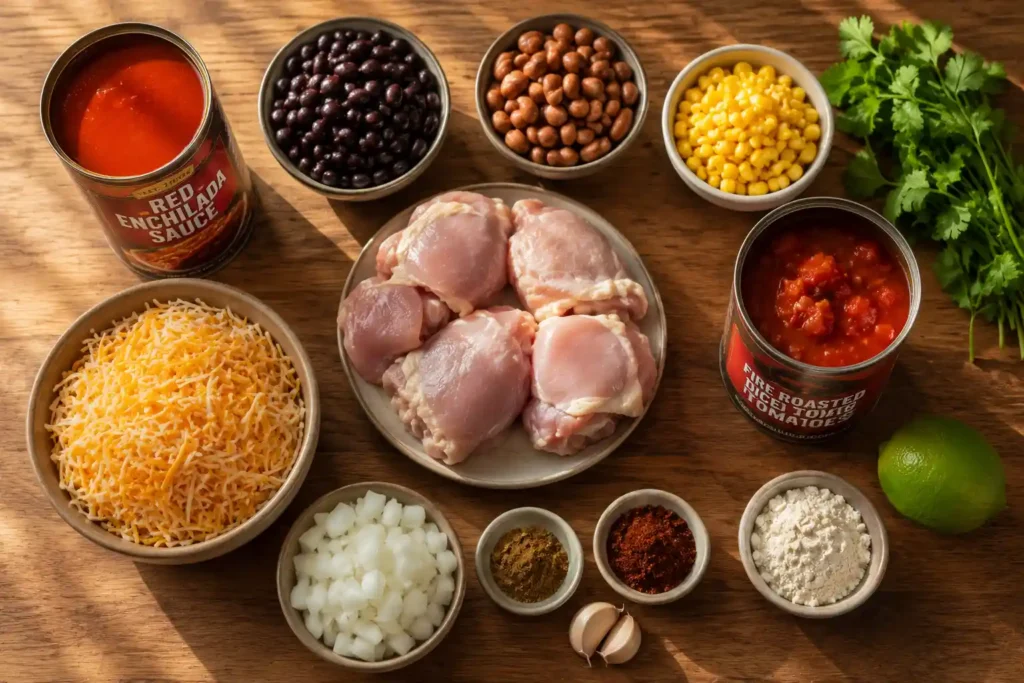
Red enchilada sauce (the flavor engine). This is what makes the dish taste like enchiladas rather than generic chili, so don’t substitute plain tomato sauce. A good canned red enchilada sauce works and saves time; a quick homemade version from chile powder, tomato, broth, and spices is even better if you have ten minutes. It’s stocked in the international or Mexican aisle of any supermarket.
Chicken (the protein). Boneless skinless thighs stay juicier and shred better than breast, though breast works and is leaner. The easiest route is shredded rotisserie or any pre-cooked chicken stirred in near the end. If cooking from raw, poach it right in the broth and shred it.
Beans (heartiness and body). Black beans, pinto, or a mix give the chili its substance, and mashing or blending a portion of them is a great natural thickener. Canned beans, rinsed, are perfect here. Any combination works; it’s a flexible, forgiving element.
Corn (sweetness and texture). Corn adds pops of sweetness that balance the chile. Frozen, canned, or fresh off the cob all work. Fire-roasted corn, if you can find it, adds a nice charred note that suits the enchilada flavor.
Tomatoes (the base). Diced tomatoes or fire-roasted diced tomatoes round out the base alongside the enchilada sauce. Fire-roasted add subtle smokiness worth seeking out in the canned-tomato aisle.
Aromatics and spices (onion, garlic, cumin, chili powder). Sautéed onion and garlic build the foundation, and a little extra cumin and chili powder reinforce the enchilada sauce. Ground cumin is the one that most says “Mexican” here, so don’t skip it.
Masa harina or blended beans (the thickener). This is the detail that gets you restaurant thickness. A couple of tablespoons of masa harina — the corn flour used for tortillas — stirred in adds body and a subtle corn flavor that fits perfectly. No masa? Blend a scoop of the beans and broth and stir it back in. Masa harina is in the international aisle or with the baking flours.
Finishing touches (cheese, cream, lime, cilantro). A handful of melty cheese and a splash of cream or half-and-half give it that enchilada richness; lime and cilantro brighten it. These are what make the bowl taste finished rather than flat.
How to Make Chicken Enchilada Chili at Home
You’ll build a quick aromatic base, pour in the enchilada sauce and broth with the beans, corn, and tomatoes, simmer to meld and thicken, then stir in the chicken and finishing touches. Start to finish is about 40 minutes, or closer to 25 if your chicken is already cooked. The method works because the enchilada sauce does the flavor heavy lifting, so the simmer is mostly about melding and building body rather than developing flavor from scratch.
Step 1: Build the Aromatic Base
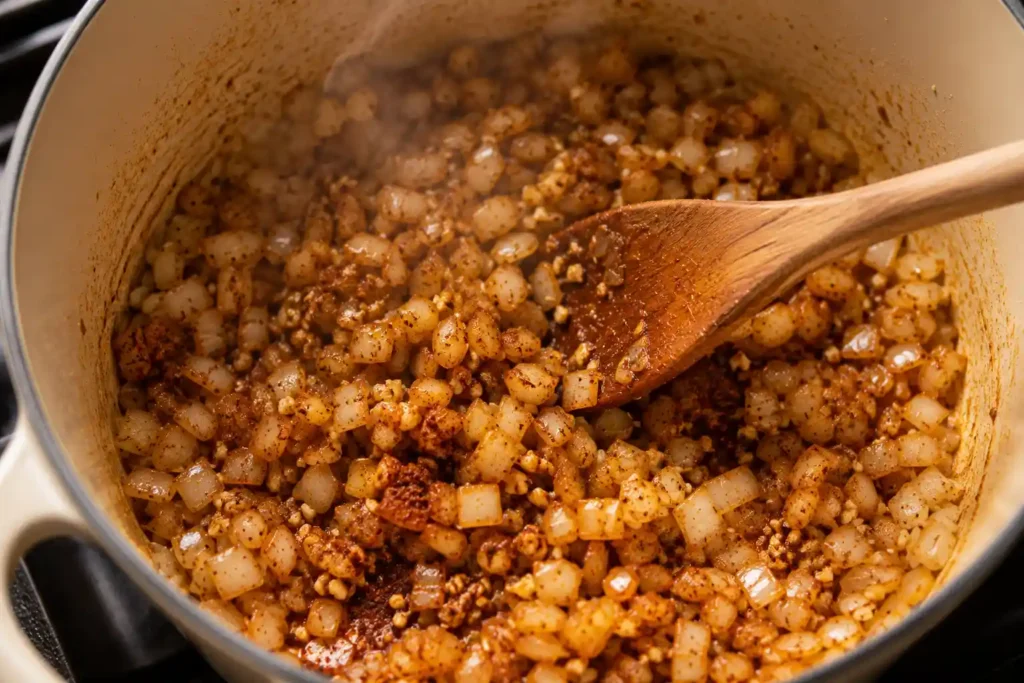
Heat a tablespoon of oil in a large pot or Dutch oven over medium heat. Add a diced onion and cook 4 to 5 minutes until soft and translucent, then stir in the minced garlic, a teaspoon of cumin, and a teaspoon of chili powder and cook another 30 to 60 seconds until fragrant. Blooming the spices in the oil like this, rather than dumping them into liquid later, wakes up their flavor and is a small step that makes a real difference in the finished depth.
Step 2: Add the Enchilada Base and Simmer
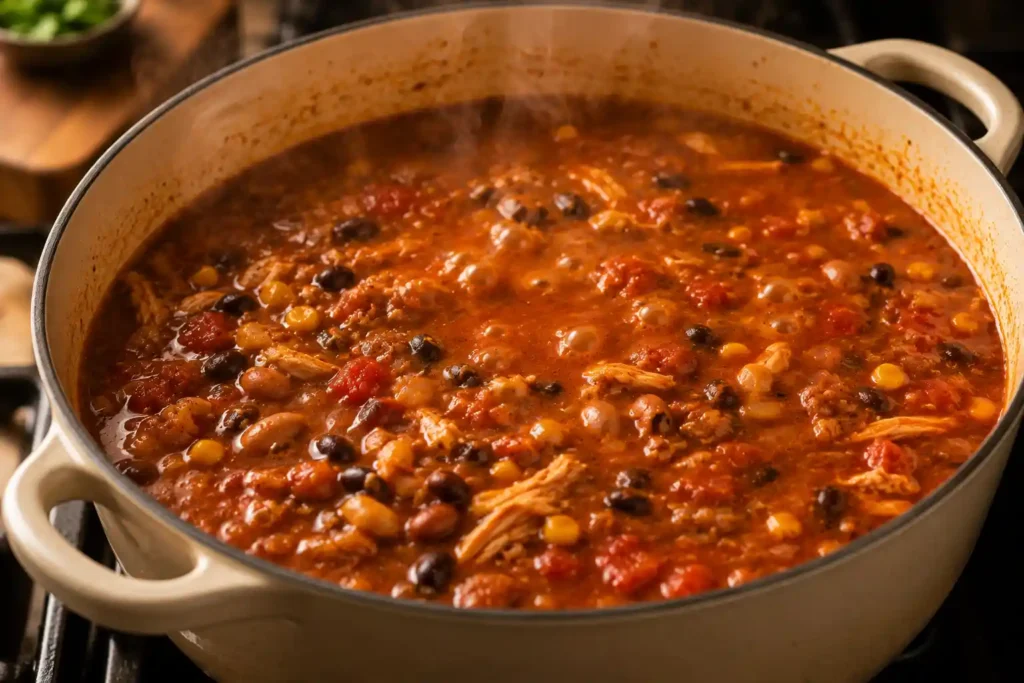
Pour in the enchilada sauce, 3 cups chicken broth, the diced tomatoes, drained beans, and corn. Stir well, bring to a simmer, and let it bubble gently for 15 to 20 minutes so the flavors meld and the base reduces slightly. If you’re cooking chicken from raw, nestle the breasts or thighs in now and poach them in the simmering liquid until cooked through — about 15 minutes for thighs — then pull them out to shred.
Chef’s Note: To thicken without a gummy result, whisk 2 tablespoons masa harina into about half a cup of the warm broth first, then stir that slurry back into the pot — adding masa straight to the hot liquid clumps it. No masa? Scoop out a cup of beans and broth, blend it smooth, and stir it back in. Both thicken naturally and keep the flavor on theme.
Step 3: Thicken the Chili
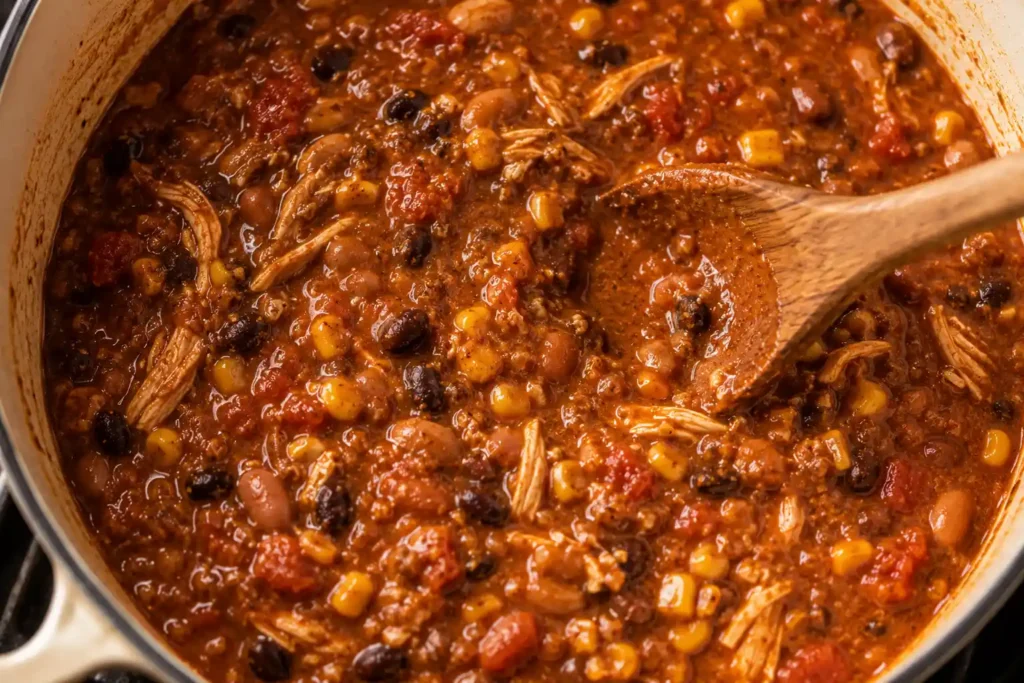
Stir in your masa slurry or blended beans (see the note above) and let the chili simmer another 5 minutes to lose any raw flour taste and come together. You’re aiming for a consistency that’s thick and hearty but still spoonable and a touch brothy — not a stiff paste. If it goes too thick, loosen it with a splash of broth; if it’s thinner than you like, simmer a few minutes longer or add a little more thickener.
Step 4: Add Chicken and Finish
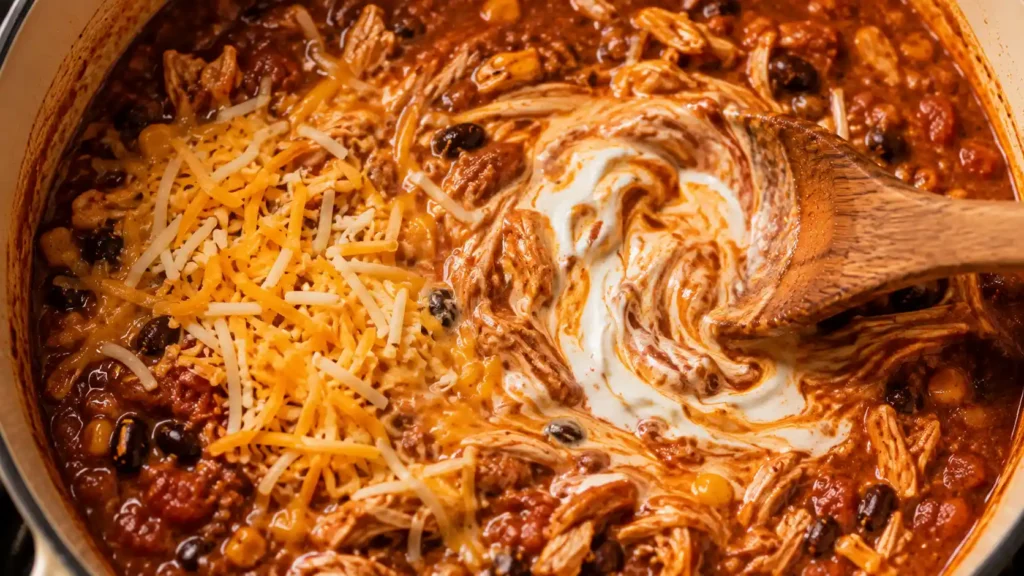
Stir the shredded chicken back in along with a splash of cream or half-and-half and a handful of shredded cheese, and warm through over low heat until the cheese melts and everything is hot — a couple of minutes. Take it off the heat, squeeze in fresh lime juice, and stir through chopped cilantro. Taste and adjust salt and heat. Serve topped with more cheese, avocado, a dollop of sour cream, and crunchy tortilla strips.
Why Enchilada Sauce Beats Chili Powder Here
The single thing that separates this from a generic bean-and-chicken chili is the base. Reaching for a packet of taco or chili seasoning gives you a soup that’s vaguely Southwestern but doesn’t taste like the dish it’s named after. Real red enchilada sauce brings a cooked-down chile-and-tomato complexity — dried chiles, a little tang, a rounded warmth — that a dry spice blend just can’t replicate in a quick simmer. It’s the same reason enchiladas taste like enchiladas and not like tomato sauce with taco seasoning.
That’s why this recipe treats the enchilada sauce as non-negotiable and everything else as flexible. Get that base right and the beans, corn, and chicken can flex to whatever you have.
It’s not chili with Mexican spices. It’s enchiladas that gave up on the tortilla and became soup.
Dialing In the Thickness
Texture is where home versions most often miss, landing either watery or gluey. The restaurant bowl is thick and hearty but still a soup you eat with a spoon, not a stew you could stand a fork in. The trick is thickening with ingredients that belong in the dish rather than a cornstarch slurry that tastes of nothing. Masa harina is the best option — it’s literally tortilla flour, so it adds body plus a subtle corn note that reinforces the enchilada character. Blended beans are the no-shopping alternative and work nearly as well.
Whichever you use, add it gradually and give it a few minutes to work before deciding it needs more, since it continues to thicken as it simmers and again as it cools.
Make-Ahead, Storage, and Freezing
This is a strong make-ahead and meal-prep recipe — like most chilis, the flavor deepens overnight, so a batch made a day early often tastes better than fresh. It keeps 4 to 5 days in an airtight container in the fridge. Reheat gently on the stove or in the microwave, loosening with a splash of broth since it thickens as it sits.
It also freezes well, which makes it ideal for batch cooking, with one caveat: if you’ve already stirred in the cream and cheese, the dairy can separate slightly on thawing. For the best frozen results, freeze the chili before the dairy finish, then thaw and stir in the cream and cheese fresh when you reheat. Freeze in portion-sized containers for a couple of months, and always add the toppings fresh — tortilla strips and avocado don’t survive storage.
Toppings and Sides That Matter
The toppings aren’t optional garnish here; they’re part of what makes it read as enchilada chili. Melty shredded cheese, cool sour cream or a swirl of crema, diced avocado, fresh cilantro, a squeeze of lime, and crunchy tortilla strips each add something — richness, coolness, freshness, acidity, crunch. Build your own bar and let people top their bowls.
On the side, warm cornbread or warm tortillas for dipping are the natural partners, and a simple lime-dressed slaw or green salad balances the richness. It’s substantial enough to be dinner on its own with good toppings.
Variations Worth Making
Creamier, enchilada-soup style. Add more cream and blend a larger portion for a smoother, richer bowl closer to a creamy enchilada soup than a chili.
Spicier. Stir in a diced chipotle in adobo, a hotter enchilada sauce, or a pinch of cayenne. Chipotle adds smoke along with heat, which suits this beautifully.
Vegetarian. Skip the chicken and double the beans, adding a diced sweet potato or zucchini for substance. Use vegetable broth and check that your enchilada sauce is meat-free.
Slow cooker or Instant Pot. Build the base, add everything but the dairy and toppings, and cook low and slow or under pressure; stir in the chicken (if not cooked in it), cream, and cheese at the end.
Lighter. Use breast meat, low-fat dairy or none, and lean on blended beans rather than cream for body.
Equipment That Genuinely Helps
You don’t need much for this one, and the basics are all you truly require: a large pot or Dutch oven with a heavy base to simmer evenly without scorching the tomato-heavy base. That’s the one piece that matters, and a decent one lasts years.
Two optional tools earn their place if you make soups often. An immersion blender makes the blended-bean thickening method effortless — a few pulses right in the pot instead of ladling hot soup into a countertop blender. And a pair of meat-shredding claws or even two forks makes quick work of the chicken, though honestly a rotisserie bird shredded by hand skips that entirely. Nothing here is specialized; cheap versions all work fine.
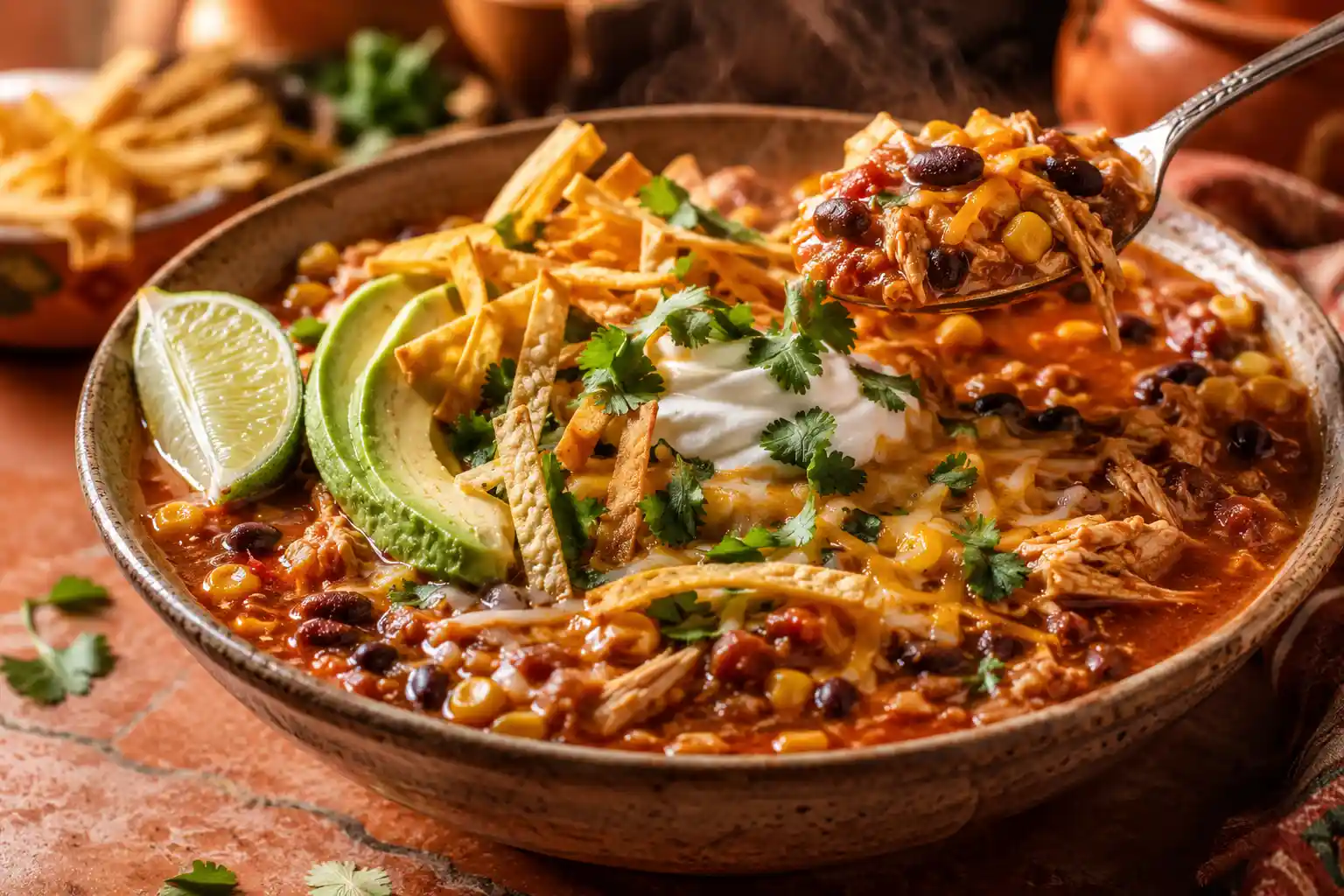

Copycat Café Zupas Chicken Enchilada Chili
A hearty, enchilada-sauce-based chili loaded with shredded chicken, beans, and corn, finished with cheese, cream, and lime so every spoonful tastes like a chicken enchilada. Thickened naturally with masa or blended beans and ready in about 40 minutes.
Ingredients
Equipment
Method
- Heat oil in a large pot over medium. Cook onion 4 to 5 minutes until soft, then add garlic, cumin, and chili powder and cook 30 to 60 seconds until fragrant.
- Add enchilada sauce, broth, tomatoes, beans, and corn. Bring to a simmer and cook 15 to 20 minutes. If using raw chicken, poach it in the liquid until cooked through, then remove and shred.
- Whisk masa harina into 1/2 cup warm broth, then stir the slurry into the pot (or stir in blended beans). Simmer 5 minutes until thickened to a hearty but spoonable consistency.
- Stir in the shredded chicken, cream, and cheese, and warm over low heat until melted and hot. Off the heat, add lime juice and cilantro. Season and serve with toppings.
Video
Notes
Thicken with masa harina (whisk into warm broth first to avoid clumps) or blended beans; both add body and stay on flavor.
Keeps 4 to 5 days refrigerated; loosen with broth when reheating. Freezes well for a couple of months — best frozen before the cream and cheese, then finished fresh.
Add toppings fresh; tortilla strips and avocado don’t store.
For creamier, spicier, vegetarian, slow-cooker, and lighter versions, see the variations above.
Frequently Asked Questions
What makes Zupas chicken enchilada chili different from regular chili?
The defining difference is that it’s built on real red enchilada sauce rather than generic chili or taco seasoning. That cooked-down chile-and-tomato base gives it the specific flavor of a chicken enchilada, which a dry spice blend can’t replicate in a quick simmer. With shredded chicken, beans, and corn and an enchilada-style finish of cheese, cream, and lime, it tastes like enchiladas turned into a hearty soup.
How do I thicken chicken enchilada chili without it turning gluey?
The best thickener here is masa harina, the corn flour used for tortillas, because it adds body plus a subtle corn flavor that fits the dish. Whisk about 2 tablespoons into a half cup of warm broth first to make a slurry, then stir it in, since adding masa straight to hot liquid clumps it. If you don’t have masa, blend a cup of the beans and broth until smooth and stir it back in for a natural thickener.
Can I use rotisserie chicken instead of cooking it from raw?
Yes, and it’s the fastest route. Simply stir about 3 cups of shredded rotisserie or other pre-cooked chicken in near the end, along with the cream and cheese, and warm it through. Using cooked chicken cuts the total time to around 25 minutes. If you cook from raw instead, poach the chicken right in the simmering broth for extra flavor, then shred and return it.
What’s the best enchilada sauce to use?
A good canned red enchilada sauce works well and keeps the recipe quick, and it’s the most convenient option for weeknights. If you have ten extra minutes, a homemade red enchilada sauce from chile powder, tomato, broth, and spices gives even deeper flavor. Avoid substituting plain tomato sauce or a taco seasoning packet, since neither delivers the enchilada character that defines this chili.
How do I store and reheat this chili?
Store it in an airtight container in the fridge for 4 to 5 days; like most chilis, the flavor deepens overnight. Reheat gently on the stove or in the microwave, loosening it with a splash of broth since it thickens as it sits. Add fresh toppings like avocado and tortilla strips only when serving, as they don’t hold up in storage.
Can I freeze chicken enchilada chili?
Yes, it freezes well for a couple of months in portion-sized containers, which makes it great for batch cooking. For the best texture, freeze it before stirring in the cream and cheese, since dairy can separate slightly when thawed. Thaw it, reheat gently, and stir in the cream and cheese fresh, then add toppings when serving.
How can I make it vegetarian or gluten-free?
For vegetarian, skip the chicken and double the beans, adding diced sweet potato or zucchini for substance, and use vegetable broth plus a meat-free enchilada sauce. For gluten-free, check that your enchilada sauce and broth are gluten-free, since some contain wheat, and thicken with blended beans or a certified gluten-free masa harina rather than any flour-based thickener. Both versions keep the same enchilada flavor.
How many calories are in Café Zupas chicken enchilada chili?
Café Zupas publishes nutrition information for its menu, so the most accurate calorie figure for the restaurant version comes from their official nutrition guide and varies by portion size. A homemade copycat depends heavily on how much cheese, cream, and toppings you add, so the count shifts with your ingredients. If you’re tracking closely, calculate it from the specific brands and amounts you use, or check Café Zupas’ published figures for the restaurant bowl.