
Your favorite restaurant recipes, recreated at home — tested and easy to follow.


Café Zupas built a following on soups that taste like someone actually cooked them, and the Wisconsin Cauliflower is the one people come back for. It’s a thick, creamy, cheddar-forward cauliflower soup with a savory depth that most homemade cauliflower soups never reach — and the reason most home versions fall flat is right there in that gap. They boil the cauliflower, blend it with cheese, and end up with something pale and one-note. The restaurant version has a toasty, almost nutty backbone underneath the cream.
That backbone comes from roasting. When you roast cauliflower instead of simmering it, the edges caramelize and the flavor turns deep and slightly sweet — that Maillard browning is flavor that boiling simply can’t produce. Layer that over a proper roux-thickened base and a blend of real cheeses, and you get the thick, glossy, deeply savory bowl that keeps people ordering it. It’s a cousin to a good beer-cheese or broccoli-cheddar soup, but cauliflower gives it a rounder, less grassy character.
This copycat is built around that roasting step, plus the details that keep a cheese soup from going grainy or splitting. It comes together in about an hour. If you like this style of thick, cheesy comfort bowl, the same base logic carries over to other creamy soups and dips on the site — the make-ahead spinach dip leans on the same trick of building flavor before the dairy goes in.
Why This Copycat Works
- Roasts the cauliflower first for the toasty, caramelized depth boiled versions never get.
- A real roux base plus cheese added off the heat gives a thick, glossy soup that doesn’t go grainy.
- About an hour start to finish, most of it hands-off roasting time.
- Hardest part: melting the cheese without breaking it — low heat and freshly grated cheese are the whole trick.
Key Ingredients & Substitutions

Cauliflower (the body and flavor). One large head, cut into even florets so they roast at the same rate. Roasting is non-negotiable for the flavor this soup is known for. Frozen cauliflower can work in a pinch but won’t caramelize as well since it sheds water; if you use it, roast it hot and don’t crowd the pan. Cauliflower is in the produce section year-round.
Sharp cheddar (the Wisconsin character). This is the flavor the soup is named for, so use a good sharp or extra-sharp cheddar and grate it yourself from a block. Pre-shredded cheese is coated in anti-caking starch that makes cheese soup grainy and keeps it from melting smoothly. A little white cheddar keeps the color paler and cleaner; orange cheddar gives the classic golden look.
A melting cheese (for silk). A handful of a good melter — Monterey Jack, Gruyère, or even a little cream cheese — smooths the texture so the soup is glossy rather than stringy. Gruyère adds a nutty depth that suits the roasted cauliflower especially well. All are in the regular cheese case.
Butter and flour (the roux). Equal parts, cooked together, are what give the soup its thick, spoon-coating body without relying on blending everything to a paste. For a gluten-free version, a cornstarch slurry stirred in at the end thickens it just as well.
Aromatics (onion, garlic). Sautéed in the butter before the roux, these build the savory base. Don’t skip them — they’re a big part of why the restaurant version tastes layered rather than flat.
Stock and milk or cream (the liquid). Chicken or vegetable stock carries savory depth; whole milk or a mix of milk and cream brings the richness. Heavy cream makes it more luxurious and more stable against breaking; low-fat milk is more prone to curdling, so keep the heat gentle if you use it.
A pinch of nutmeg and a little mustard powder (optional depth). Both are classic in cheese sauces — nutmeg rounds the dairy and mustard powder sharpens the cheese flavor without adding obvious heat. Small amounts; they should be felt, not tasted.
How to Make Wisconsin Cauliflower Soup at Home
You’ll roast the cauliflower while you build a savory roux base, then combine them, simmer briefly, and melt in the cheese off the heat so it stays smooth. Start to finish is about an hour, with the roasting running mostly unattended. The method works because each element is developed separately — roasted flavor, a stable thickened base, and gently melted cheese — then brought together, which is exactly what keeps it from turning into pale, grainy cauliflower mush.
Step 1: Roast the Cauliflower

Heat your oven to 425°F. Toss the florets with a couple of tablespoons of oil, a good pinch of salt, and some pepper, and spread them in a single layer on a sheet pan — crowding steams them instead of browning them, so use two pans if you need to. Roast for 25 to 30 minutes, flipping once halfway, until the edges are deeply golden brown and a knife slides in easily. You want real color here, not pale tan; those browned edges are the flavor. Set aside a small handful of the best-looking florets to garnish the finished bowls.
Step 2: Build the Savory Base
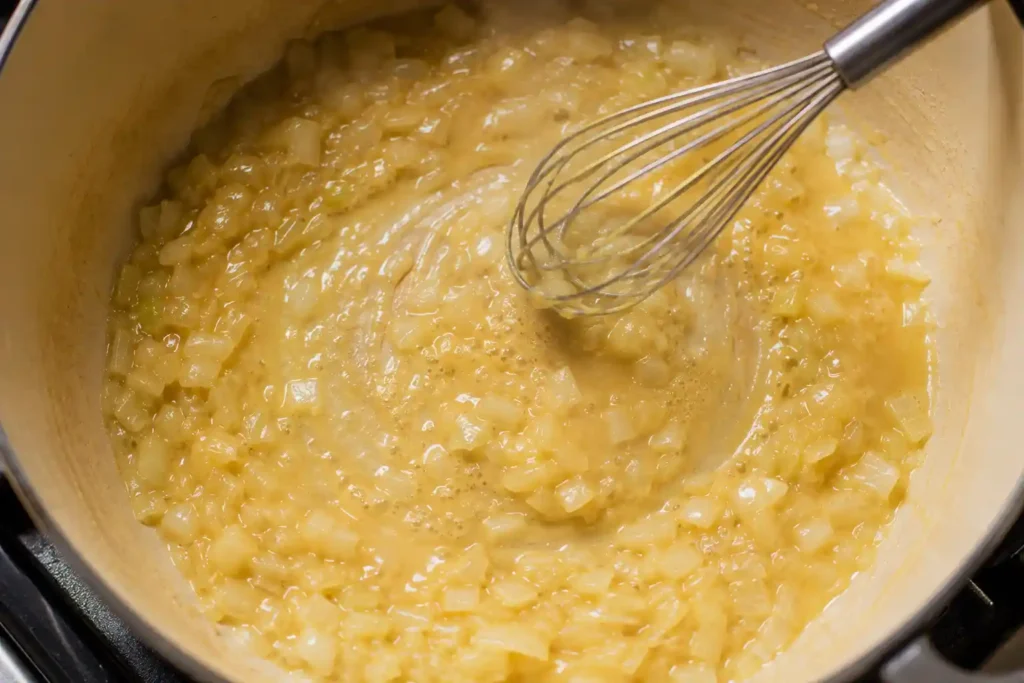
While the cauliflower roasts, melt 4 tablespoons butter in a large heavy pot over medium heat. Add a diced onion and cook 5 to 6 minutes until soft and translucent, then stir in the minced garlic for another 30 seconds until fragrant. Sprinkle in 1/4 cup flour and whisk constantly for about 2 minutes to cook out the raw flour taste — the roux should smell nutty and turn a pale gold, not brown. This short cook is what removes the pasty flavor a rushed roux leaves behind.
Step 3: Add Liquid and Simmer

Slowly pour in 3 cups warm stock while whisking, so the roux loosens without lumping, followed by 2 cups whole milk (or milk and cream). Add the roasted cauliflower, reserving that garnish handful, along with the optional nutmeg and mustard powder. Bring to a gentle simmer and cook 10 to 15 minutes, until everything is very tender and the base has thickened enough to coat the back of a spoon. Blend to your preferred texture — fully smooth with an immersion blender, or leave some florets whole for a chunkier bowl.
Step 4: Melt In the Cheese Off the Heat

Take the pot off the heat and let it stop bubbling for a minute — this is the single most important step for a smooth soup. Add the grated cheddar and melting cheese a handful at a time, stirring until each addition melts before adding more. Cheese added to boiling liquid seizes and turns grainy or stringy; added to hot-but-not-boiling soup, it melts into a glossy, velvety texture. Taste and adjust salt, then thin with a splash of warm stock if it’s thicker than you like.
Chef’s Note: Grate the cheese from a block yourself, and add it only after the soup has stopped boiling. Those two things fix nearly every grainy, greasy, or stringy cheese soup. Pre-shredded cheese carries starch and cellulose that break a smooth soup, and a hard boil after the cheese goes in will split it no matter how good the cheese is.
The Roasting Step Competitors Skip
Most cauliflower soup recipes online, and honestly most home cooks, boil or steam the cauliflower straight into the pot. It’s faster, and it produces a perfectly edible soup — but a flat one. Roasting first is the difference between “creamy cauliflower soup” and the specific toasty, savory depth that makes the Zupas version worth recreating. The browned edges add a caramelized, faintly sweet, nutty flavor that reads as richness even before the cheese goes in.
If you take one thing from this recipe, it’s that step. Everything else is standard cheese-soup technique; the roasting is what gets you the restaurant flavor.
Boiled cauliflower makes soup. Roasted cauliflower makes this soup.
Keeping the Cheese From Breaking

A broken cheese soup — grainy, greasy, or stringy — is the most common complaint with recipes like this, and it comes down to a few avoidable mistakes.
Grainy texture. Almost always pre-shredded cheese or cheese added to boiling soup. Grate your own and add it off the heat.
Greasy or oil separating on top. The soup got too hot after the cheese went in, splitting the fat out. Keep it below a simmer once cheese is in; never boil it.
Stringy, clumping cheese. Added too fast or all at once. Add it in small handfuls, stirring each in fully before the next.
Too thin. Not enough roux, or too much liquid. Simmer a few minutes longer before the cheese, or stir in a cornstarch slurry.
Too thick or gluey after sitting. Roux-based soups firm up as they cool. Thin with warm stock or milk when reheating, not water.
Make-Ahead and Storage
This soup keeps well for 3 to 4 days in an airtight container in the fridge, and the flavor deepens overnight, which makes it a solid make-ahead for a dinner or a week of lunches. Reheat it gently — low heat on the stove, stirring, and never a hard boil, since that’s what breaks the cheese on a reheat just as easily as on day one. Loosen it with a splash of warm milk or stock as you go, because it thickens considerably in the fridge.
Freezing is where cheese-and-dairy soups get tricky. They can separate and turn grainy on thawing because the dairy and cheese don’t hold up to freezing well. If you know you’ll freeze it, you can freeze the roasted-cauliflower base before adding the cheese and dairy, then finish it fresh after thawing — that gets you a far better texture than freezing the completed soup.
Variations Worth Making
Loaded, baked-potato style. Top with crumbled bacon, extra cheddar, and sliced green onions for something closer to a loaded potato soup.
Broccoli-cauliflower. Swap half the cauliflower for roasted broccoli for a cheddar soup that splits the difference — roast both the same way.
Spicier. A pinch of cayenne or a diced roasted jalapeño in the base adds warmth without fighting the cheese.
Lighter. Use whole milk instead of cream and lean on the roux for body; it won’t be quite as plush but keeps the flavor. Note that lower-fat dairy is more prone to breaking, so keep the heat gentle.
Gluten-free. Skip the flour roux and thicken with a cornstarch slurry stirred in near the end, or lean on extra blended cauliflower for body.
What to Serve With It
This is a rich bowl, so it wants something with crunch or acidity alongside. A crusty bread or a grilled cheese for dunking is the obvious move, and it’s exactly the kind of soup Café Zupas pairs with a half sandwich or salad. A simple green salad with a sharp vinaigrette cuts the richness nicely. For a snack-board angle, it’s good with sharp cheddar and homemade Triscuit-style crackers for scooping.
Equipment That Genuinely Helps
You don’t need much, and cheap versions are fine for most of it. A large heavy-bottomed pot or Dutch oven matters most — its thick base spreads heat evenly and prevents the scorching that a thin pot causes under a thick dairy soup. A box grater (or a food processor with a grating disc) makes grating your own cheese painless, which, as covered above, genuinely changes the result versus pre-shredded.
An immersion blender is the one tool I’d actively recommend buying if you make soups often — it purées the soup right in the pot to whatever texture you want, with none of the hot-liquid hassle and mess of transferring to a countertop blender. A regular blender works, but blend in batches and vent the lid, since hot soup builds pressure and can erupt. A rimmed sheet pan for the roasting rounds it out.


Copycat Café Zupas Wisconsin Cauliflower Soup
A thick, creamy, cheddar-forward cauliflower soup built on roasted cauliflower for real toasty depth. A roux base and freshly grated cheese melted off the heat keep it glossy and smooth rather than grainy. Ready in about an hour, and even better the next day.
Ingredients
Equipment
Method
- Heat oven to 425°F. Toss cauliflower florets with oil, salt, and pepper, spread in a single layer on a sheet pan, and roast 25 to 30 minutes, flipping once, until deeply golden. Reserve a small handful for garnish.
- Melt butter in a large pot over medium heat. Cook the onion 5 to 6 minutes until soft, add garlic for 30 seconds, then whisk in the flour and cook 2 minutes until pale gold and nutty.
- Slowly whisk in the warm stock, then the milk. Add the roasted cauliflower and optional nutmeg and mustard powder. Simmer 10 to 15 minutes until very tender and thickened. Blend to your preferred texture.
- Off the heat, once the soup stops bubbling, stir in the grated cheeses a handful at a time until smooth and glossy. Season to taste and thin with warm stock if needed. Serve topped with the reserved roasted florets.
Video
Notes
Grate cheese from a block and add it only off the heat to avoid a grainy or split soup.
Keeps 3 to 4 days refrigerated; reheat gently and thin with warm milk or stock. Don’t boil on reheating.
To freeze, freeze the cauliflower base before adding cheese and dairy, then finish fresh after thawing.
For loaded, broccoli, spicy, lighter, and gluten-free versions, see the variations above.
Frequently Asked Questions
What makes Zupas Wisconsin cauliflower soup taste different from regular cauliflower soup?
The biggest difference is roasting the cauliflower before it goes into the soup rather than boiling it. Roasting caramelizes the edges and builds a toasty, nutty, savory depth that a boiled cauliflower soup never develops. Combined with a blend of sharp cheddar and a good melting cheese over a roux base, that roasted flavor is what gives the Café Zupas version its signature richness.
Why did my cauliflower cheese soup turn out grainy?
Grainy cheese soup almost always comes from one of two things: using pre-shredded cheese, or adding cheese to soup that is still boiling. Pre-shredded cheese is coated in starch and cellulose that prevent smooth melting, so grate your own from a block. And always take the pot off the heat and let it stop bubbling before stirring cheese in a handful at a time.
Do I have to roast the cauliflower, or can I boil it?
You can boil it and the soup will still be creamy and edible, but it will taste noticeably flatter and paler. Roasting is the single step that gives this soup the deep, toasty flavor the restaurant version is known for. If you have the extra half hour, roast it; it is the part of the recipe that most changes the result.
How do I store and reheat this soup?
Store it in an airtight container in the fridge for 3 to 4 days; the flavor actually deepens overnight. Reheat it gently over low heat, stirring, and never let it come to a hard boil, since boiling can break the cheese and turn the texture grainy. It thickens a lot as it chills, so loosen it with a splash of warm milk or stock rather than water.
Can I freeze Wisconsin cauliflower soup?
Cheese and dairy soups don’t freeze well once finished, because the dairy tends to separate and turn grainy when thawed. The better approach is to make and freeze the roasted-cauliflower base before adding the cheese and dairy, then thaw it and finish the soup fresh. If you do freeze the completed soup, reheat it very gently and whisk well to bring the texture back as much as possible.
How can I make this gluten-free or lighter?
For gluten-free, skip the flour roux and thicken the soup with a cornstarch slurry stirred in near the end, or lean on extra blended cauliflower for body. For a lighter version, use whole milk instead of cream and rely on the roux for thickness. Keep in mind lower-fat dairy is more likely to break, so keep the heat gentle and add the cheese off the heat.
How many calories are in Café Zupas Wisconsin cauliflower soup?
Café Zupas publishes nutrition information for its menu items, so the most accurate calorie and nutrition figures for the restaurant soup come directly from their official nutrition guide, which can vary by portion size. A homemade copycat depends heavily on how much cheese and cream you use, so the count shifts with your ingredients. If you’re tracking closely, calculate it from the specific brands and amounts you use, or check Café Zupas’ published figures for the restaurant version.
What can I serve with cauliflower cheese soup?
Because it’s rich, it pairs best with something crunchy or bright to balance it. Crusty bread or a grilled cheese for dunking is the classic move, and a green salad with a sharp vinaigrette cuts through the creaminess. It also works as a starter in smaller portions alongside a half sandwich, much like it’s served at the restaurant.