Your favorite restaurant recipes, recreated at home — tested and easy to follow.


If you’ve ever ordered a Farmer’s Wrap from Tim Hortons, there’s a good chance the chipotle sauce is the reason you keep going back. It’s smoky, a little tangy, creamy without being heavy, and it ties together the egg, hash brown, sausage, and cheese in a way that plain ketchup or hot sauce just can’t. Ask around and you’ll find people who’ve genuinely tried to recreate their breakfast at home just to chase that one sauce.
The sauce shows up across a whole lineup of Tim Hortons wraps — the Farmer’s Wrap, the Loaded Wrap, the Steak & Egg version — and its listed ingredients confirm what a lot of home cooks have suspected for years: it’s built on a mayonnaise-and-sour-cream base, brightened with jalapeño and a proper hit of dried chipotle, not just a blender full of canned chipotles in adobo like most online copycats assume.
This version recreates that same smoky, tangy, pourable sauce with real pantry and grocery-store ingredients, ready in about 5 minutes with no cooking required — perfect for topping your own homemade breakfast wraps, sandwiches, or literally anything that needs a little smoky kick.
Why This Is the Best Tim Hortons Chipotle Sauce Recipe
- It’s built on the actual base ingredients, not a guess. Most online versions default to a Greek yogurt or straight mayo base — this one blends mayonnaise and sour cream together, which matches what’s confirmed in the real sauce’s ingredient list.
- It gets the smoke right. Instead of relying only on canned chipotles in adobo (which lean more spicy-vinegary than smoky), this recipe layers in a bit of smoked paprika or ground chipotle powder for that deeper, rounder smokiness.
- It’s the right texture for a wrap. A touch of extra sour cream and a short chill time thickens the sauce so it clings to your wrap fillings instead of running out the sides — a common complaint with thinner copycat versions.
- It takes 5 minutes and needs zero cooking — just a bowl, a whisk (or blender for extra-smooth texture), and a fridge.
- It scales up easily for meal prep, since it keeps well for a full week.
What Makes Tim Hortons’ Chipotle Sauce So Good?
Tim Hortons lists the sauce’s ingredients as starting with water, soybean oil, and egg yolk — which is the technical fingerprint of a mayonnaise base — combined with sour cream powder, sugar, vinegar, and modified milk ingredients for that tangy, creamy backbone. From there, the smoky heat comes from two separate sources: jalapeño puree and chipotle powder, plus dehydrated onion and garlic for savory depth, and xanthan gum to keep everything stable and pourable.
That two-pepper approach is the detail most copycat recipes skip. A lot of versions online lean entirely on canned chipotle peppers in adobo sauce for both the heat and the smoke, which gets you close but tends to taste more vinegary and one-note than the real thing. Blending in a separate hit of dried chipotle powder (or smoked paprika if you can’t find chipotle powder) on top of a small amount of canned chipotle gives you that rounder, more restaurant-accurate smokiness instead of a flavor that’s just “spicy mayo.”
The other detail worth noting: this is genuinely a mayo-and-sour-cream sauce, not a yogurt-based “healthier” sauce, which is a shortcut a lot of recipe creators use online to lighten it up. That swap changes the flavor and texture more than people expect — Greek yogurt is tangier and thinner, while real sour cream gives you that thicker, richer mouthfeel the original actually has.
Key Ingredients & Substitutions
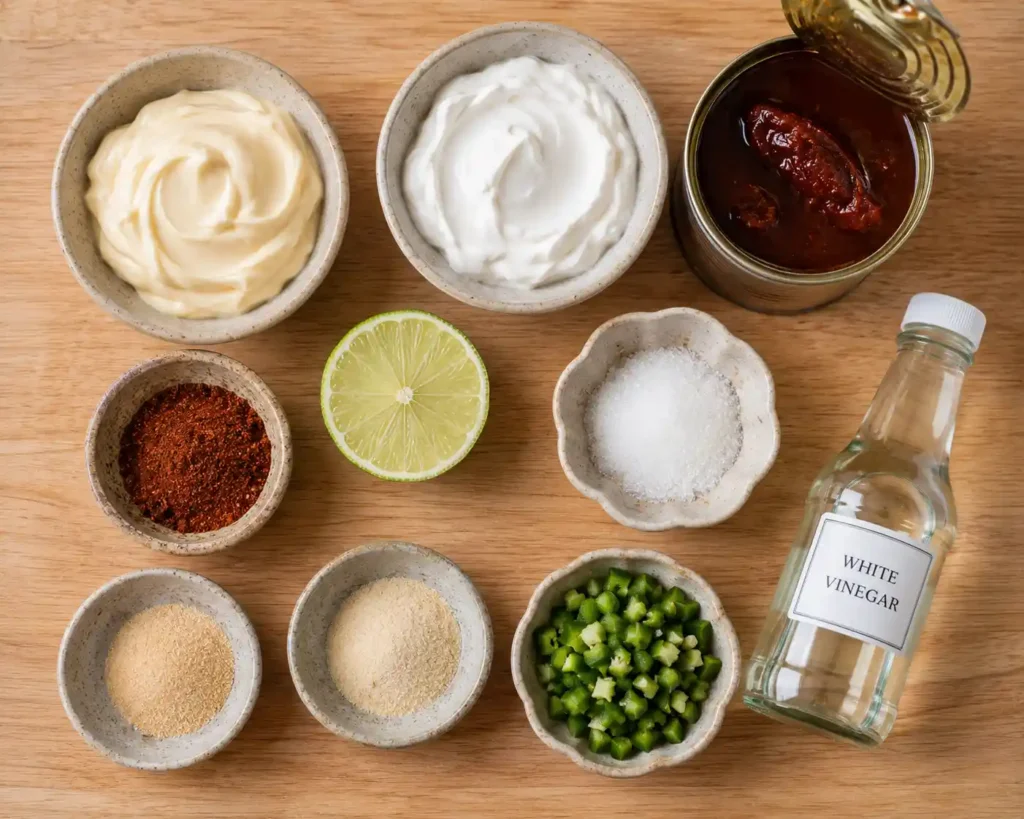
- Mayonnaise — the primary base, matching the soybean oil and egg yolk listed in the real sauce’s ingredients. Full-fat mayo gives the richest, most accurate texture; light mayo works but yields a slightly thinner sauce.
- Sour cream — adds tang and thickens the sauce, mirroring the sour cream powder in the real ingredient list. Plain Greek yogurt can substitute in a pinch, but expect a tangier, thinner result than the original.
- Canned chipotle peppers in adobo sauce — provides both heat and a smoky-vinegary base flavor. Use just the pepper (finely minced) plus a small spoonful of the adobo sauce itself; too much adobo sauce can make the final sauce overly vinegary.
- Chipotle powder or smoked paprika — this is the ingredient most copycats skip, and it’s what rounds out the smokiness beyond what the canned peppers alone provide. Chipotle powder gives the most accurate flavor; smoked paprika is a good substitute if you can’t find it, though it’s milder and slightly sweeter.
- Fresh lime juice — adds brightness and cuts through the richness of the mayo and sour cream.
- Sugar — a small amount balances the acidity and heat, matching the sugar listed in the real ingredient panel. Don’t skip it; the sauce tastes flat and overly sharp without it.
- White vinegar — adds a clean tang that rounds out the flavor alongside the lime juice.
- Garlic powder and onion powder — for savory depth, matching the dehydrated garlic and onion in the original. Fresh minced garlic can be used instead of garlic powder, but powder gives a more even, restaurant-style distribution of flavor.
- Salt — to taste; start light since canned chipotles in adobo are already fairly salty.
Substitutions: For a dairy-free version, swap the sour cream for a dairy-free sour cream alternative or additional dairy-free mayo — the flavor will be slightly less tangy but still close. For gluten-free, this sauce is naturally gluten-free as written; just double-check your specific brand of canned chipotles for any additives. For a milder version, use just one chipotle pepper instead of two or three, and skip the extra chipotle powder.
How to Make Tim Hortons Chipotle Sauce
Step 1: Prep the chipotle peppers
Remove 2 to 3 chipotle peppers from a can of chipotles in adobo sauce and finely mince them, or leave them whole if you’re using a food processor or blender. Reserve about 1 tablespoon of the adobo sauce from the can to add separately — this gives you control over how much of that vinegary sauce ends up in your final mixture, since dumping in the whole can tends to make the sauce overly sharp.
Step 2: Combine the base ingredients
In a food processor, blender, or mixing bowl, combine 1/2 cup mayonnaise, 1/4 cup sour cream, the minced chipotle peppers, the reserved 1 tablespoon of adobo sauce, 1 tablespoon lime juice, 1 teaspoon white vinegar, 1 teaspoon sugar, 1/2 teaspoon garlic powder, 1/2 teaspoon onion powder, and 1/4 teaspoon chipotle powder (or smoked paprika).
Step 3: Blend or whisk until smooth
If using a food processor or blender, pulse for 30 to 45 seconds, scraping down the sides once, until the sauce is completely smooth with no visible pepper chunks and has an even, pale orange-brown color throughout. If mixing by hand, whisk vigorously for about 2 minutes — the texture will be slightly less uniform but still good, with small flecks of chipotle visible.
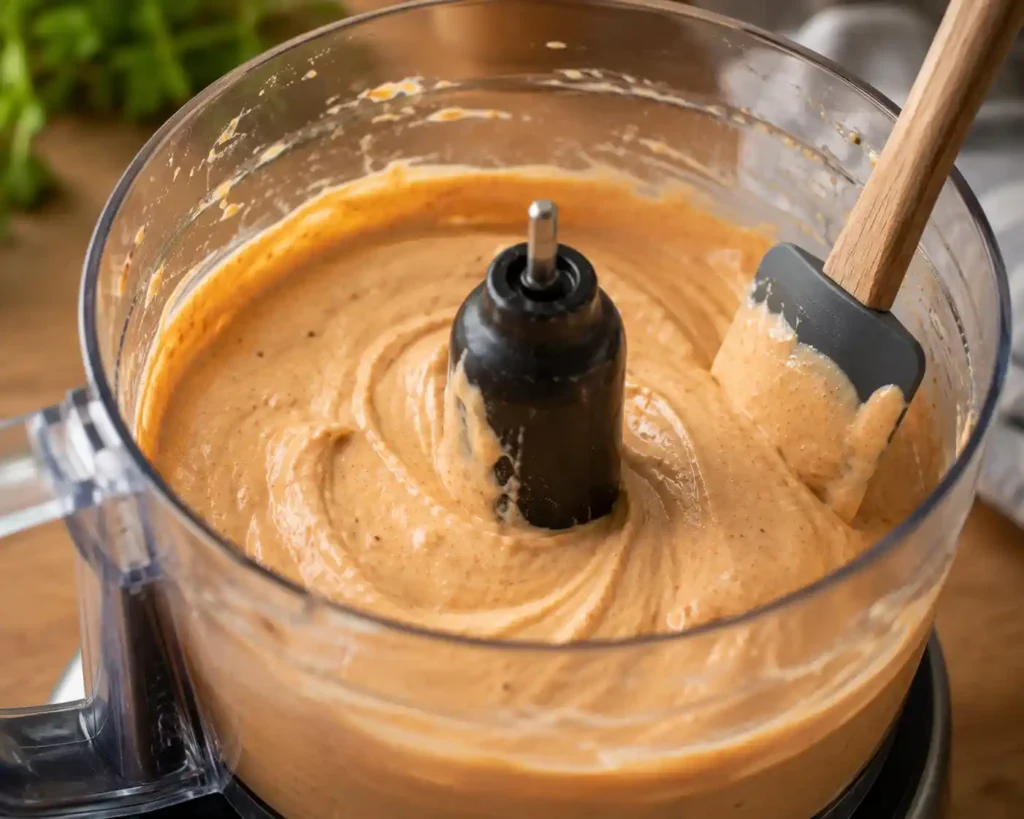
Step 4: Taste and adjust
Taste the sauce and adjust as needed: add another 1/4 teaspoon of chipotle powder for more smokiness, an extra chipotle pepper for more heat, or a small pinch of salt if it tastes flat. The sauce should taste smoky, slightly tangy, and creamy, with a gentle heat that builds rather than hits you all at once.
Step 5: Chill before serving
Transfer the sauce to an airtight container and refrigerate for at least 30 minutes before using. This isn’t just for flavor — chilling firms up the sauce so it holds its shape on a wrap or sandwich instead of running out the sides the moment you bite in, which is a common complaint with thinner homemade versions.
Step 6: Use or store
Spread or drizzle onto breakfast wraps, sandwiches, burgers, or use as a dip for fries, chicken tenders, or vegetables. Store any leftover sauce in an airtight container in the fridge for up to one week — keep an eye on the expiry date of your sour cream, since that’s usually the ingredient that determines how long the sauce stays fresh.
Variations
Extra Smoky Version: Double the chipotle powder to 1/2 teaspoon and add an extra chipotle pepper for a deeper, more pronounced smoky flavor with more background heat.
Lighter Version: Replace the mayonnaise with plain Greek yogurt and use light or reduced-fat sour cream. The flavor will be tangier and the texture thinner than the original, but it’s a solid lighter alternative if you’re watching calories.
Dairy-Free Version: Use a dairy-free mayonnaise and a dairy-free sour cream alternative in place of the dairy versions. The smoky, tangy flavor from the chipotle and lime carries most of the character, so this swap holds up well.
Extra Thick Version (for wraps): Add an extra 2 tablespoons of sour cream and chill the sauce for a full hour instead of 30 minutes if you want a thicker, more spreadable consistency that won’t run at all inside a warm wrap.
Spicy Chipotle Ranch Twist: Stir in 1/2 teaspoon dried dill and a small pinch of dried chives along with the other seasonings for a ranch-leaning variation that works especially well as a dip for fries or chicken.
No Food Processor Version: If you don’t own a food processor or blender, finely mince the chipotle peppers by hand with a sharp knife until they’re almost paste-like, then whisk everything together vigorously in a bowl — the texture won’t be quite as silky-smooth, but the flavor will be just as accurate.
How Does It Compare to the Real Thing?
Based on Tim Hortons’ own listed ingredients for the sauce, it’s genuinely built on a mayonnaise-and-sour-cream base rather than a yogurt-based “light” sauce, which explains why homemade yogurt-based copycats often taste noticeably tangier and thinner than the version you get in-store. The sauce itself has been documented at around 170 calories per serving on some nutrition trackers, though that figure reflects however that specific serving size is measured by the source and can vary depending on portion size, so treat it as a general reference point rather than an exact per-tablespoon number.
For context, the full Farmer’s Breakfast Wrap that the sauce comes on has been documented at roughly 500 to 640 calories depending on the specific version (regular, loaded, or double stacked), with the wrap noted as running higher in sodium and fat than lighter items on the breakfast menu. Since the sauce itself is only a small component of that total, a homemade version like this one — used in reasonable amounts of a tablespoon or two per wrap — plays a relatively minor role in the wrap’s overall calorie count compared to the sausage, cheese, and hash brown.
Tips for the Best Tim Hortons Chipotle Sauce
- Don’t skip the reserved adobo sauce measurement. Adding the whole can’s worth of adobo sauce instead of measuring out a tablespoon can make the sauce overly vinegary and thin — control it separately from the peppers themselves.
- Chill it before judging the final flavor. Sauces like this taste slightly different (usually sharper) right after blending than they do once chilled, since the flavors mellow and meld over that first 30 minutes in the fridge.
- Use a food processor if you want that ultra-smooth, glossy texture you get from the restaurant version — hand-whisking works, but you’ll have small flecks of pepper rather than a completely uniform sauce.
- Taste your chipotle peppers before deciding on quantity — some cans run spicier than others depending on the brand, so start with two peppers and add a third only if you want more heat.
- Don’t over-thin it. If the sauce seems too thick after chilling, add water or lime juice in 1/2-teaspoon increments rather than all at once — it’s easy to go from perfect to runny with just an extra splash.
What to Serve With Tim Hortons Chipotle Sauce
- A homemade breakfast wrap with scrambled eggs, sausage or bacon, shredded hash browns, and melted cheddar — the classic pairing.
- Chicken tenders or nuggets as a smoky dipping sauce instead of plain ranch or honey mustard.
- Grilled or crispy fish tacos — the smoky, tangy flavor pairs naturally with a Mexican-inspired meal.
- French fries or potato wedges, drizzled on top or served on the side as a dip.
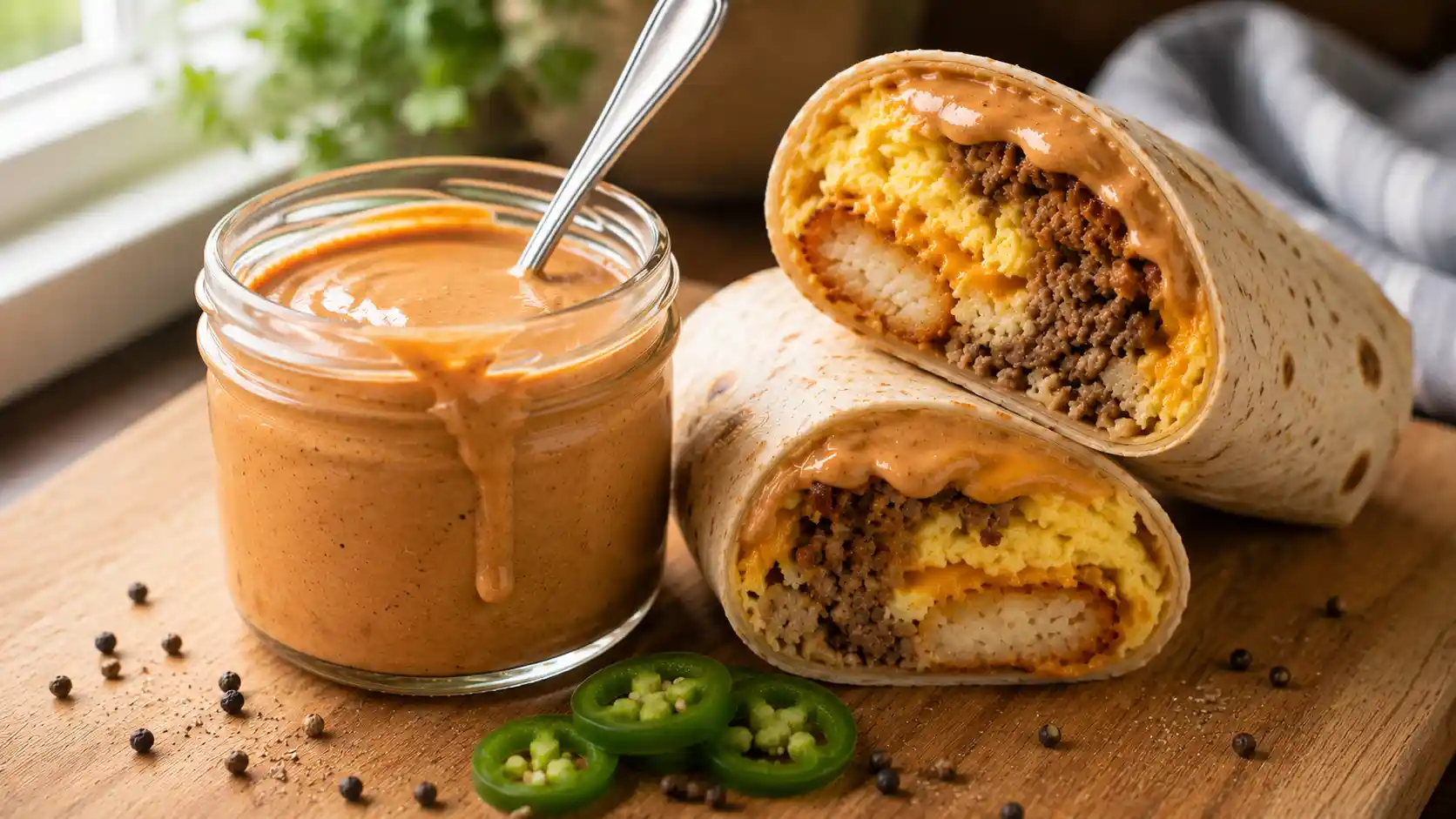

Copycat Tim Hortons Chipotle Sauce
A smoky, tangy, creamy chipotle sauce inspired by the Tim Hortons Farmer’s Wrap, made with a mayonnaise and sour cream base, real chipotle peppers, and a touch of chipotle powder. Ready in about 5 minutes with no cooking required.
Ingredients
Equipment
Method
- Remove and finely mince 2–3 chipotle peppers from a can of chipotles in adobo sauce, and reserve 1 tablespoon of the adobo sauce separately.
- Combine the mayonnaise, sour cream, minced chipotle peppers, reserved adobo sauce, lime juice, vinegar, sugar, garlic powder, onion powder, and chipotle powder in a food processor, blender, or mixing bowl.
- Blend for 30–45 seconds until completely smooth, scraping down the sides once, or whisk vigorously by hand for about 2 minutes.
- Taste and adjust — add more chipotle powder for smokiness, an extra pepper for heat, or a pinch of salt as needed.
- Transfer to an airtight container and refrigerate for at least 30 minutes before serving.
- Use on breakfast wraps, sandwiches, or as a dip; store leftovers in the fridge for up to one week.
Video
Notes
Storage: Refrigerate in an airtight container for up to 1 week; check the expiry of your sour cream, since it’s usually the first ingredient to spoil.
Freezing is not recommended — mayonnaise and sour cream-based sauces tend to separate when thawed.
For a lighter, dairy-free, extra smoky, or extra thick version, see the Variations section in the full blog post.
If you can’t find chipotle powder, smoked paprika is a good (slightly milder) substitute.
Frequently Asked Questions
What’s actually in Tim Hortons chipotle sauce?
According to the sauce’s publicly listed ingredients, it’s built on water, soybean oil, and egg yolk (a mayonnaise base), combined with sour cream powder, sugar, vinegar, and modified milk ingredients for tang, plus jalapeño puree, dehydrated onion and garlic, chipotle powder, and xanthan gum for stability. This copycat recipe is designed to match that same mayo-and-sour-cream foundation with real chipotle peppers and chipotle powder.
Is Tim Hortons chipotle sauce the same as the Farmer’s Wrap sauce?
Yes — the chipotle sauce is the signature sauce used on the Farmer’s Breakfast Wrap and its variations, including the Loaded, Steak & Egg, and Double Stacked versions.
How many calories are in Tim Hortons chipotle sauce?
Nutrition trackers have listed the sauce at around 170 calories for a standard serving, though exact serving sizes can vary by source, so treat this as a general estimate. For comparison, the full Farmer’s Breakfast Wrap it’s served on runs roughly 500 to 640 calories depending on the version.
Can I make this ahead of time?
Yes, and it’s actually better after resting — make it up to a week in advance and store it in an airtight container in the fridge; the flavors continue to meld over the first day or two.
How do I store leftover sauce?
Keep it in a sealed, airtight container in the refrigerator for up to one week. Since sour cream is usually the ingredient that spoils first, check its expiry date to gauge how long your batch will realistically last.
Can I freeze this sauce?
Freezing isn’t recommended. Mayonnaise- and sour-cream-based sauces tend to separate and turn grainy once thawed, so it’s best made fresh or kept refrigerated rather than frozen.
Is this recipe gluten-free?
Yes, as written, this sauce is naturally gluten-free. Just double-check your specific brand of canned chipotle peppers for any unexpected additives if you’re strictly avoiding gluten.
Can I make it dairy-free?
Yes — substitute a dairy-free mayonnaise and a dairy-free sour cream alternative for the dairy versions. See the Dairy-Free Variation above for details.